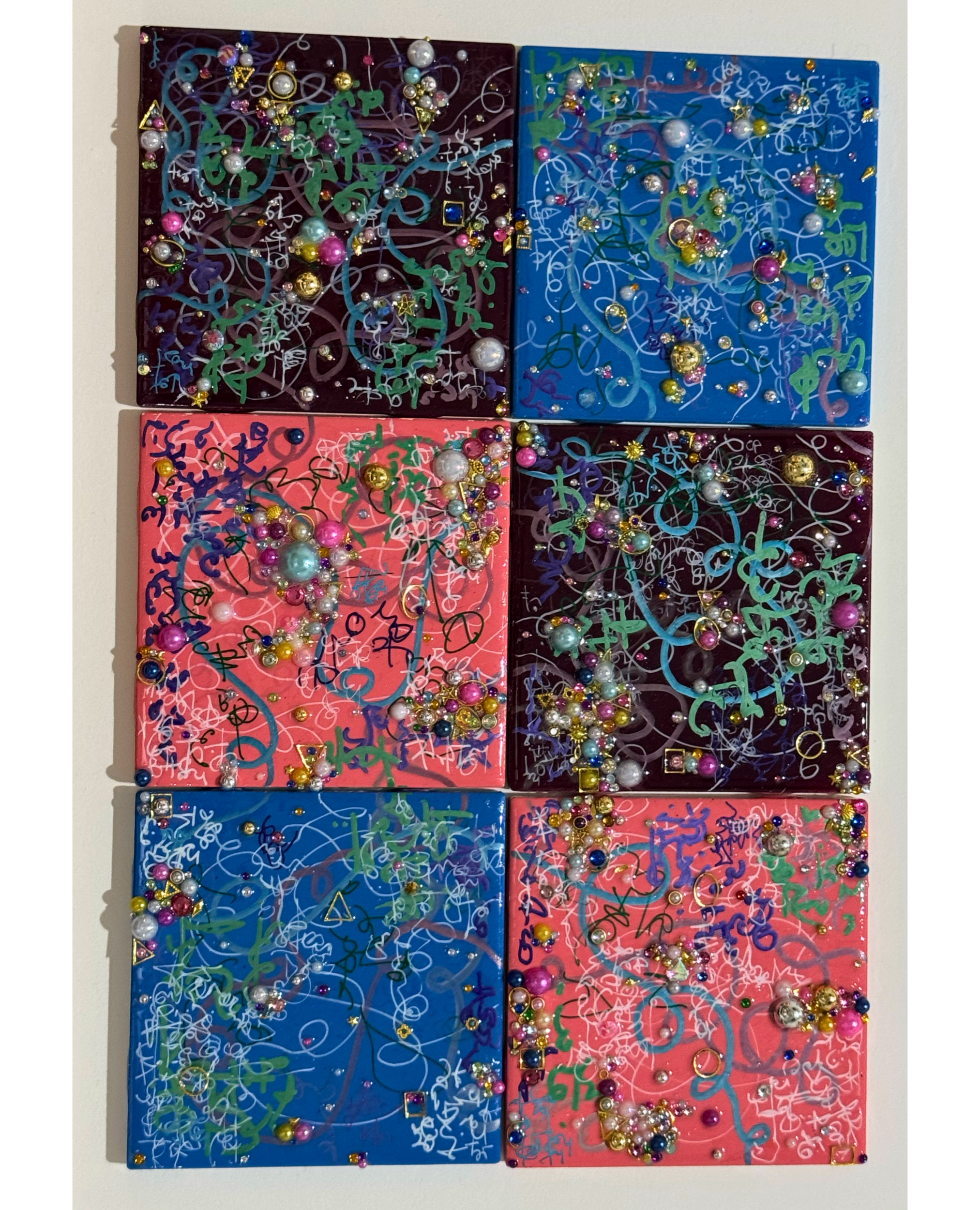
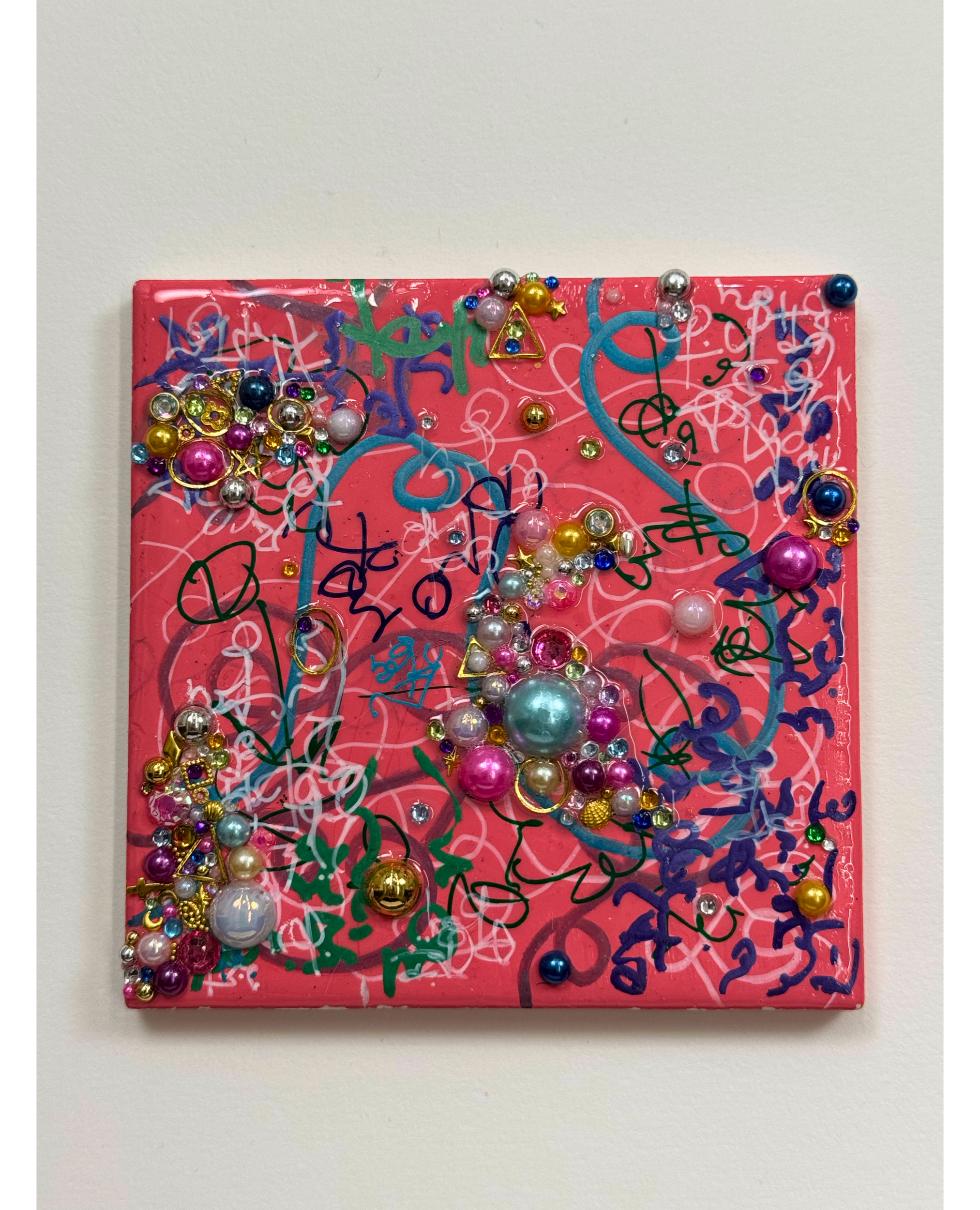
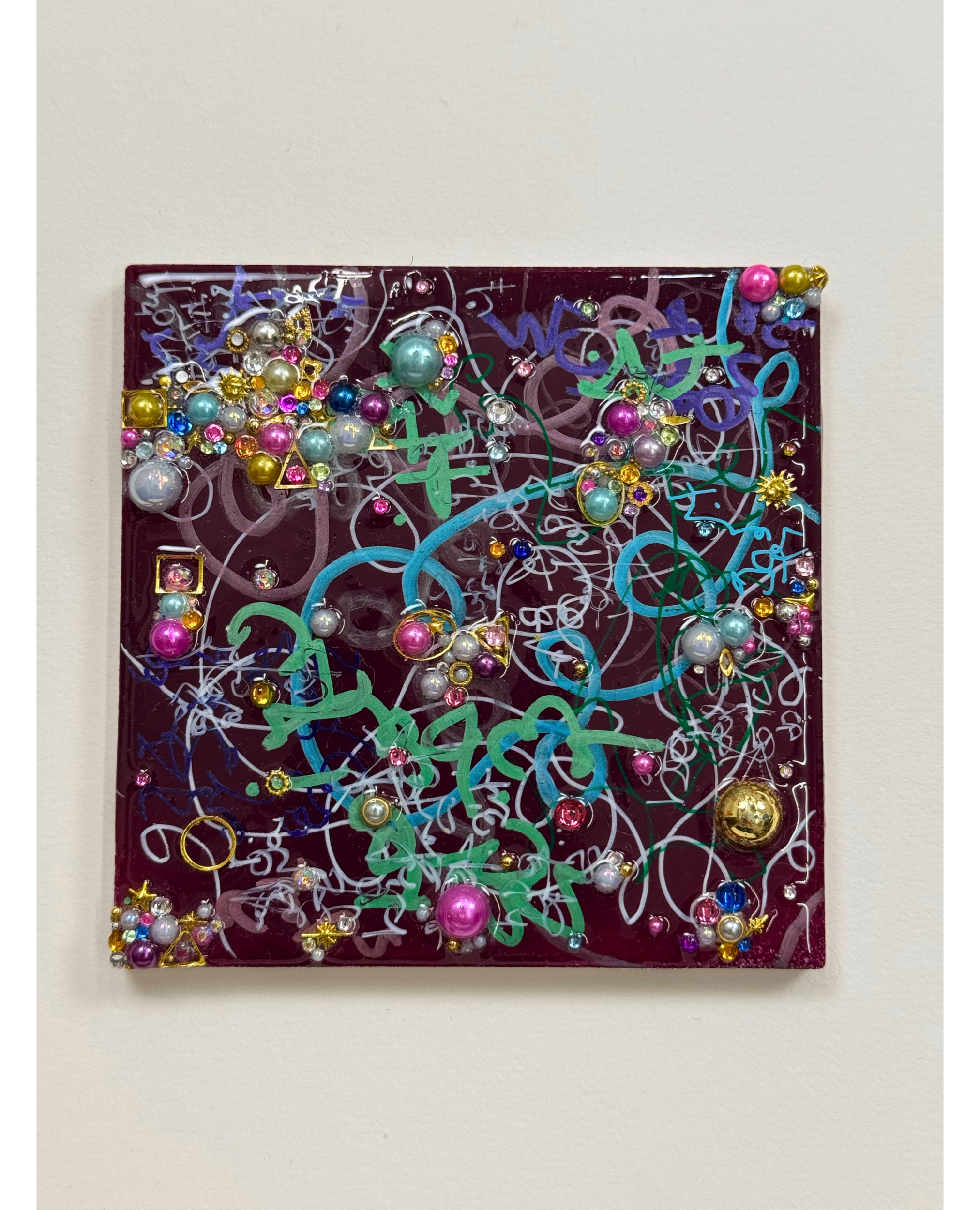
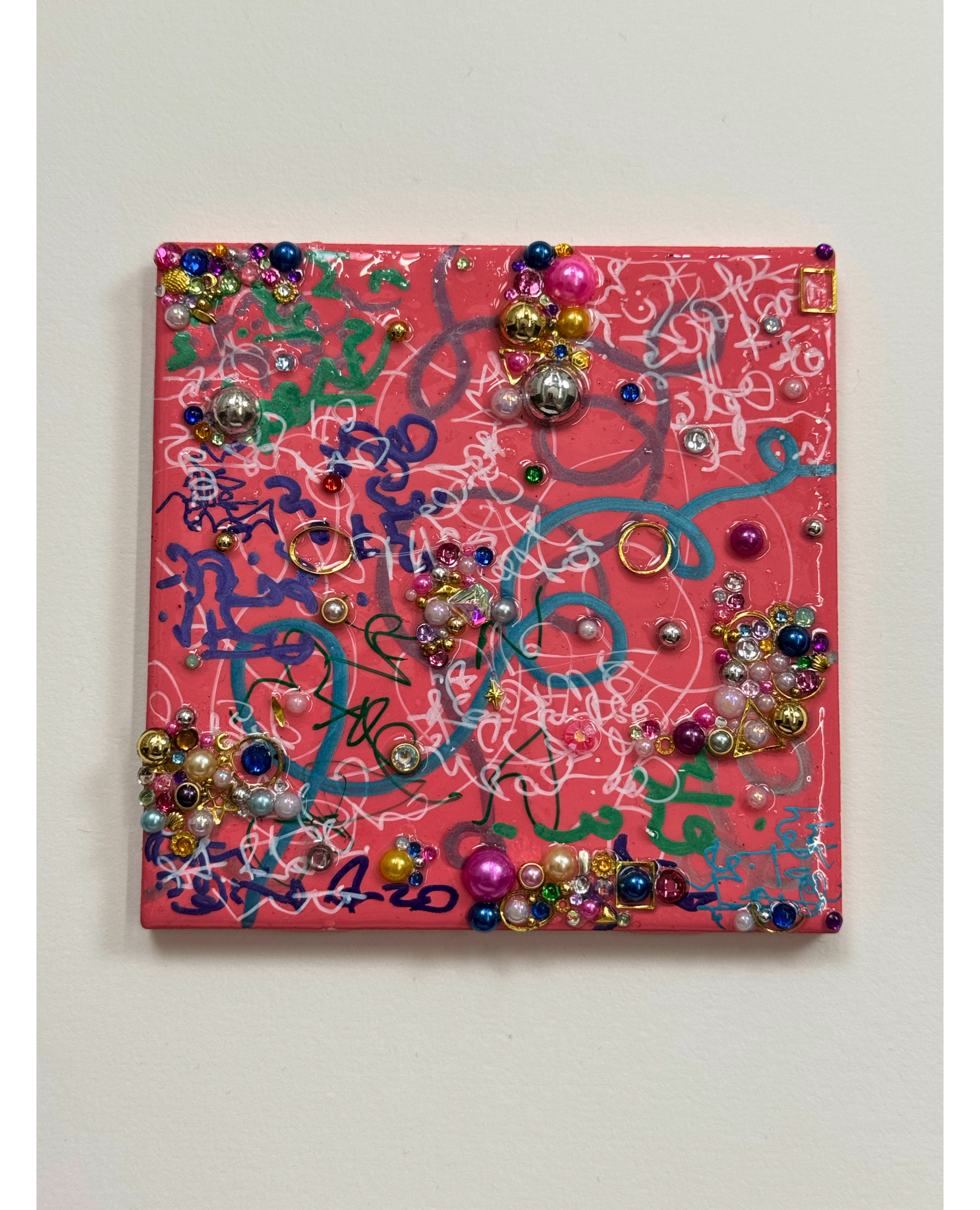
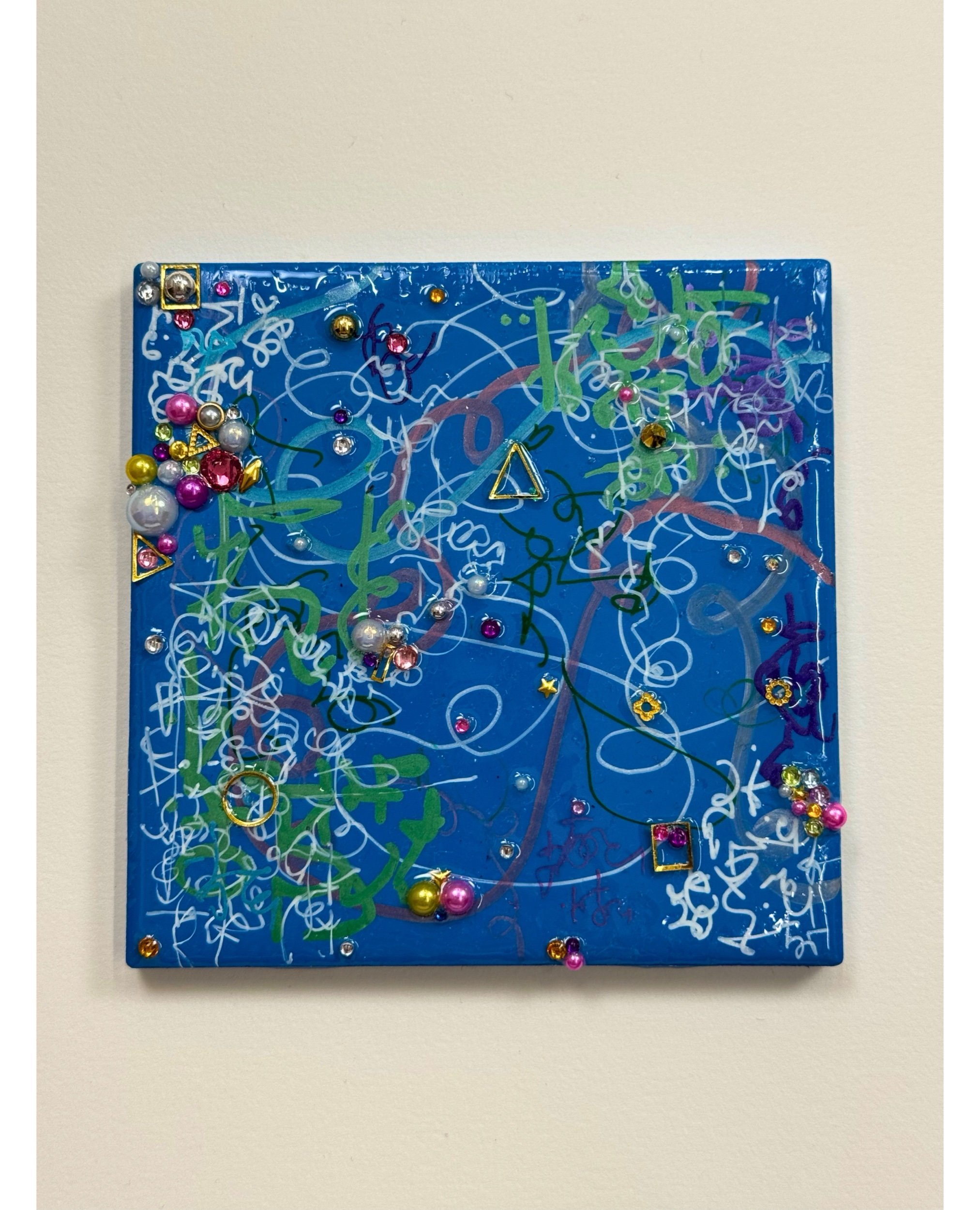
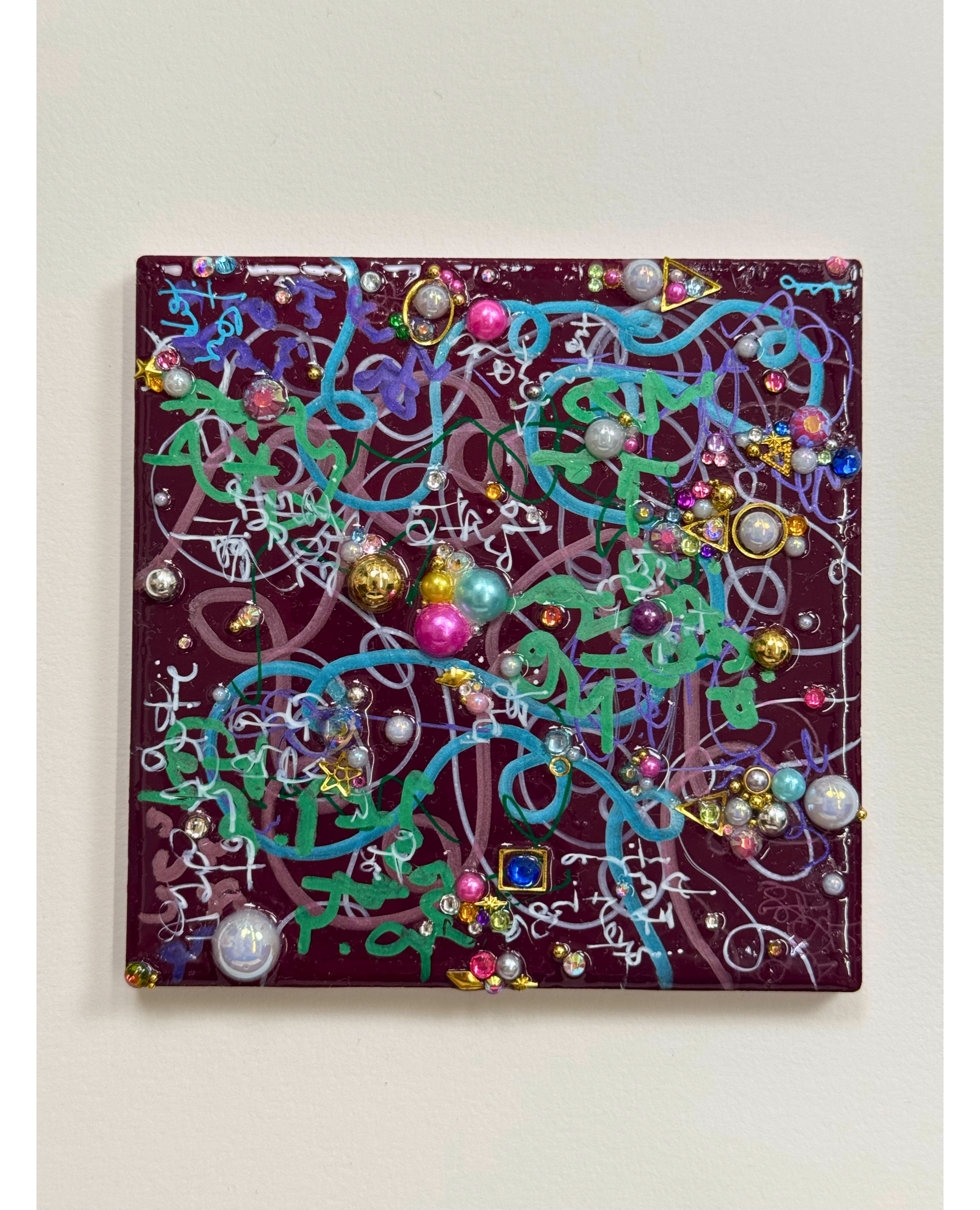
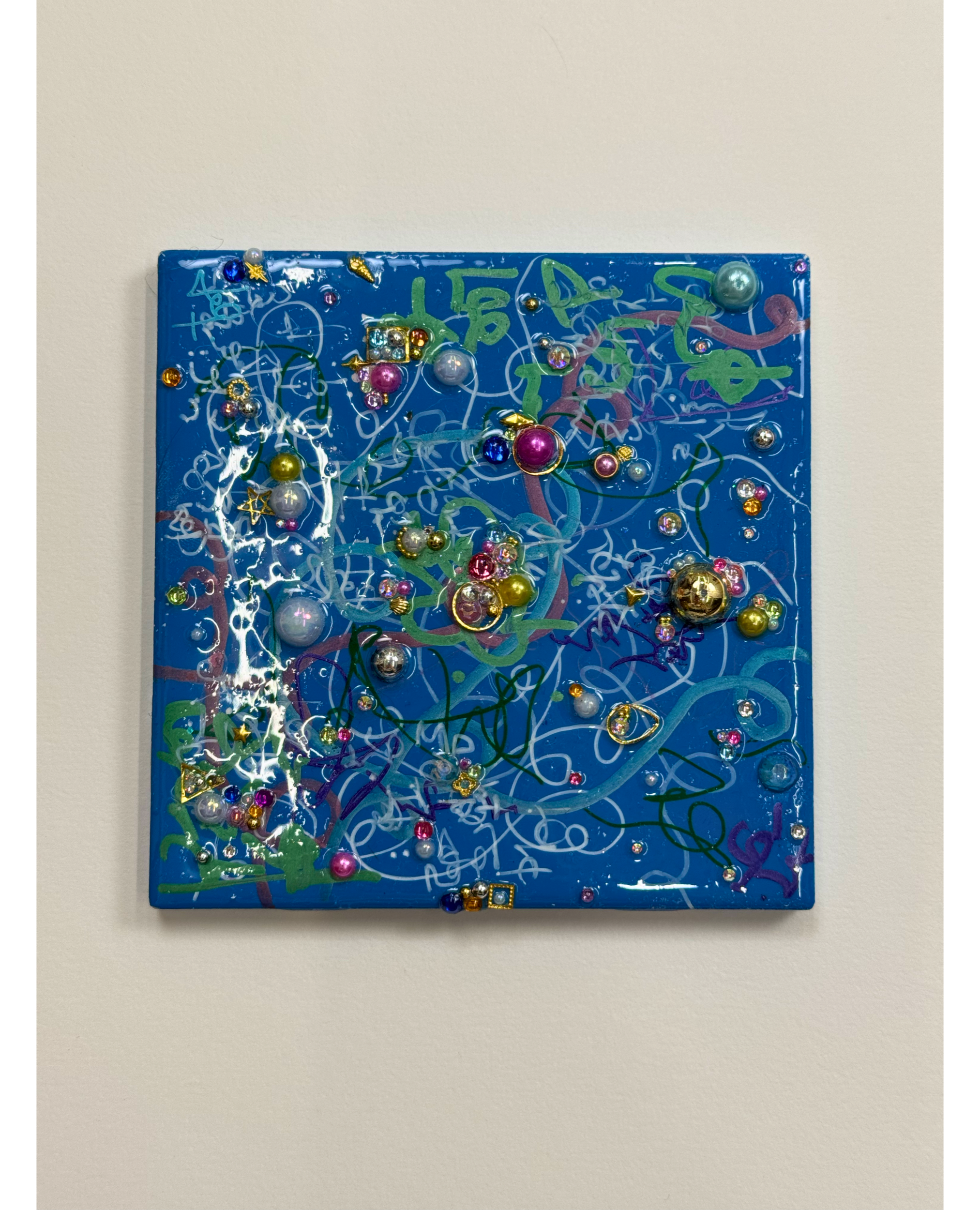
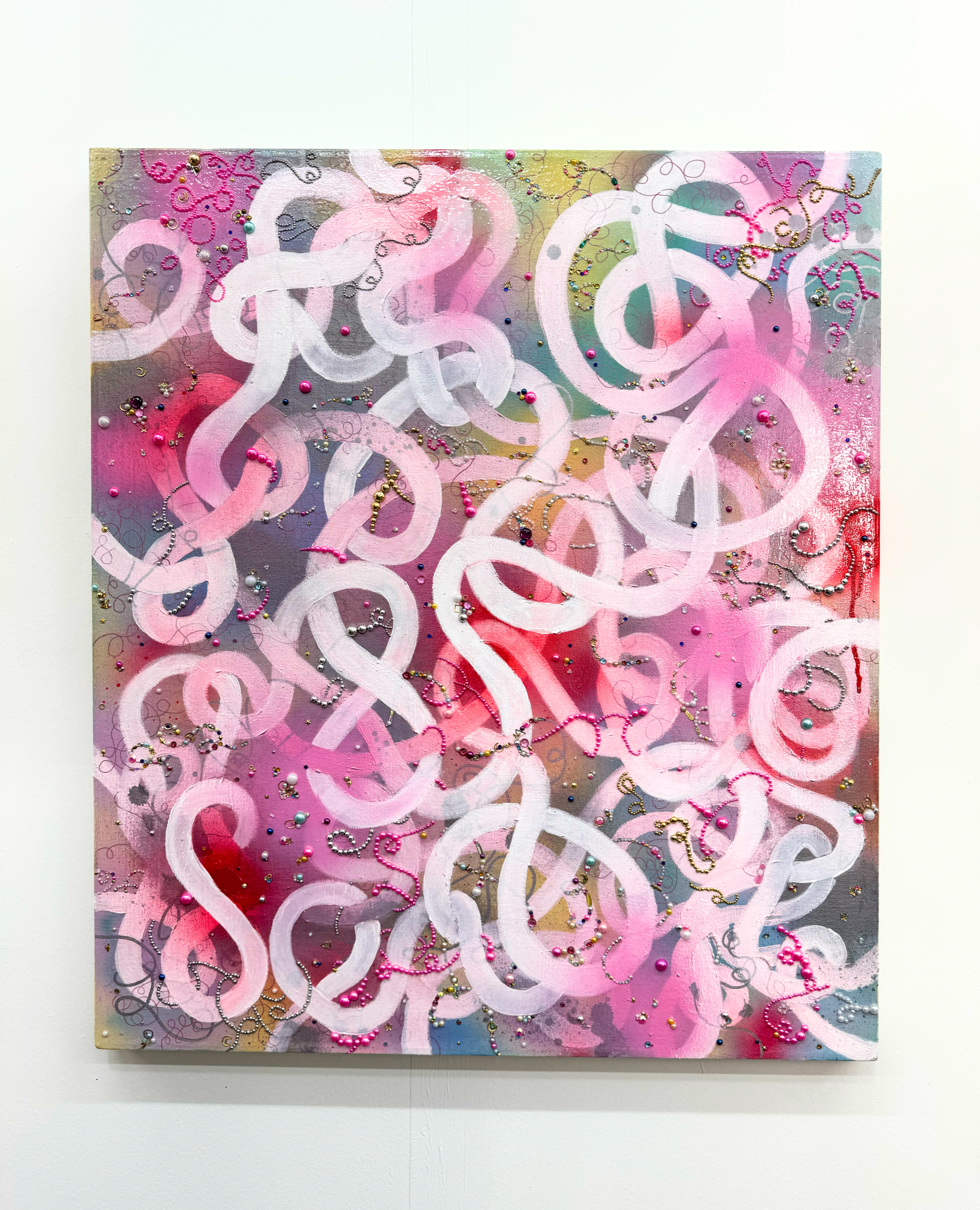
Storytelling in Gotham Artist Statement:
“The erotic is a measure between the beginnings of our sense of self and the chaos of our strongest feelings.”
“Recognizing the power of the erotic within our lives can give us the energy to pursue genuine change in our world, rather than merely settling for a shift of characters in the same weary drama.” – Audre Lorde, Uses of the Erotic
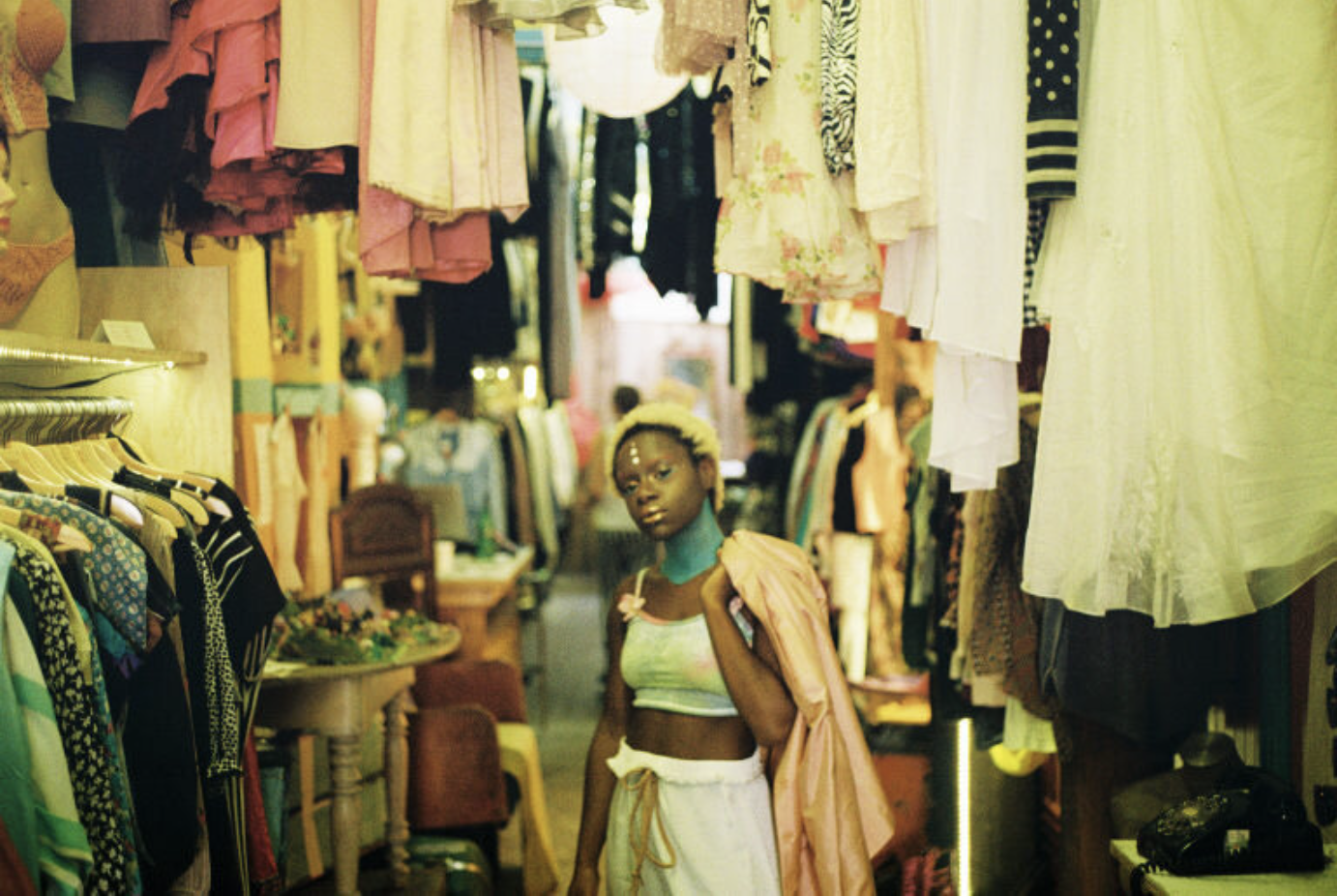
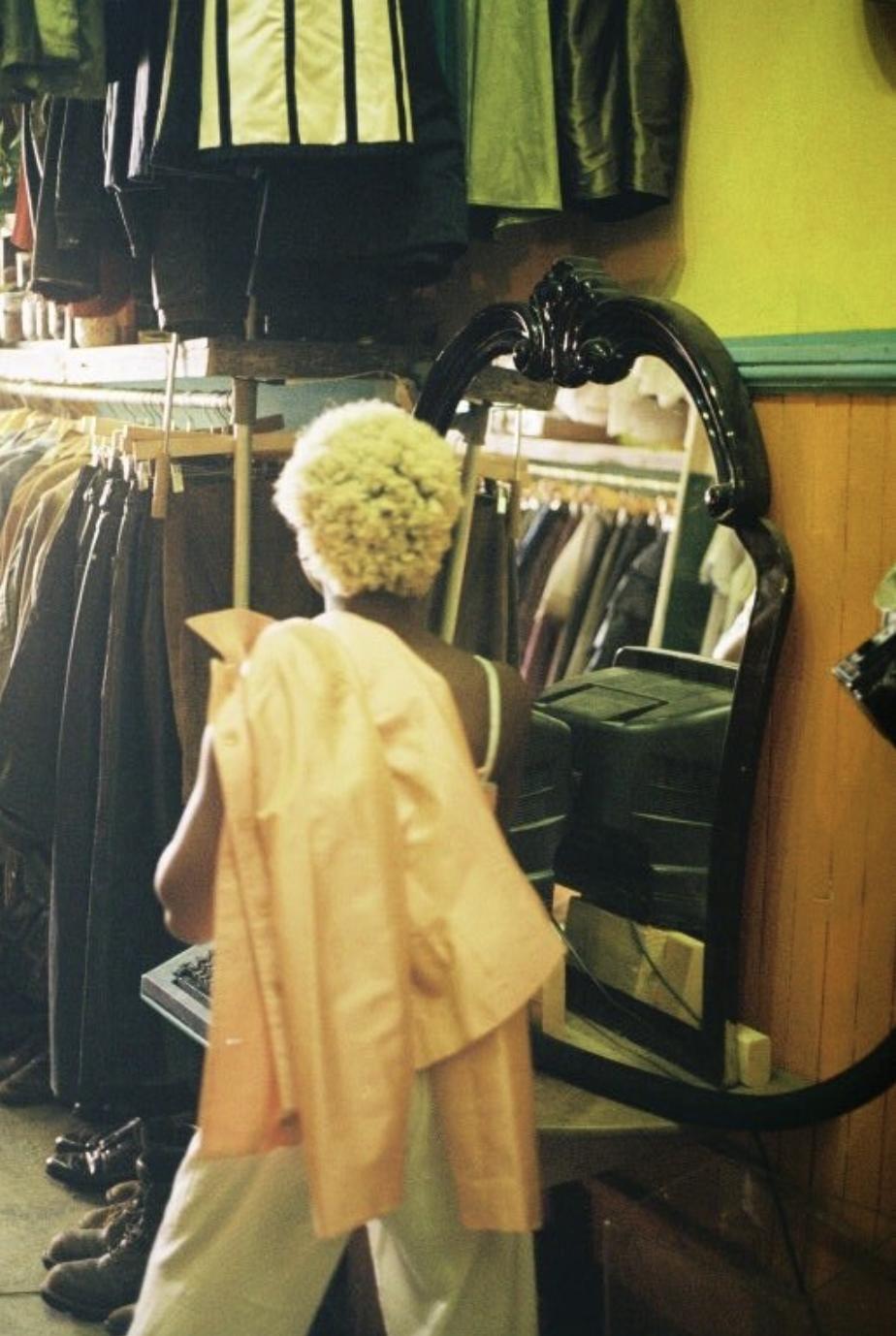
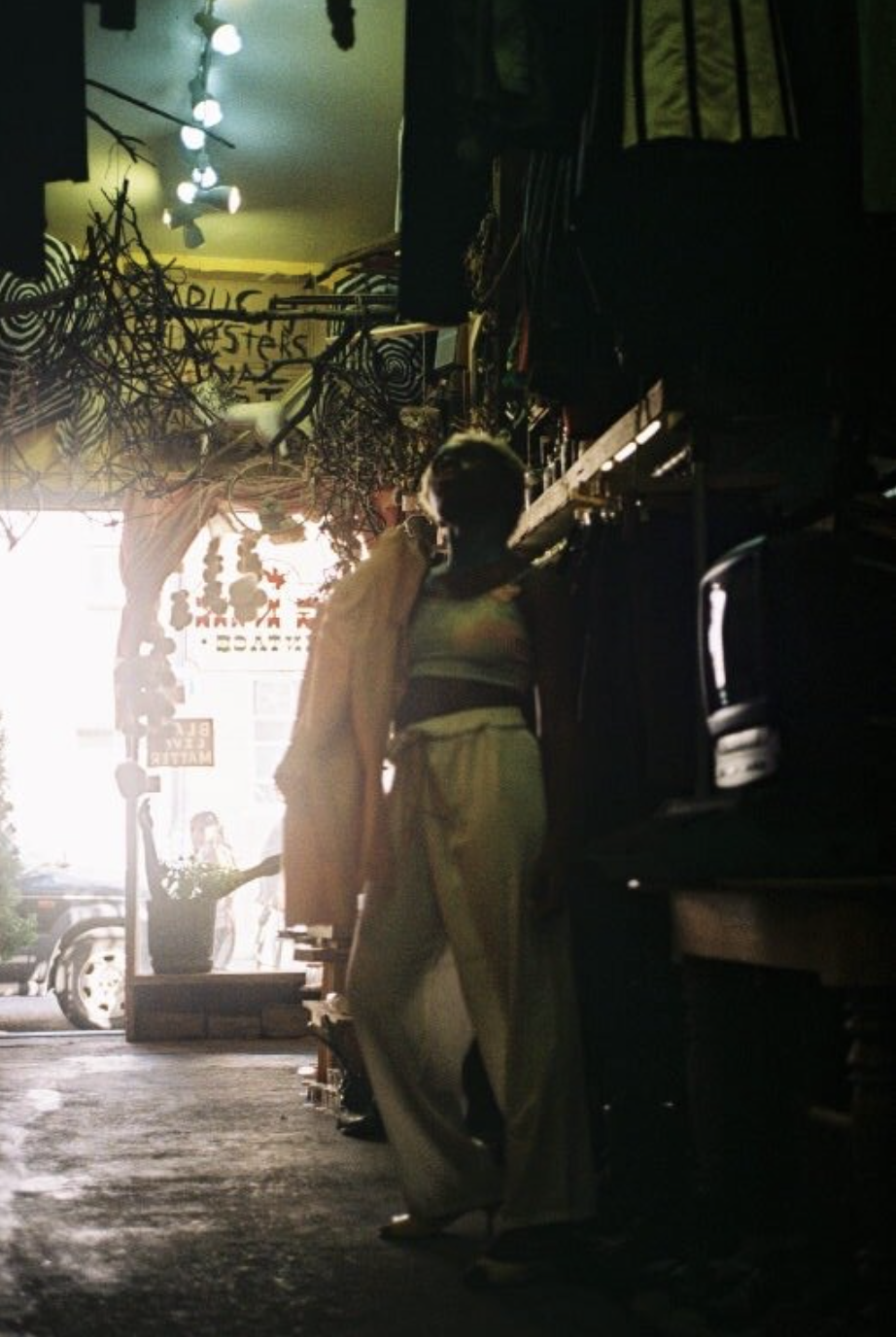
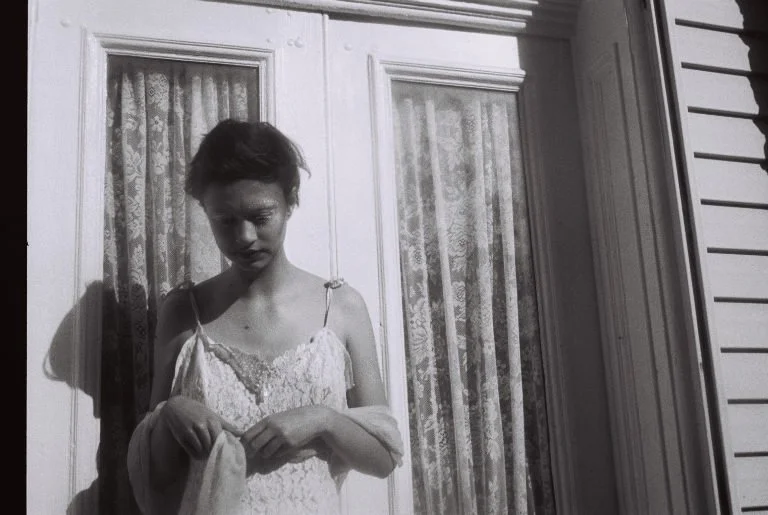
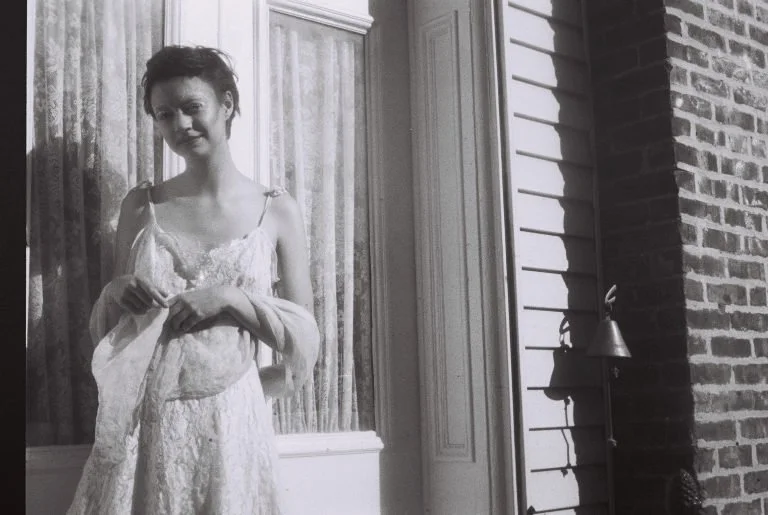
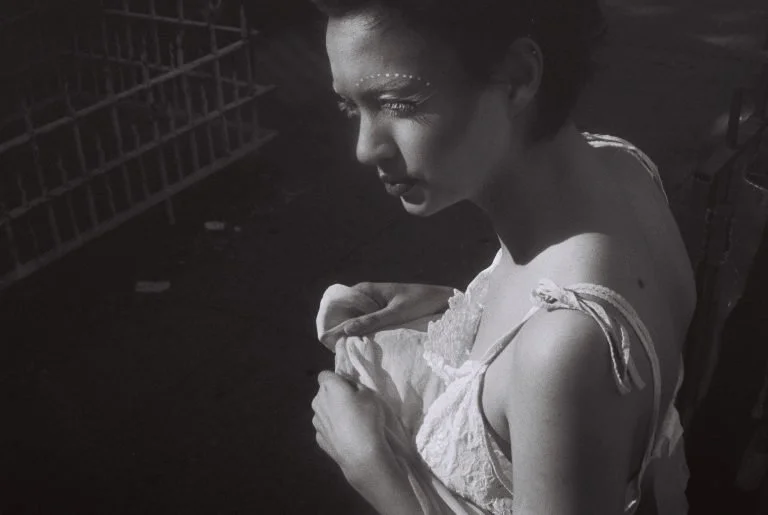
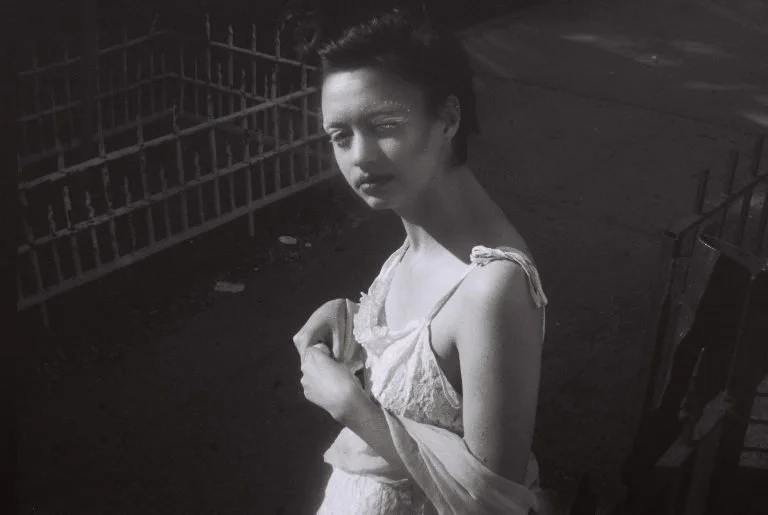
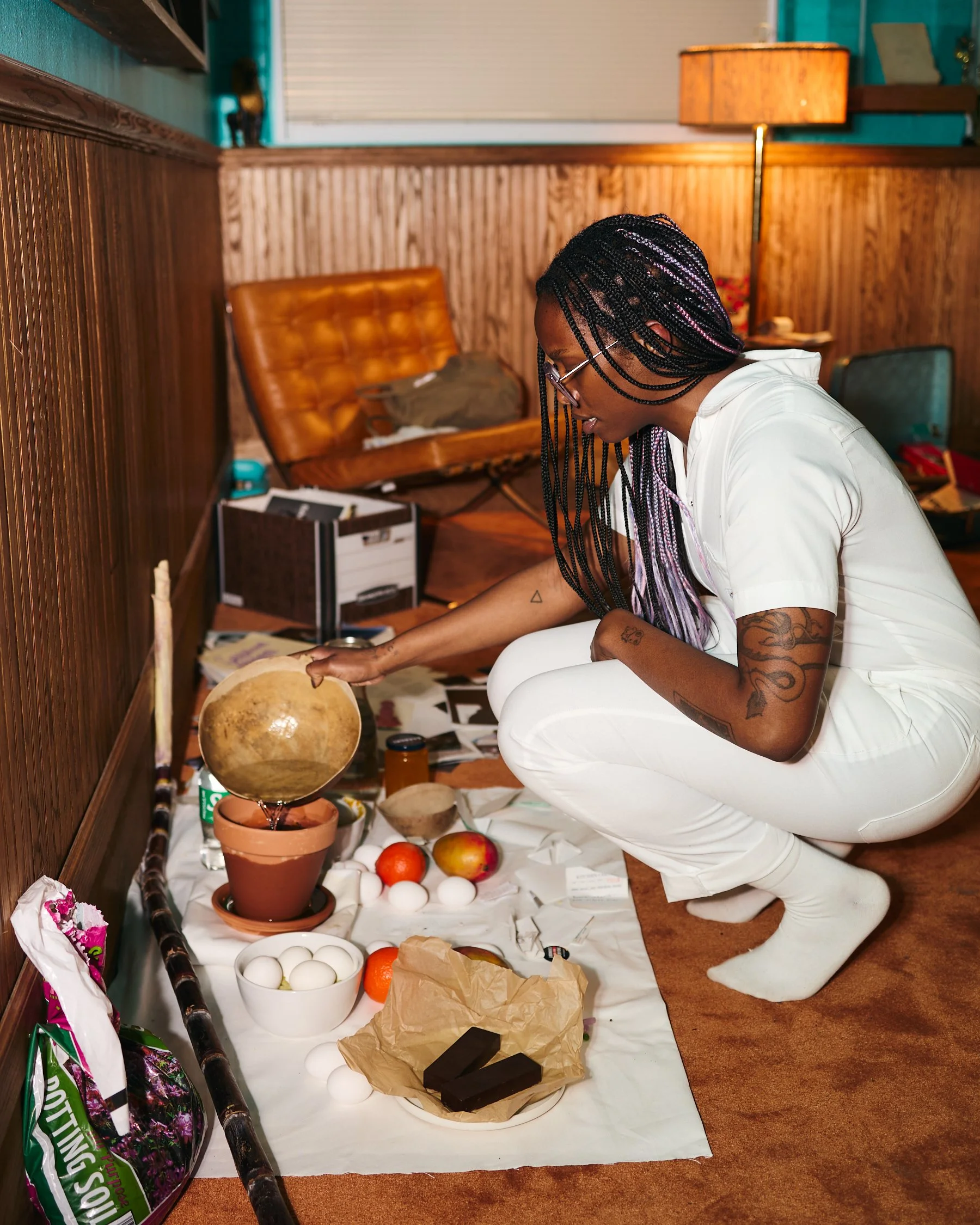
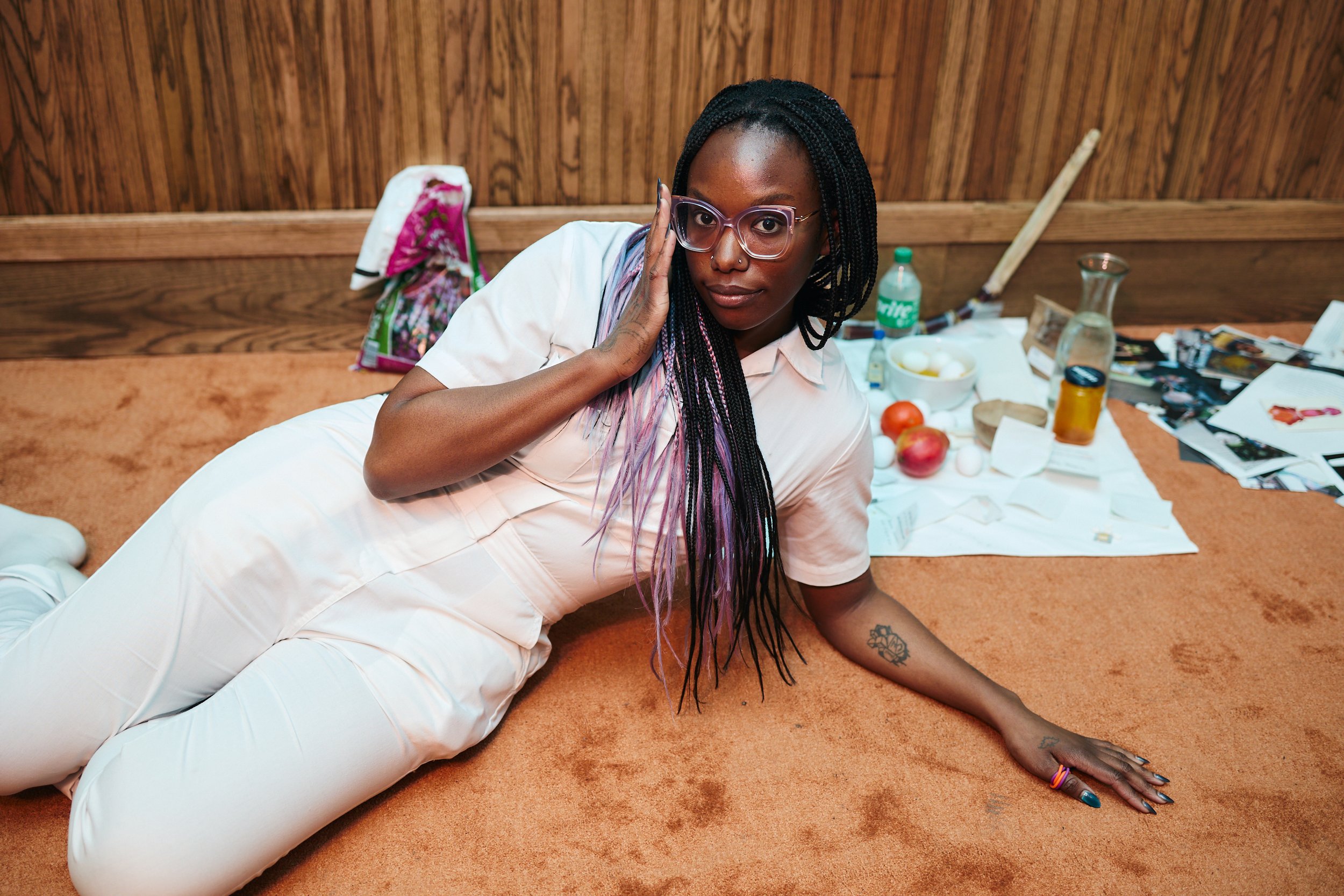
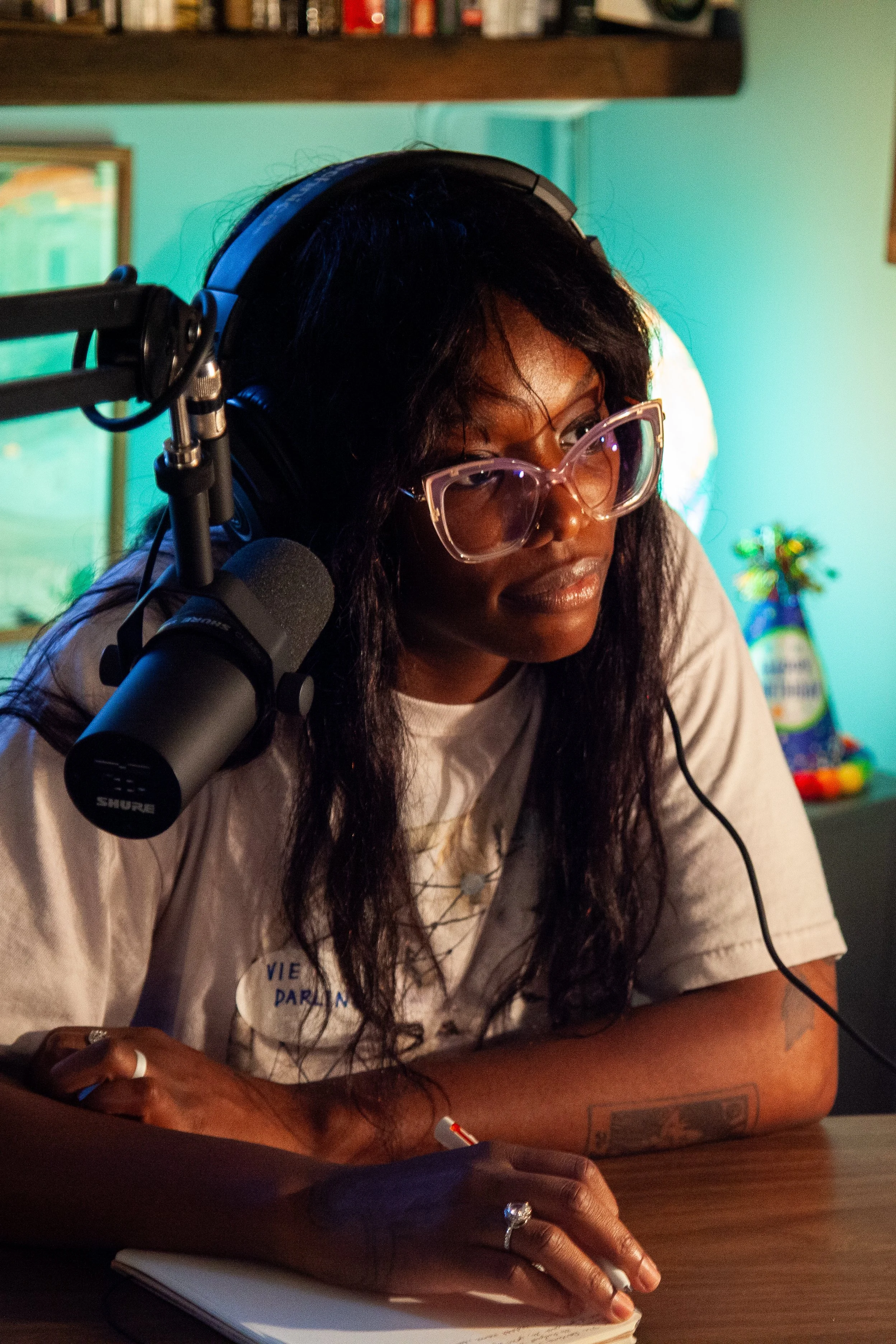
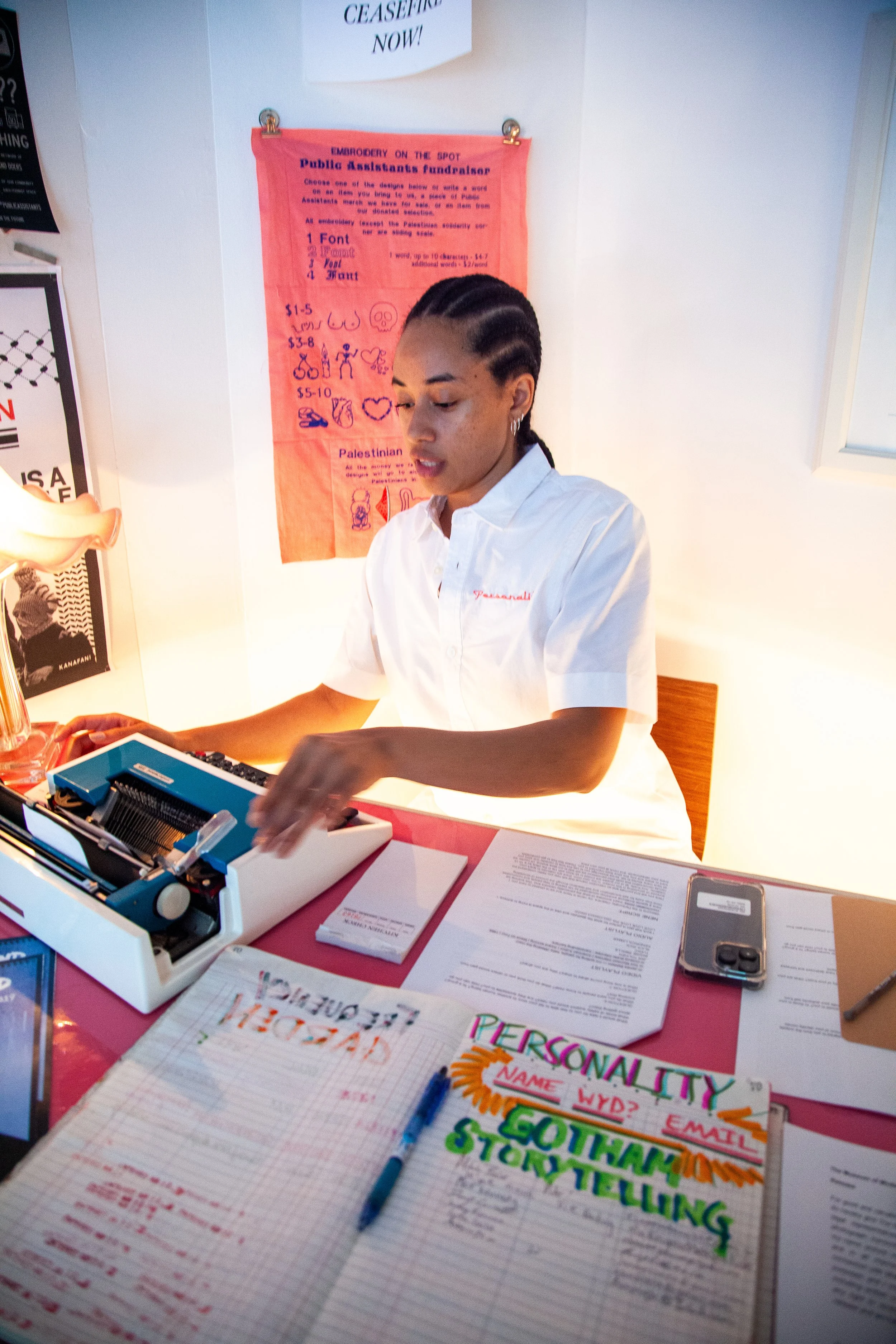
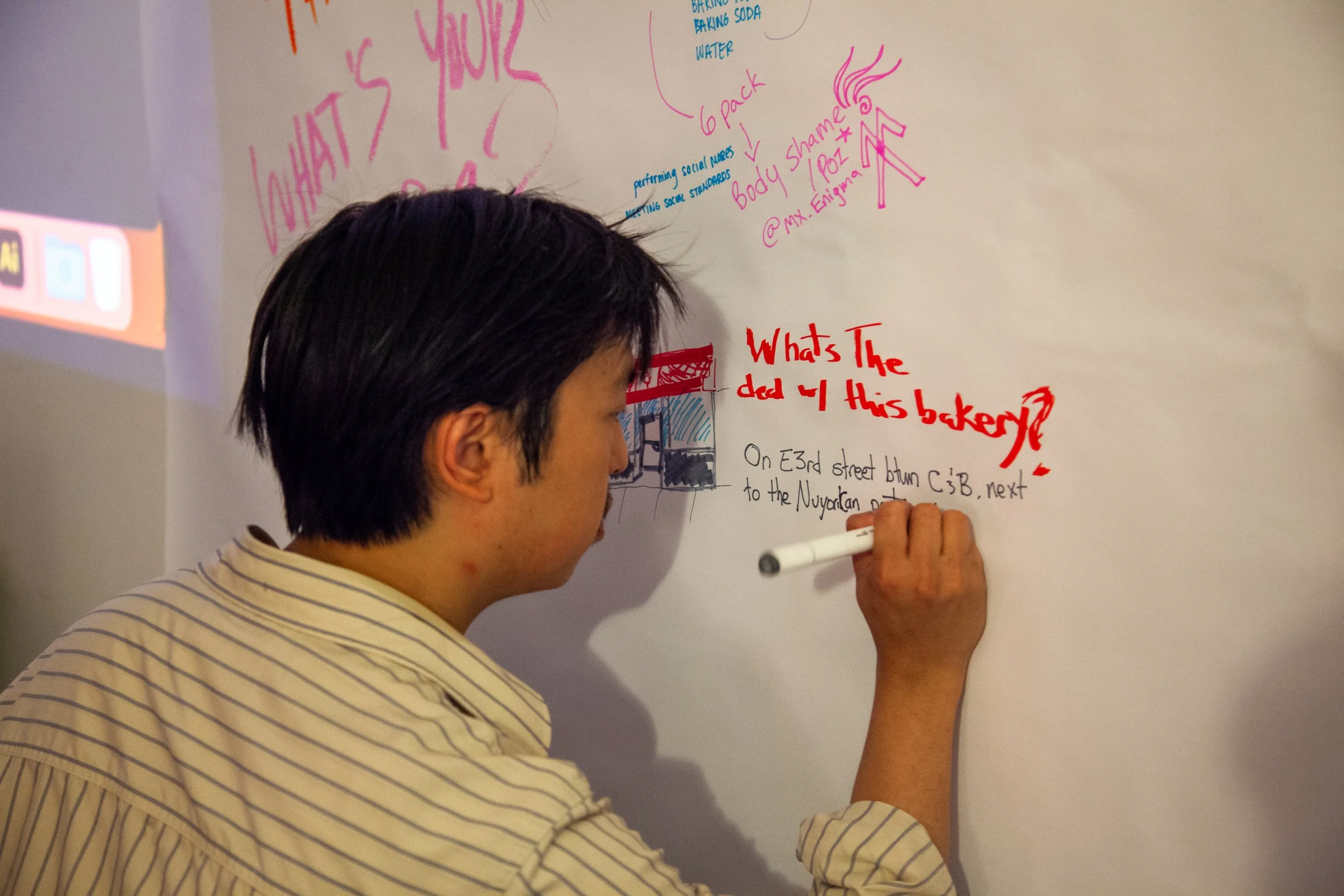
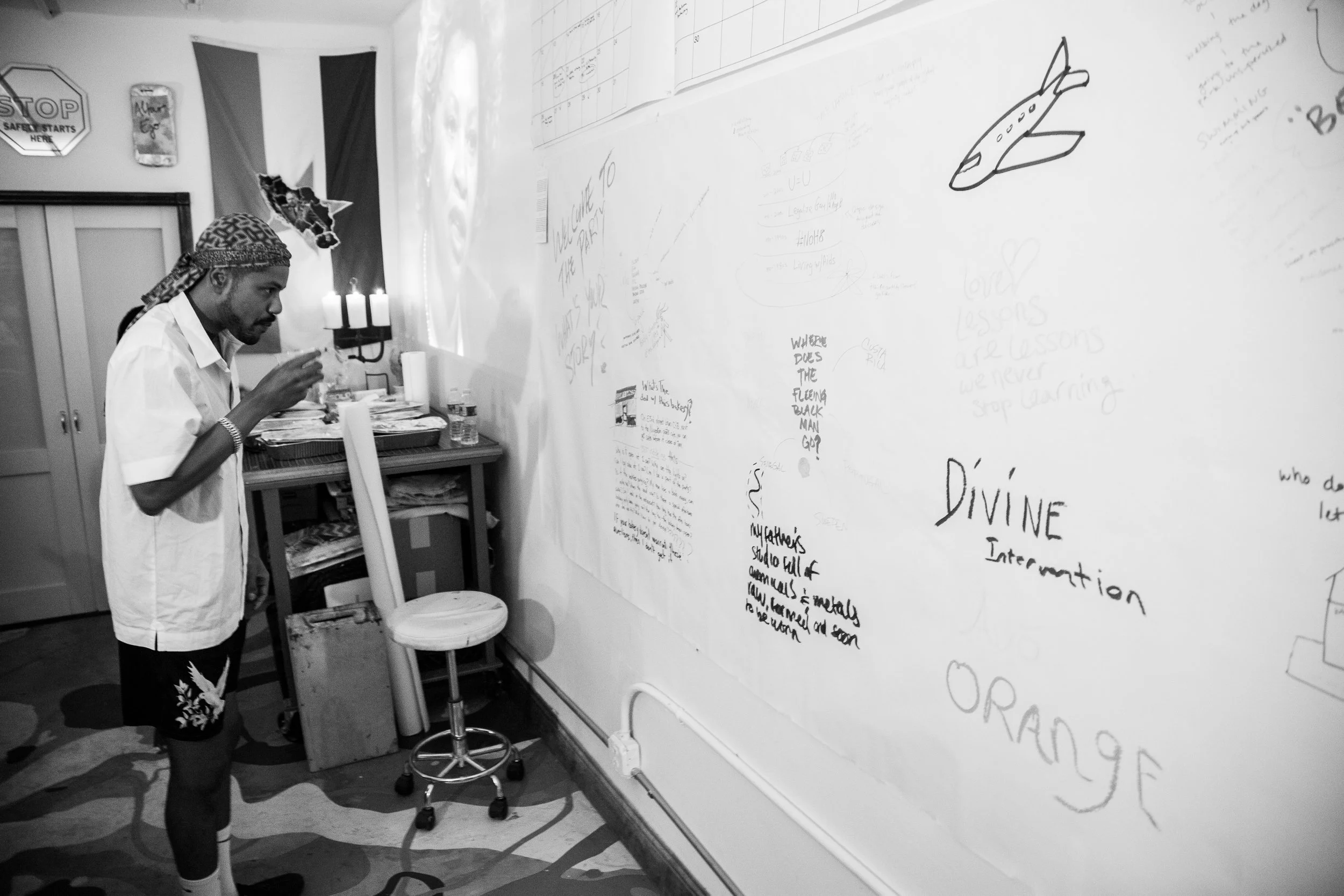
This activation of DonChristian’s The Sumptuous Discovery of Gotham A Go-Go creates a sanctified container for presence, allowing for the safety that foregrounds truth. Here, we transcend performance as spectacle and enter into a realm of performance as ceremony, in which intimacy and the body become the medium, the archive, the resistance.
Drawing from the emotional minimalism of Félix González-Torres and the audacious materiality of Pope.L, this work invites participants into a temporary autonomous zone where the spoken word becomes spellwork and silence, a portal. Rooted in Black feminist theory and my own framework of Spiritual Abolition, this holding of space centers love as method—in the tradition of bell hooks—not only to model but to practice sovereignty, sanity, and safety in a world structured by trauma, codependence, and domination. Not in isolation, but interdependently. Not in theory, but praxis.
My practice draws from the world-building ethos of David Hammons, whose performances liberated art from institutional boundaries by rooting it in everyday objects and public encounters. I am interested in performance as invocation, not intervention—a confrontation with truth that takes place in a space evoking a sense of home, of comfort, of familiarity. But what is familiar is not always what is safe; what is comfortable is not always beneficial.
Foregrounded by hooks’ assertion that love cannot coexist with abuse, we endeavor to subvert the spectacle, the performance, the illusion of colonial domesticity and all its associations, thereby disrupting the unspoken epidemic that is domestic abuse. The idea that “home is where the heart is” and that family equates to sanctuary is a cultural fiction binding us to a failed project and a foregone conclusion. In truth, for many of us, the words of Gil Scott-Heron ring more true: “Home is where the hatred is.”
While Scott-Heron was speaking to his experience as a Black man in America (and more largely, the Euro-Colonial Matrix) —where being the victim of abuse is taboo and being the abuser is normalized—the macrocosmic insanity entrenches itself in each microcosm. One enforces the other, validating and affirming it. I disrupt the unconscious ritual of performing “family values”—a ritual that serves as a veil to obfuscate and disappear deep violence—, instead leaning into the hard, unglamorous labor of healing and embodied presence. Through being confronted with the reality of unconditional love, we expose the somatic truth of the little (and large) ways interpersonal (and interfamilial) abuse has been systemically normalized and propagated.
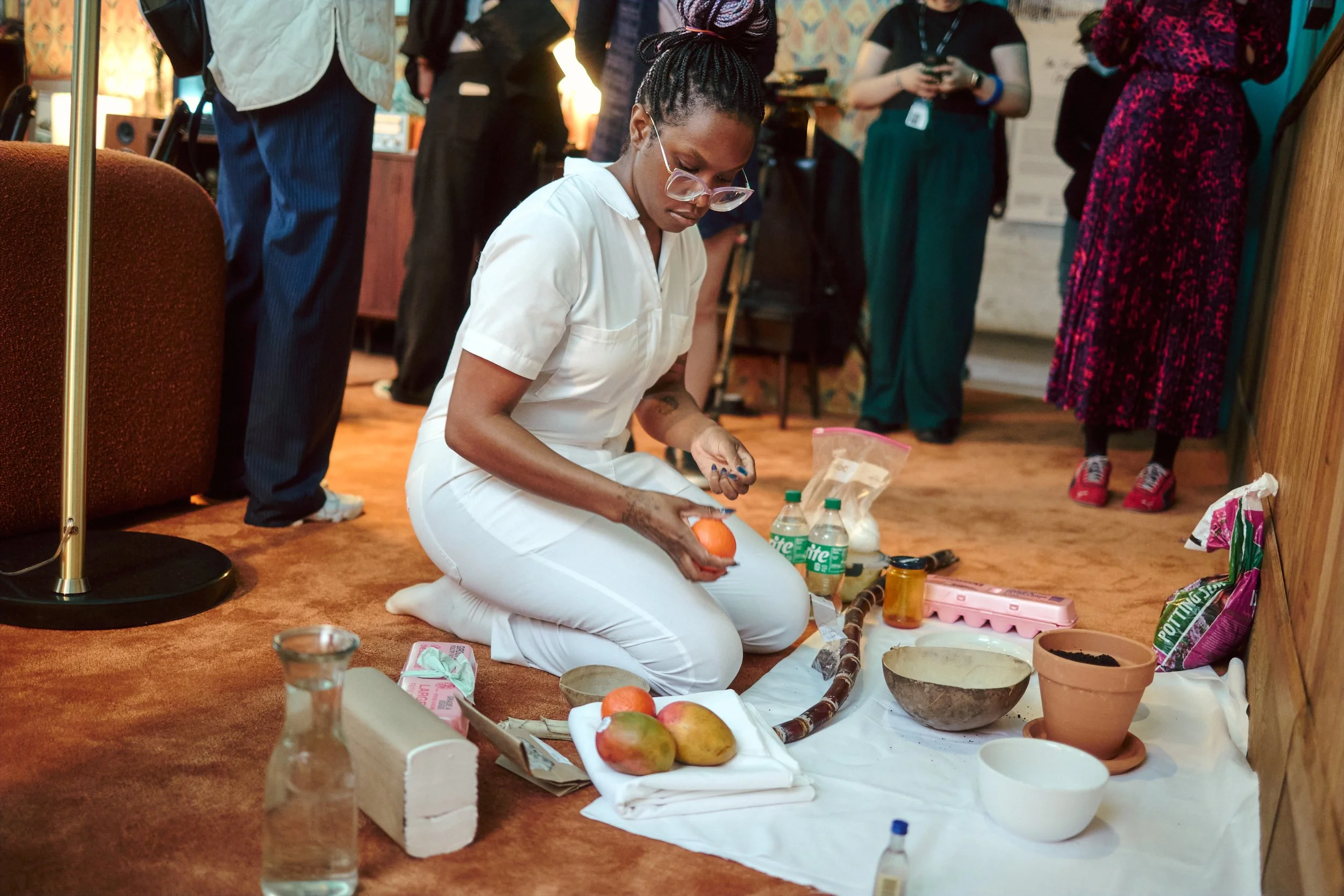
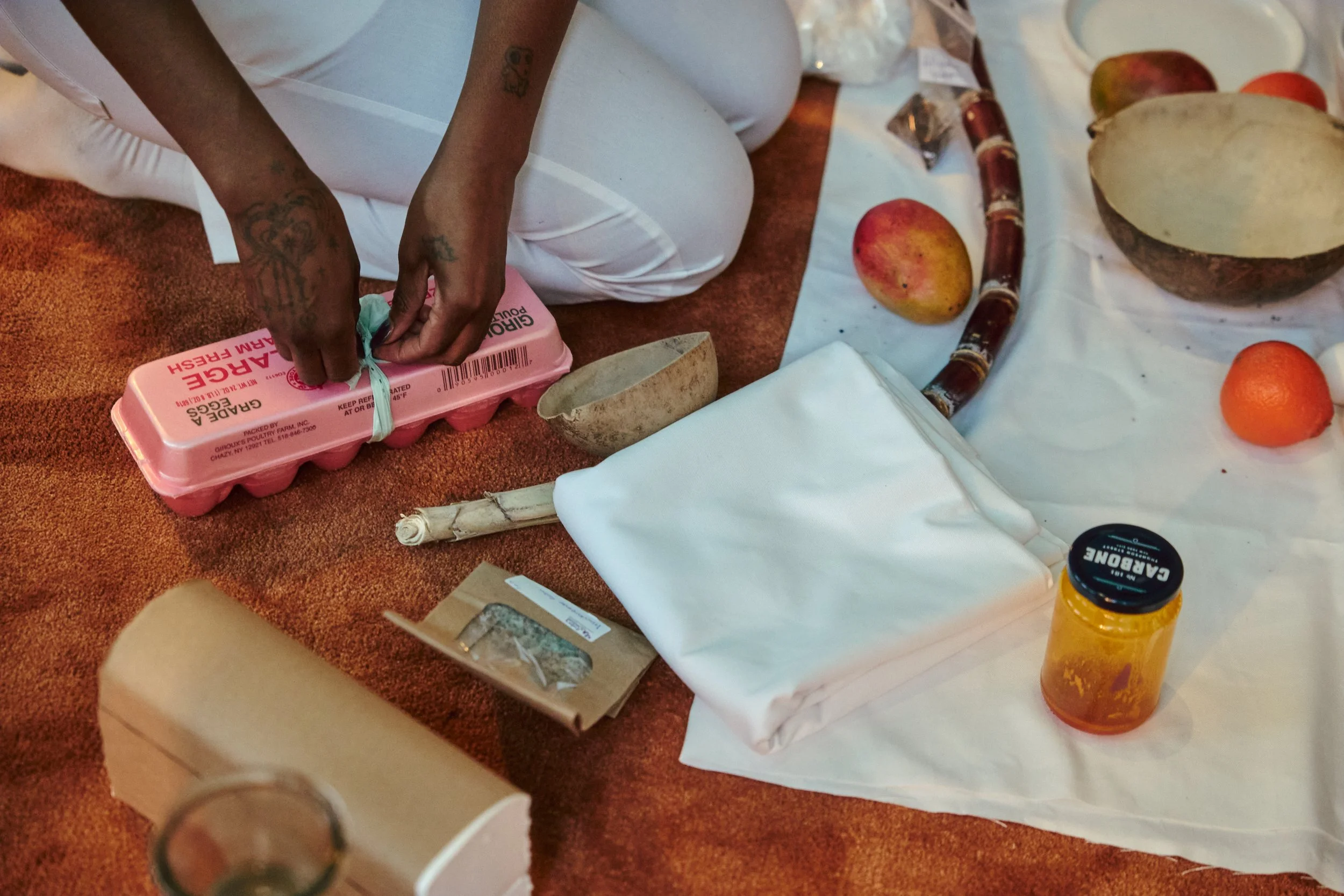
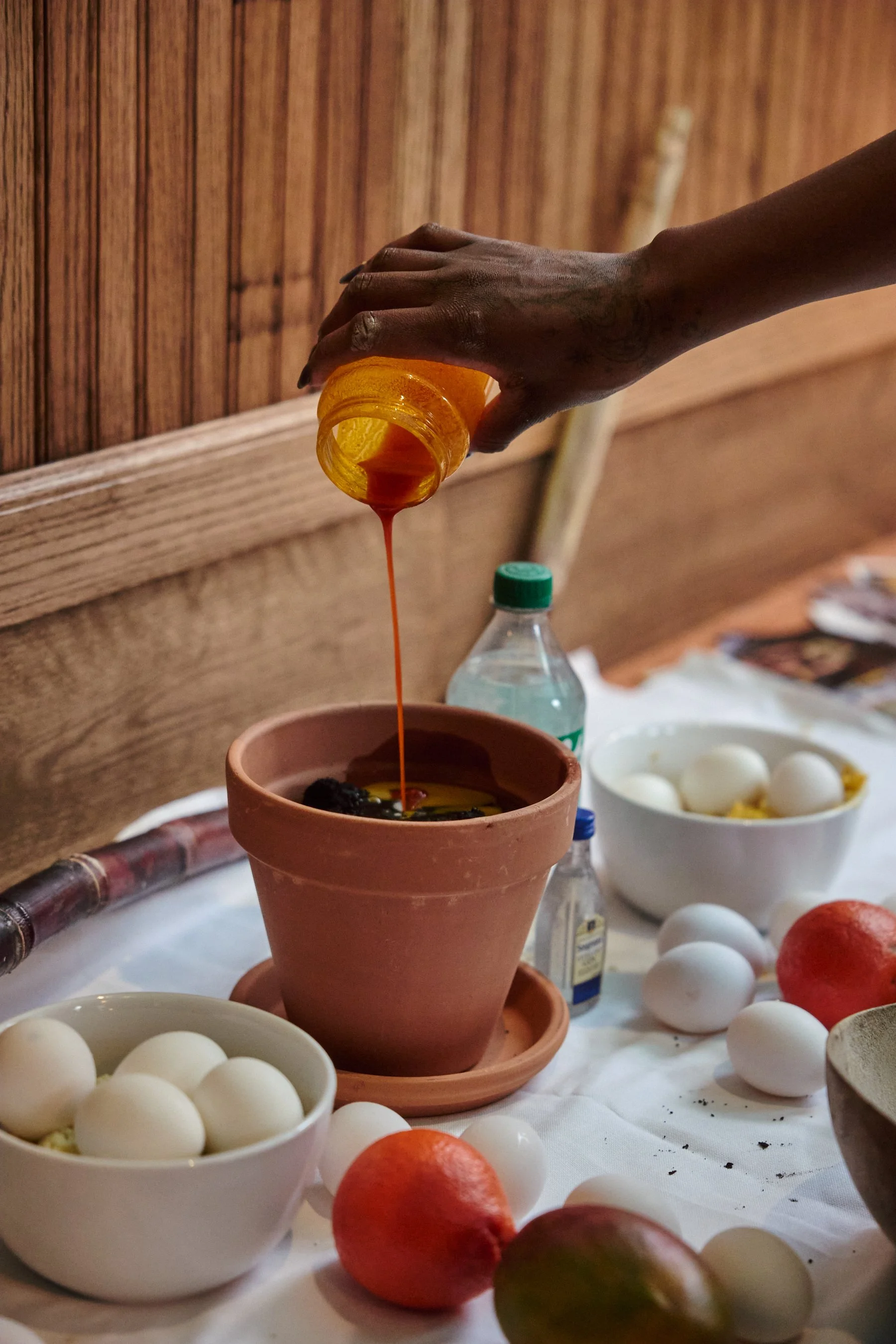
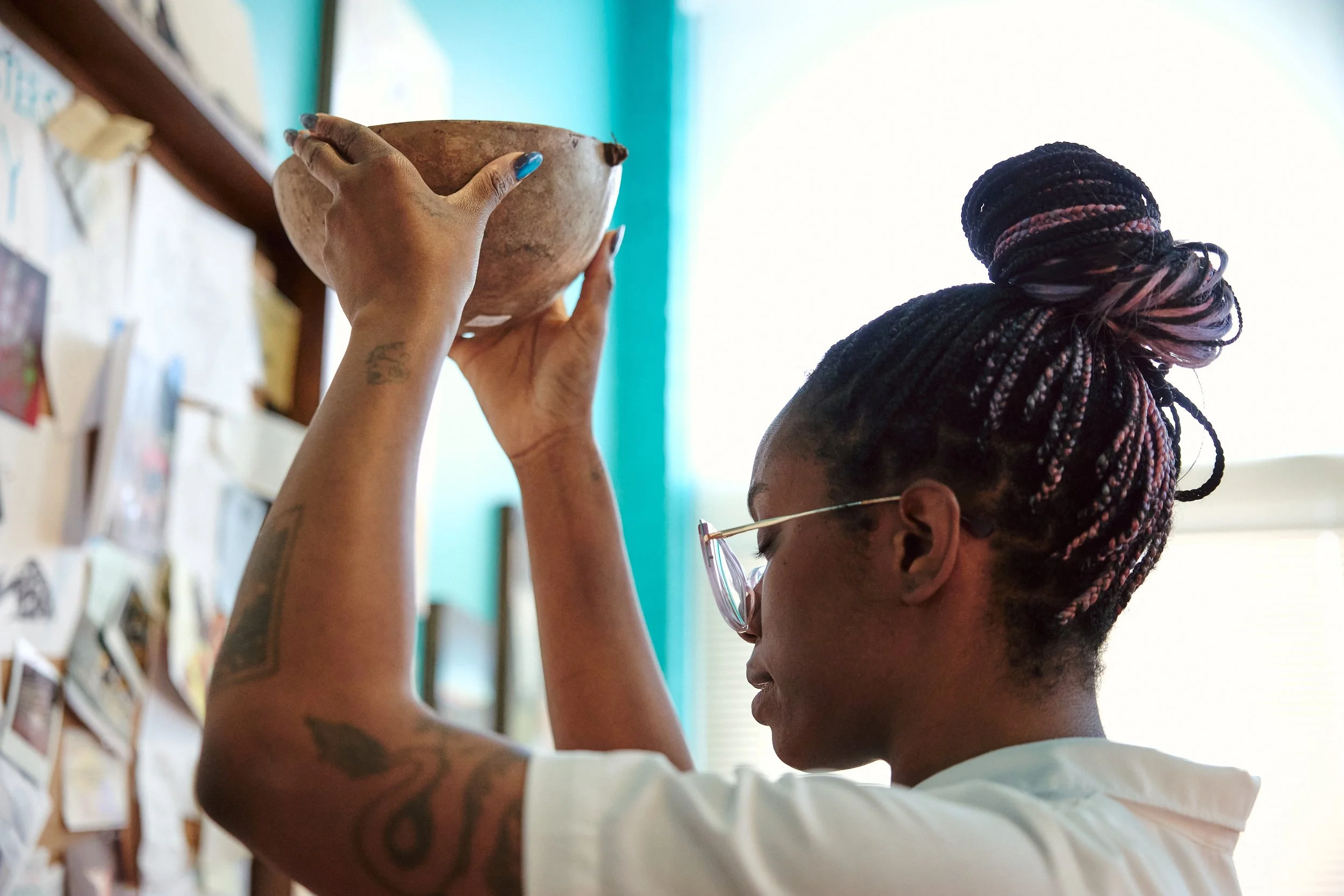
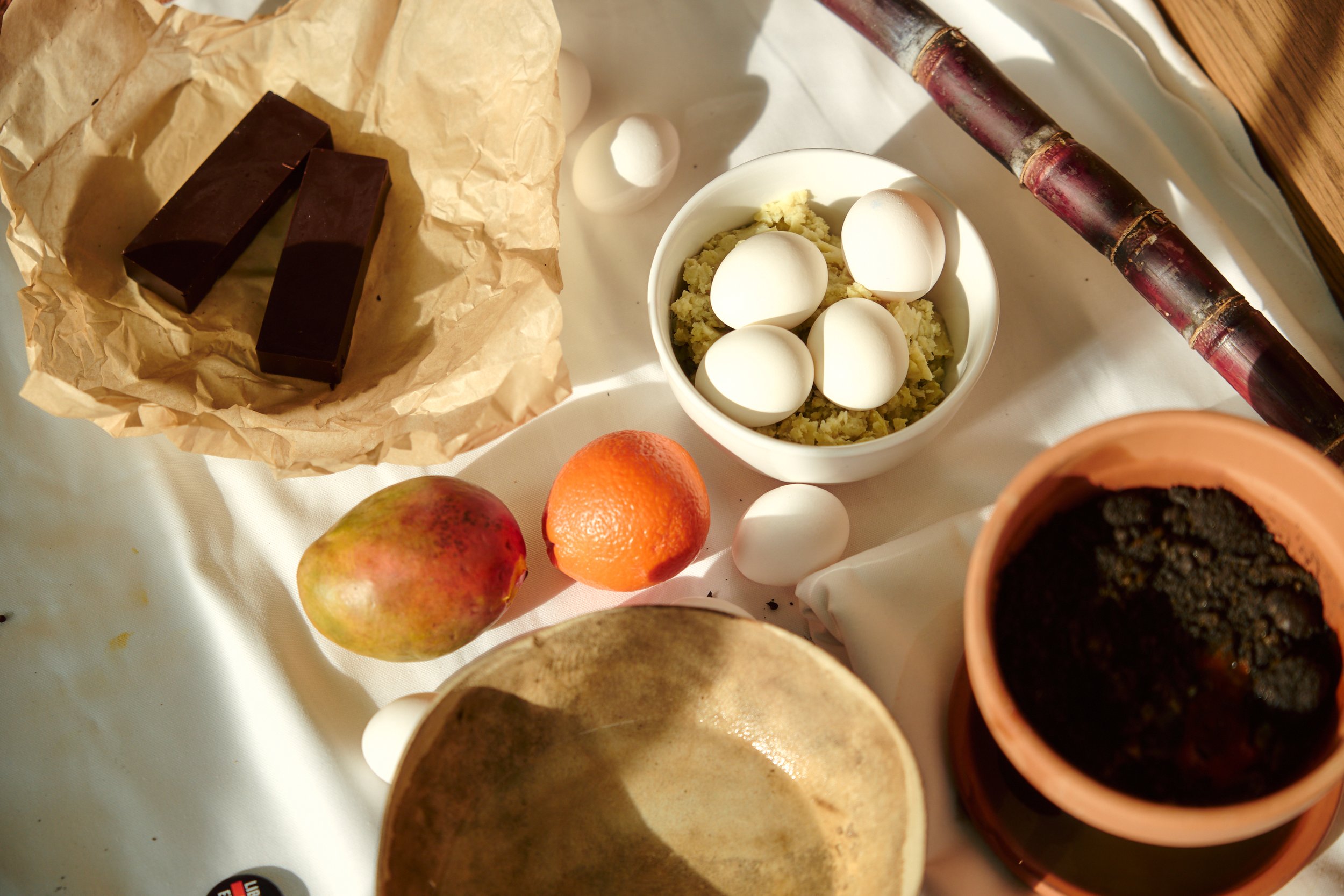
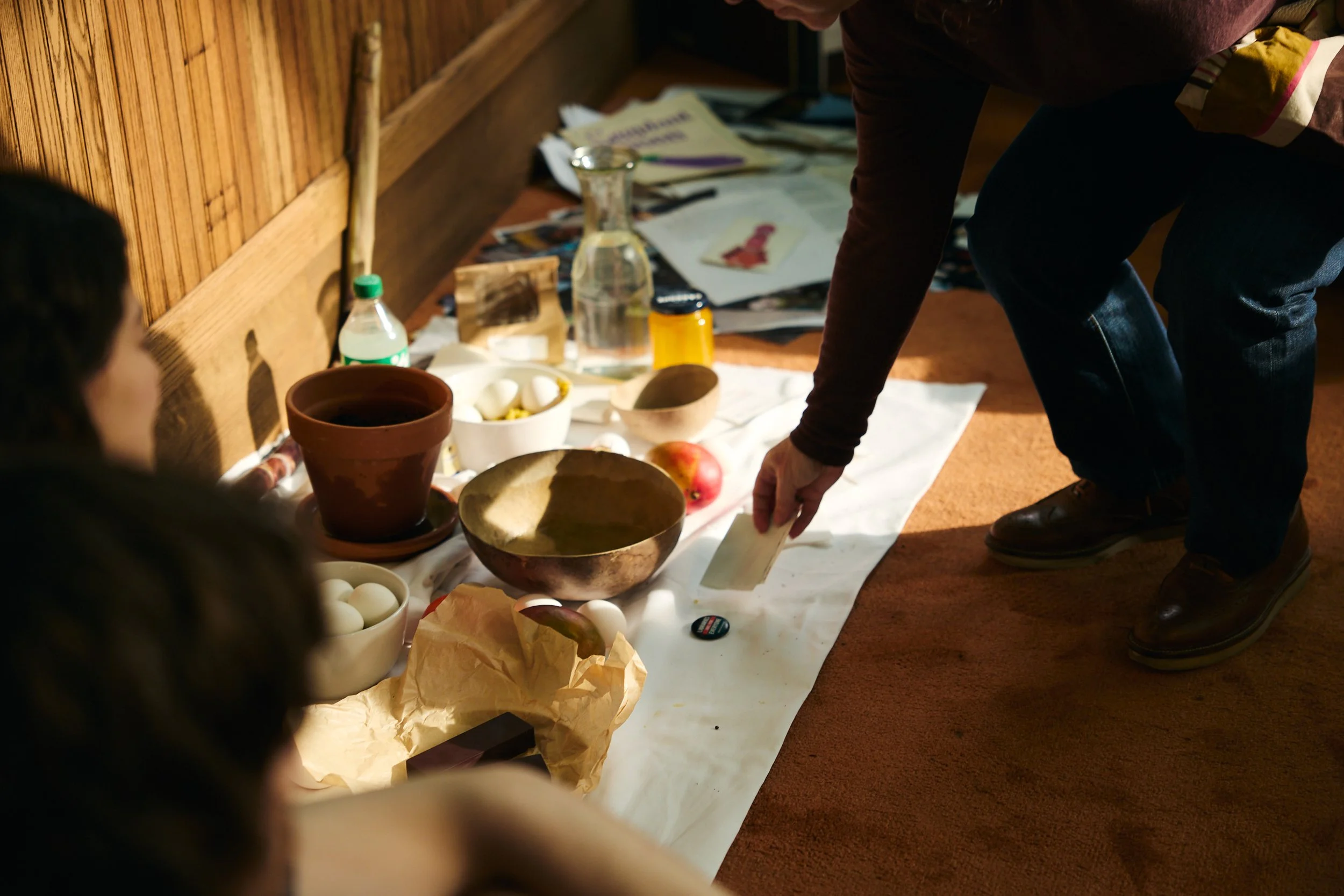
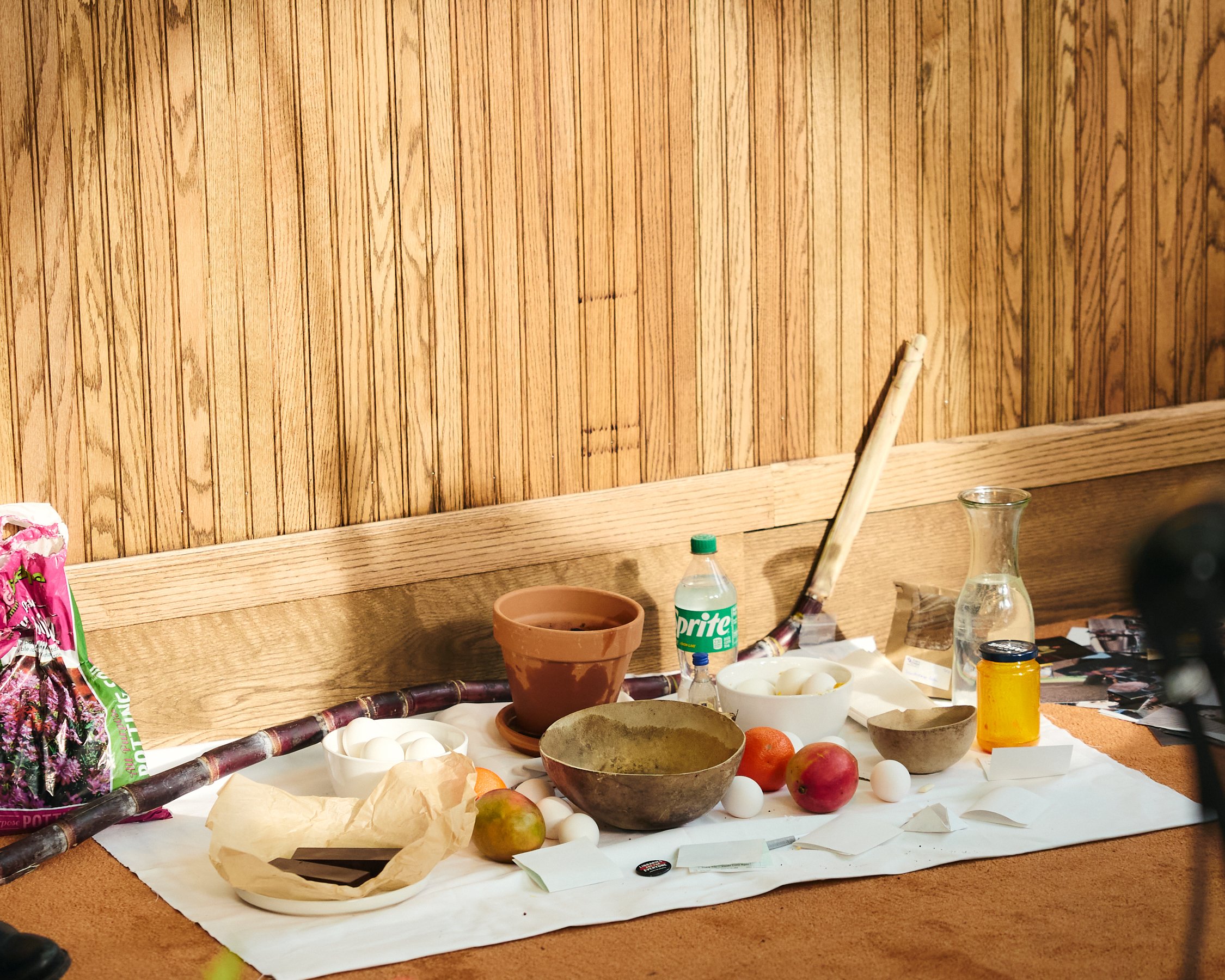
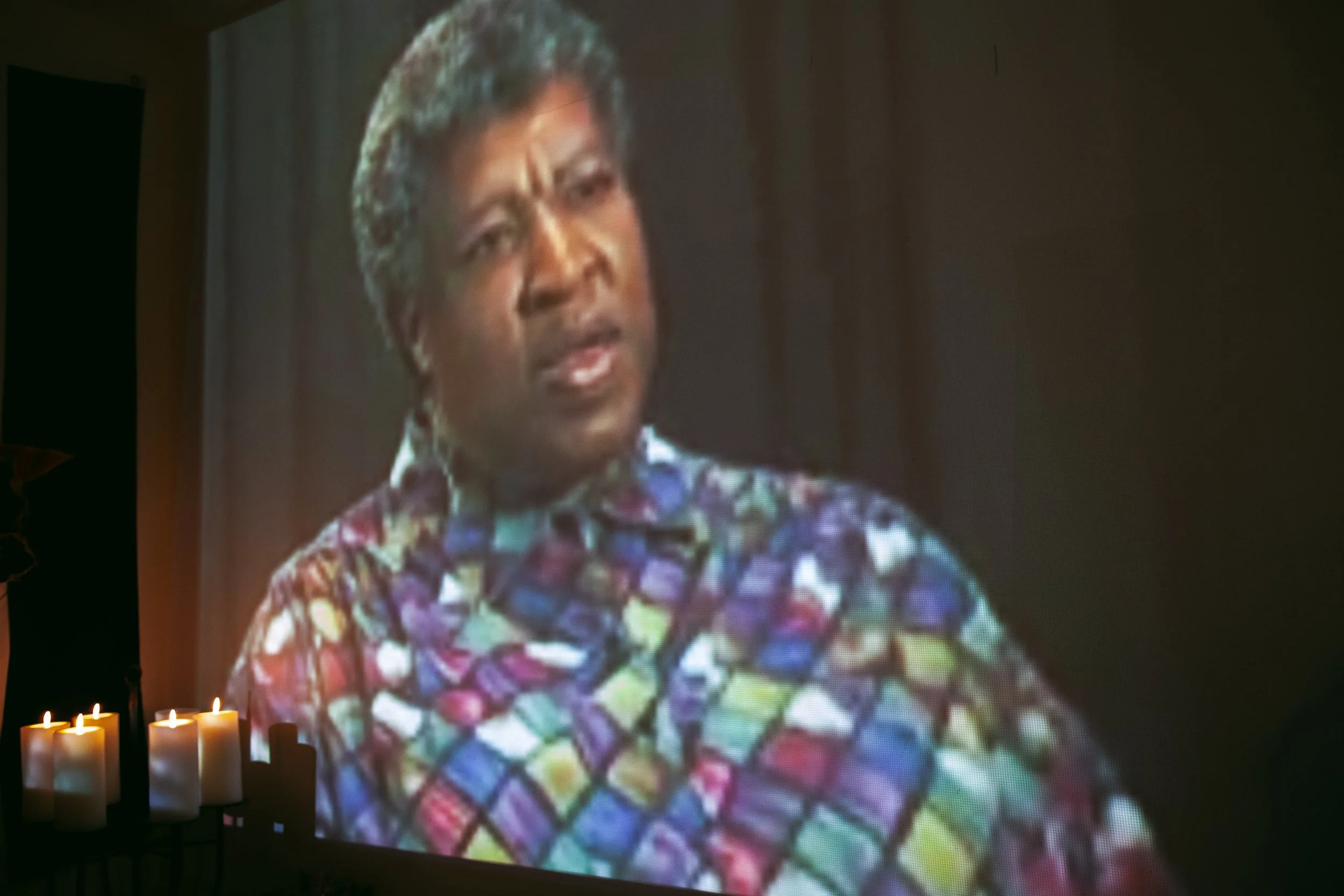
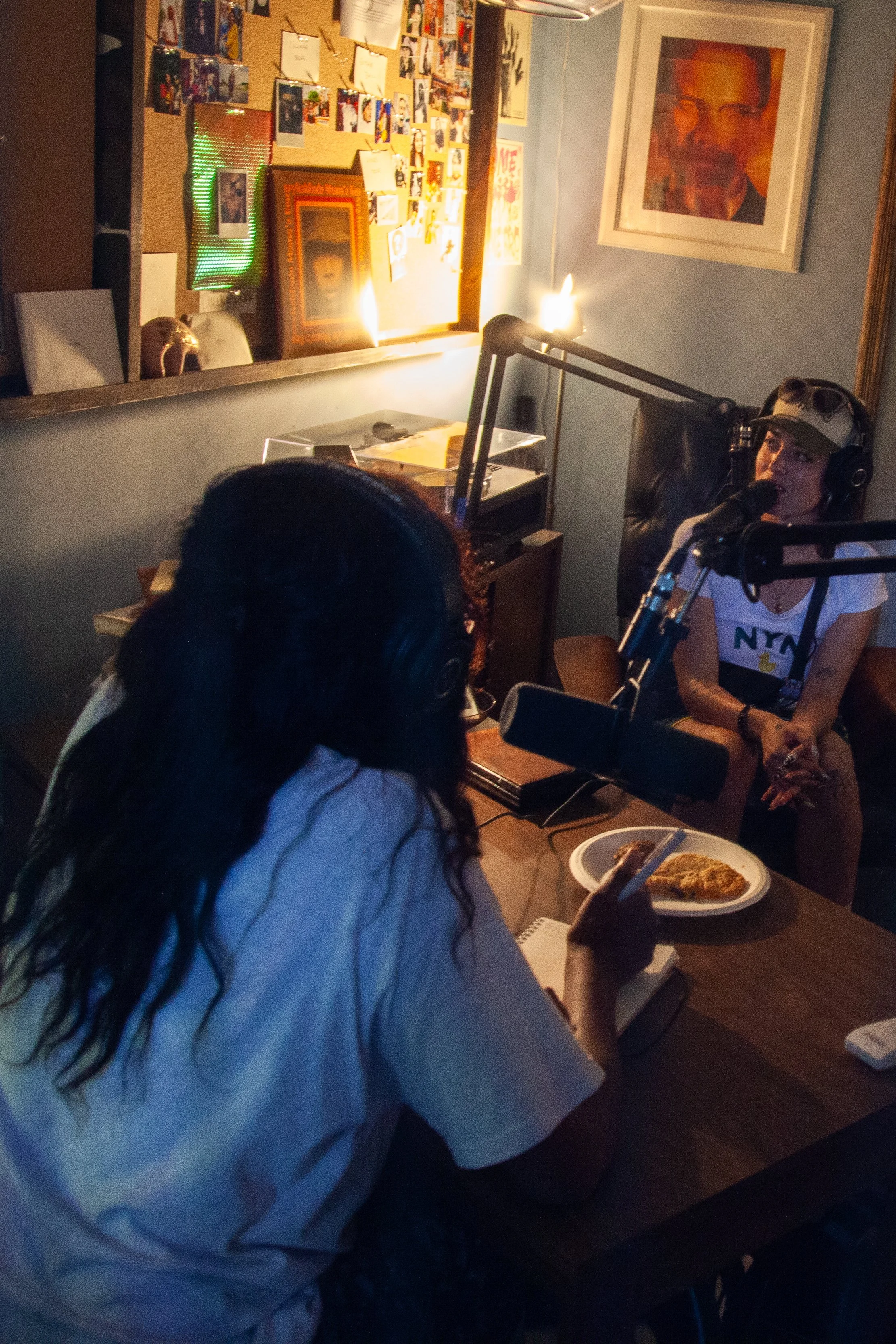
I open the space with the pouring libations: an ancient and living offering to the Ancestors—mine, Don’s, the Lenape stewards of this land, and those who walk beside each person who sits with me. The ritual grounds the space in lineage and intentionality, facing East, the direction of new beginnings.
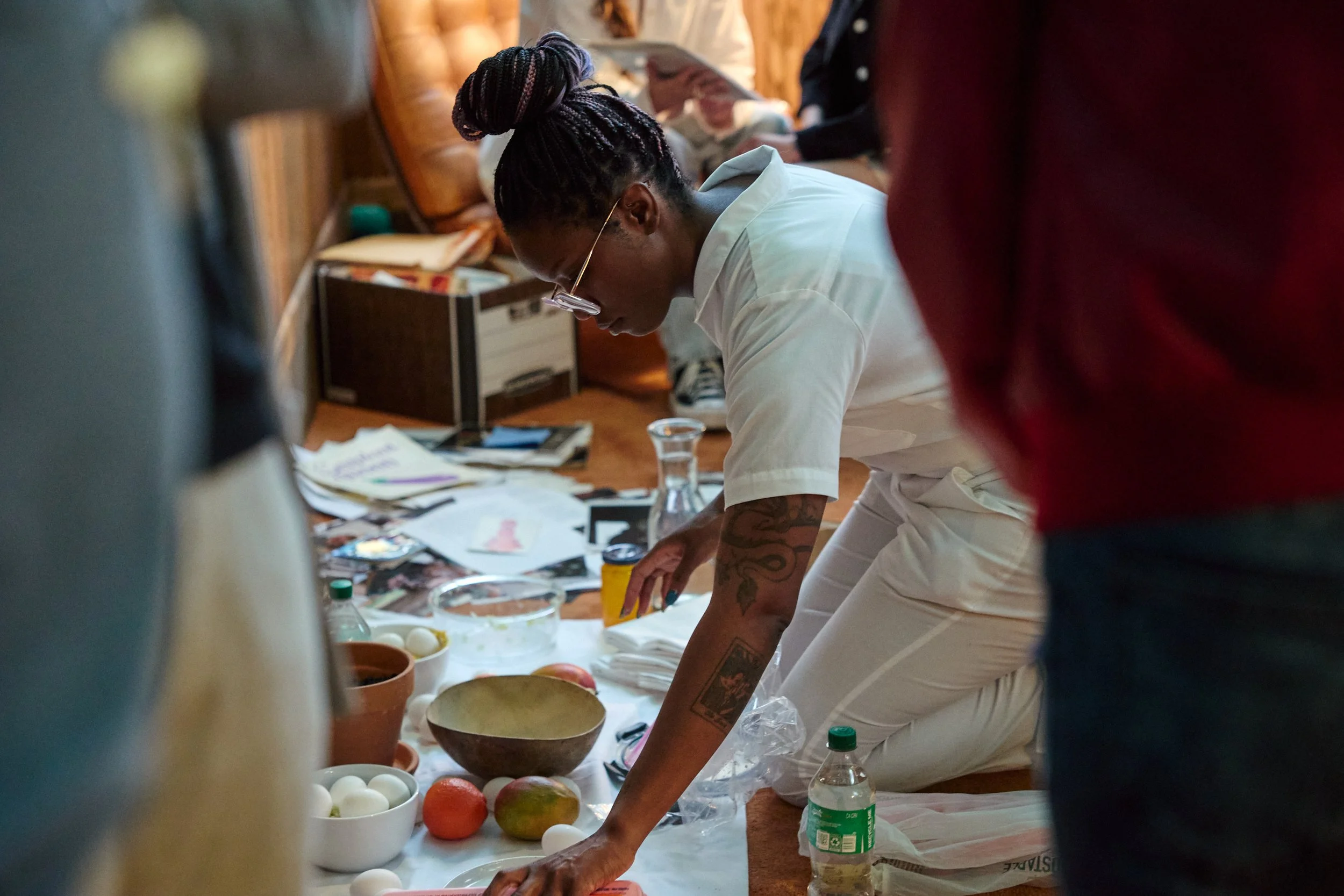
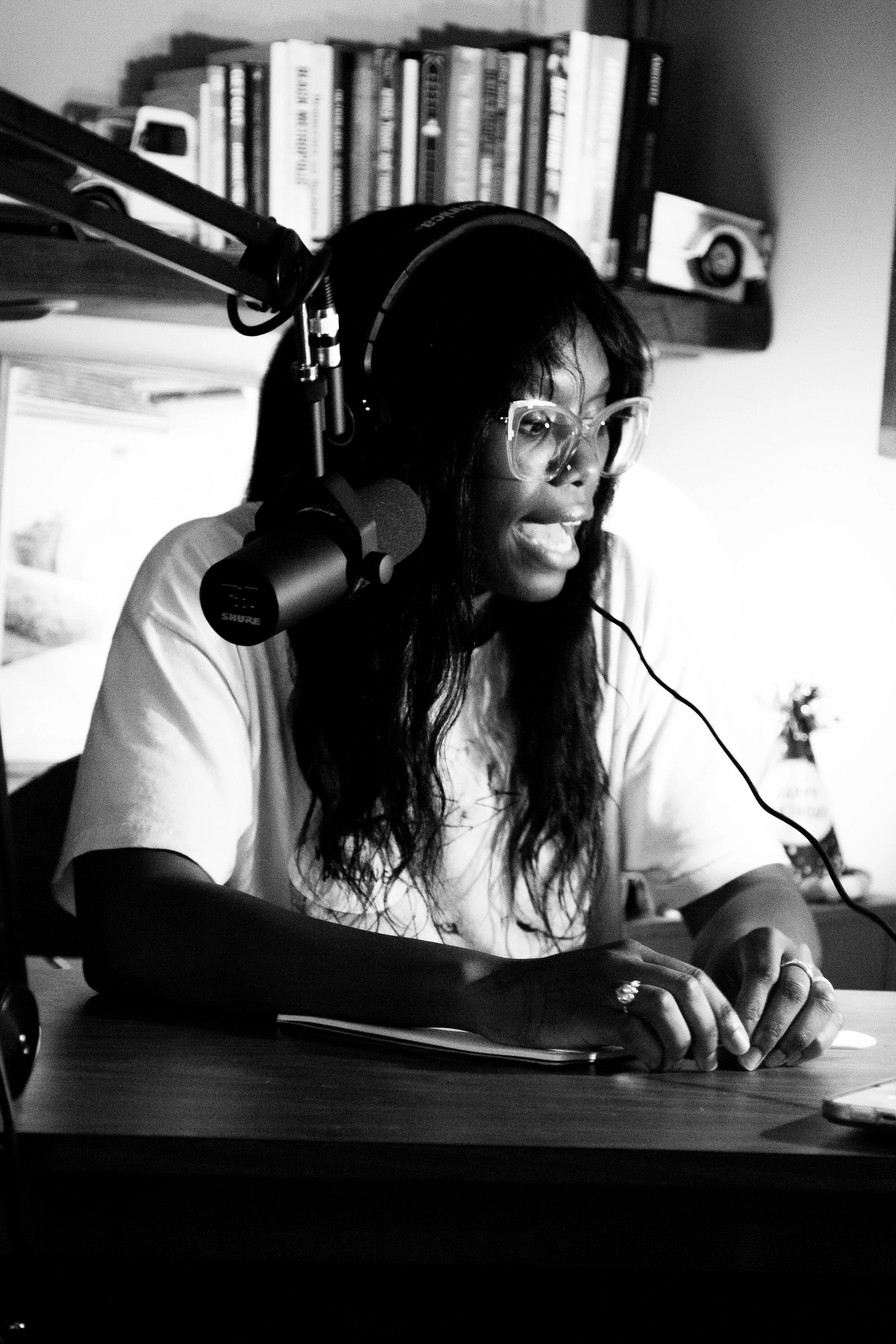
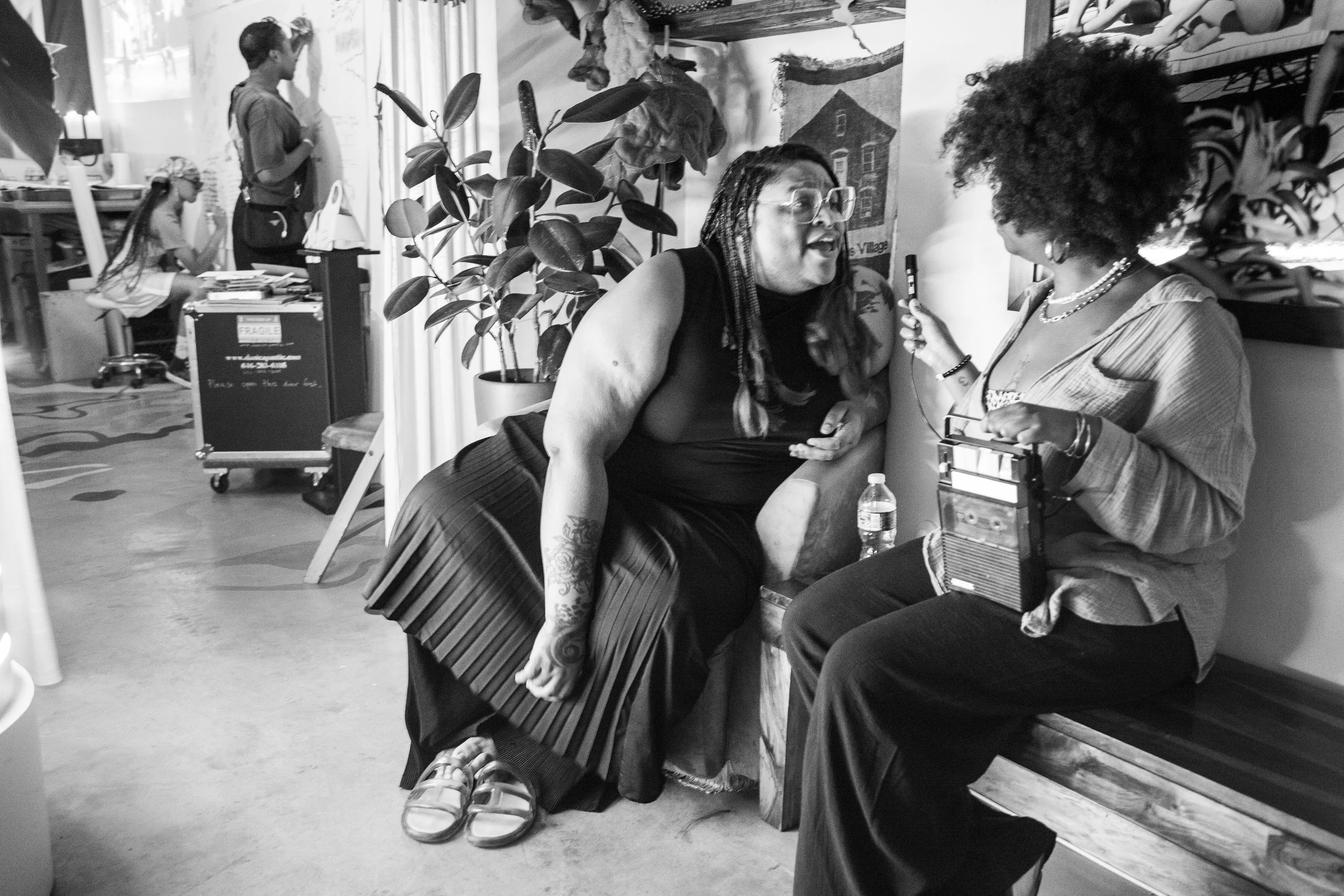
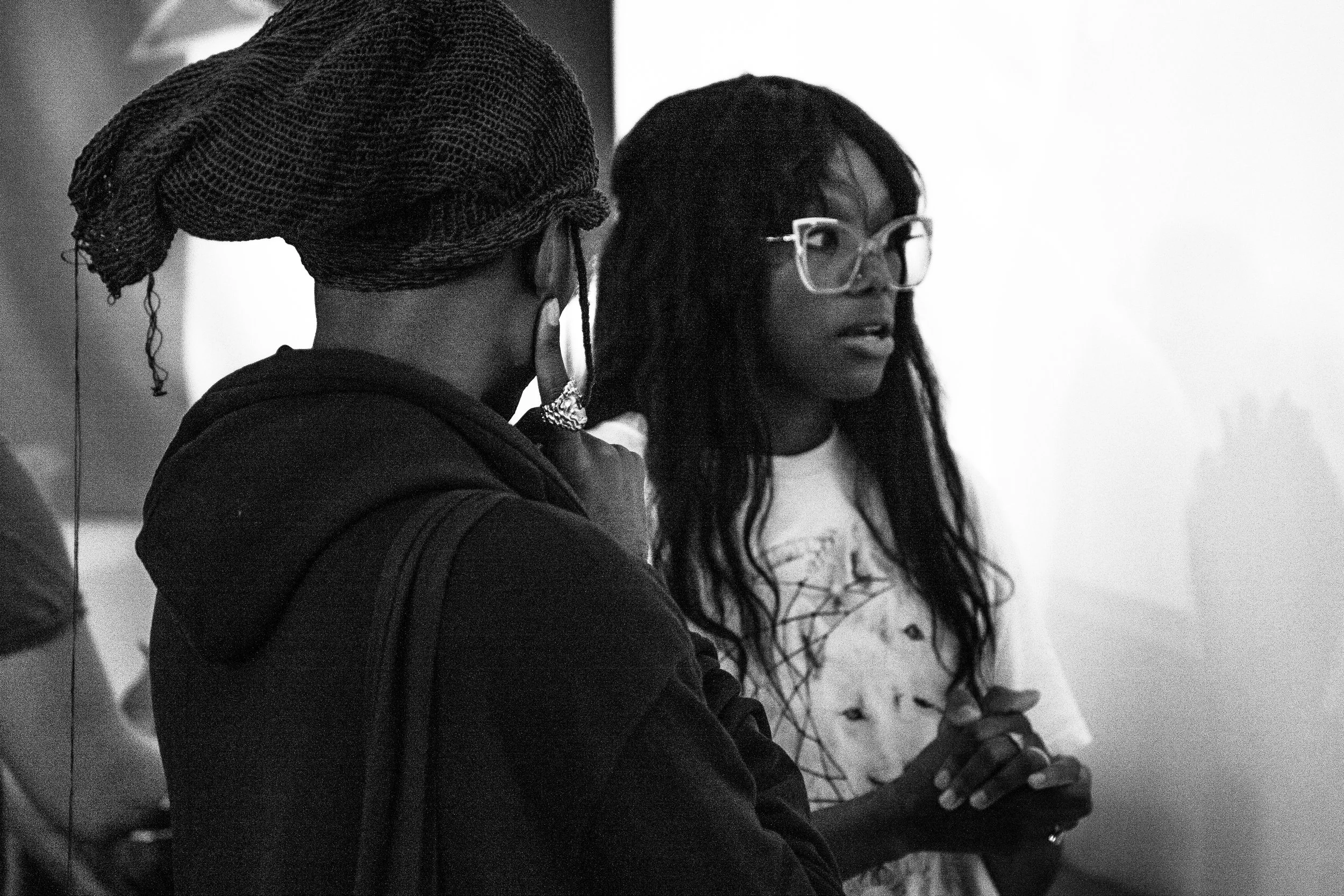
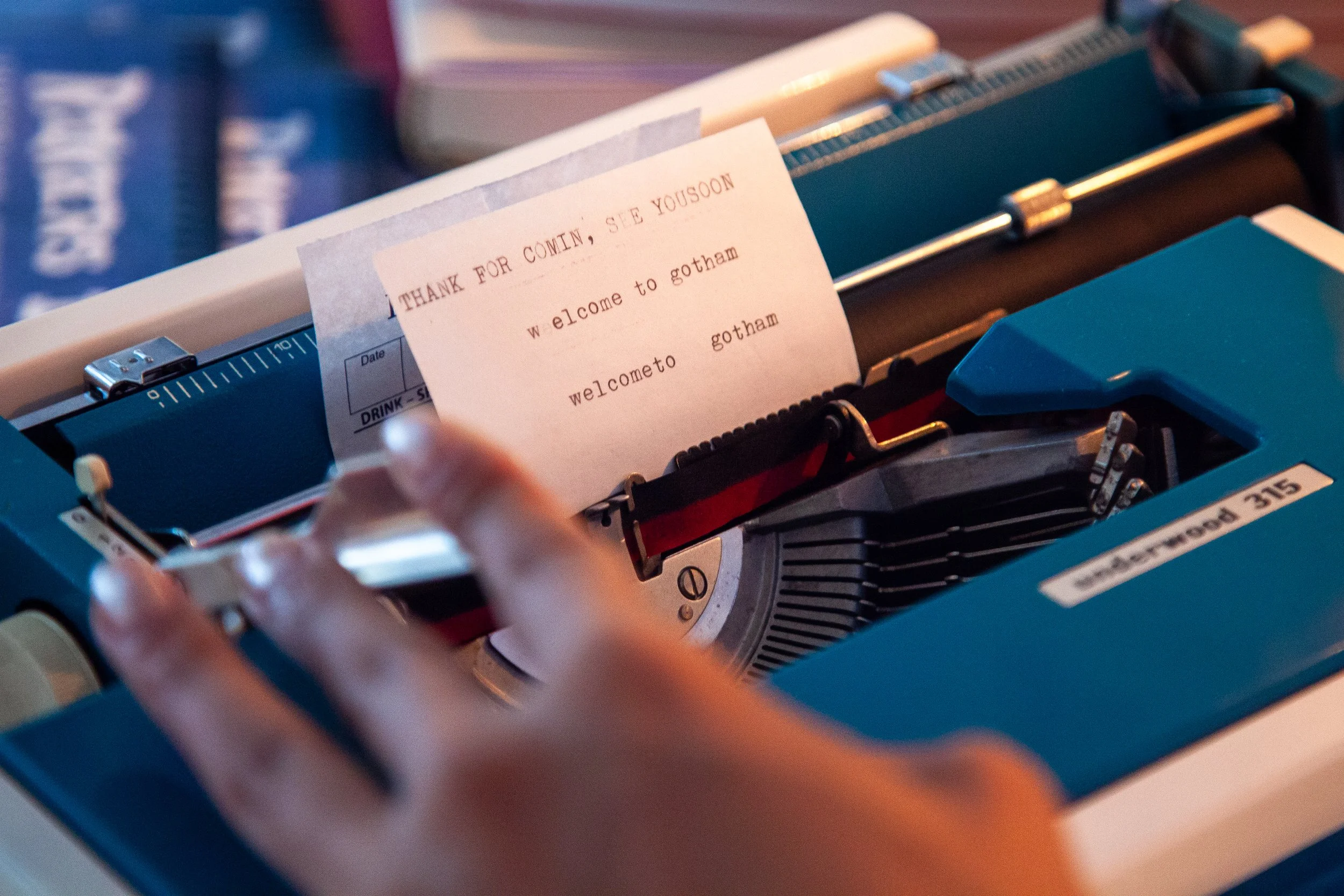
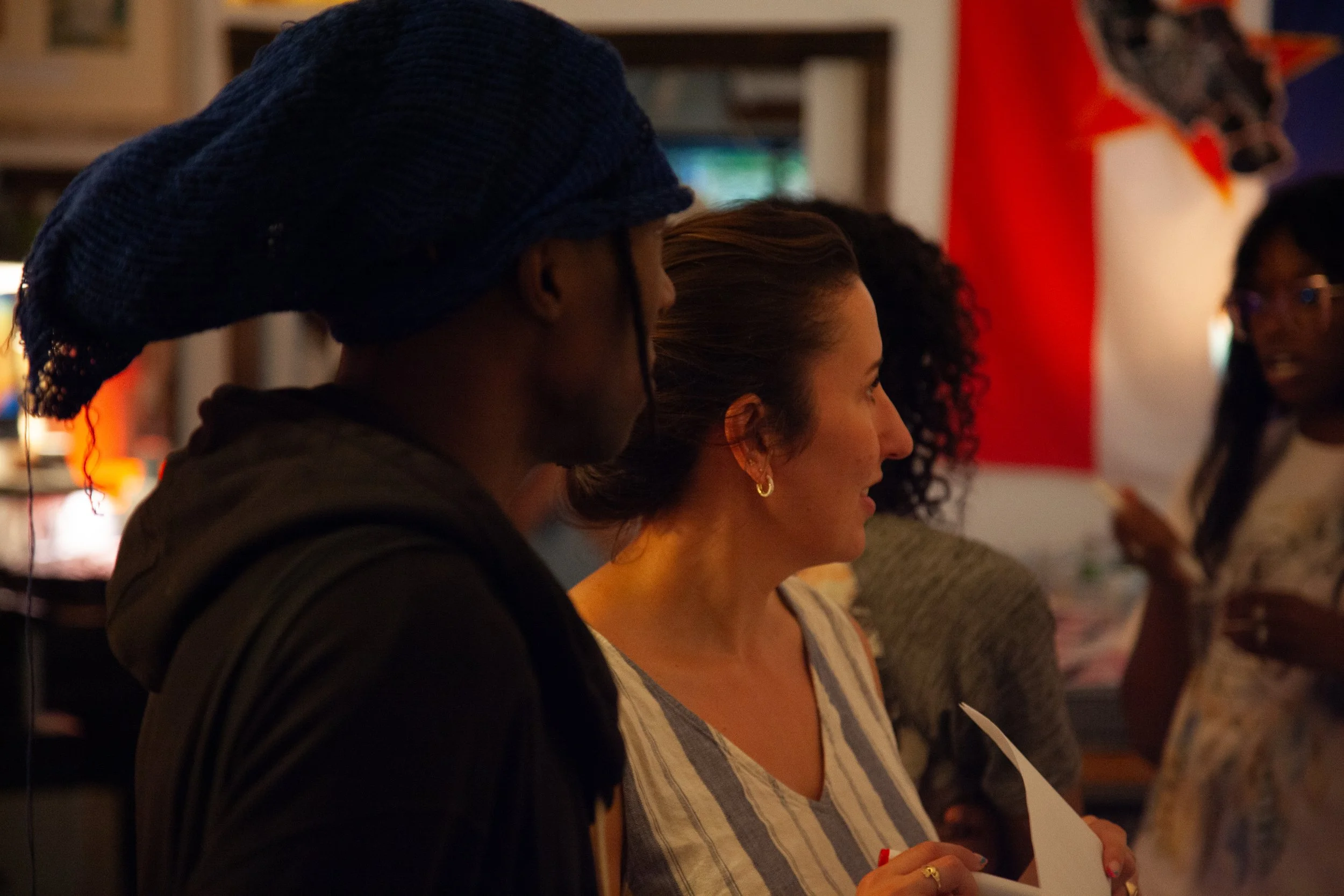
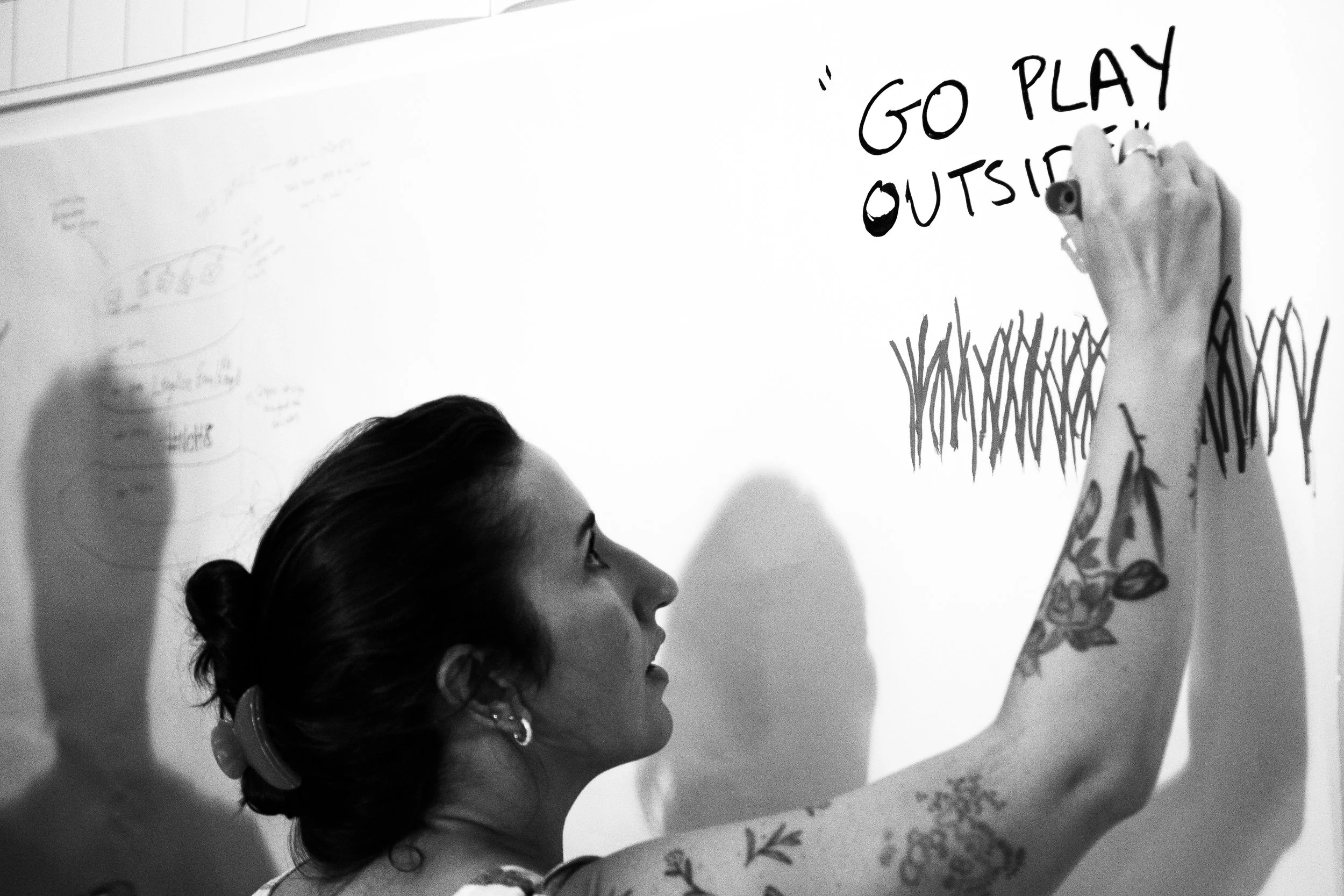
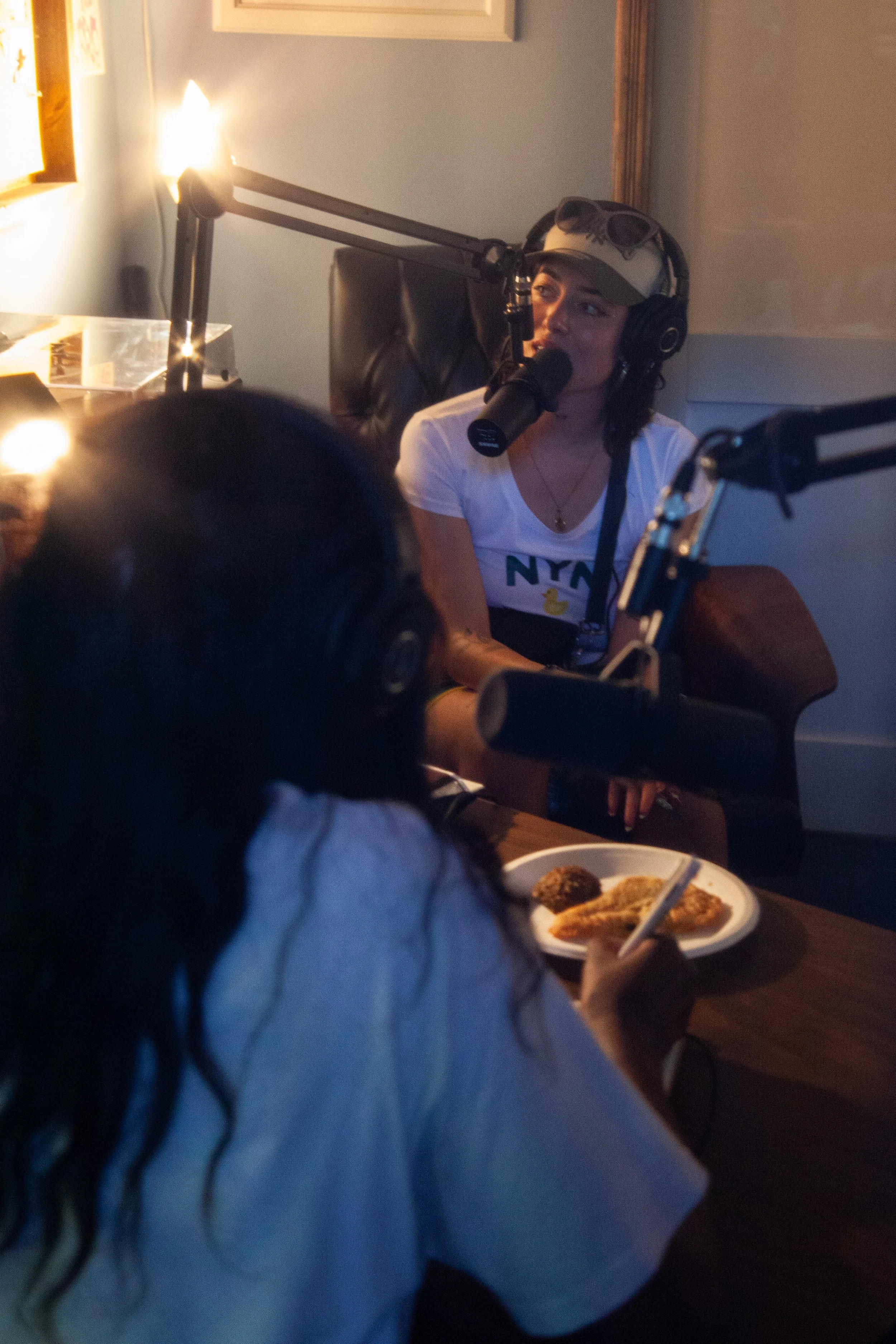
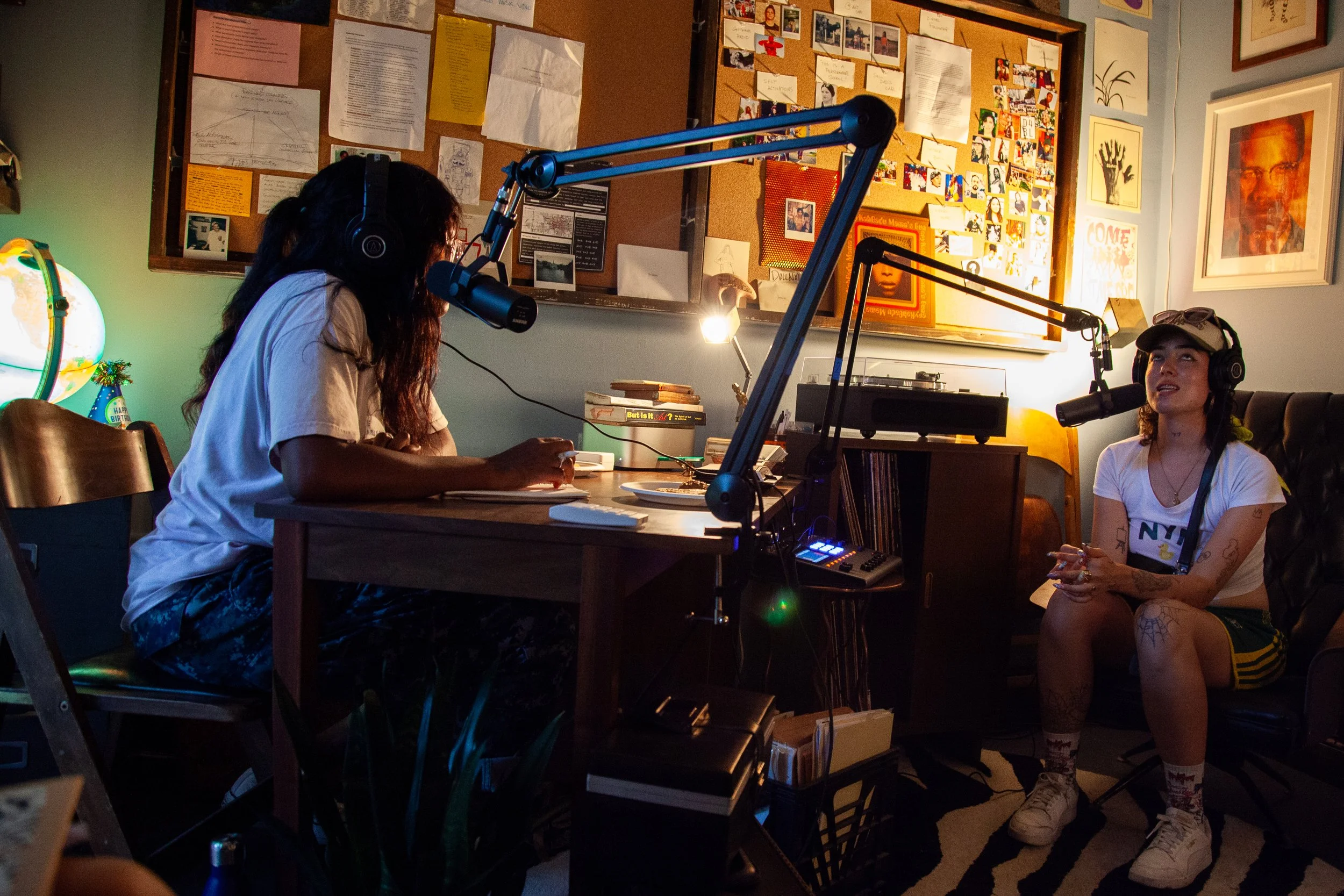
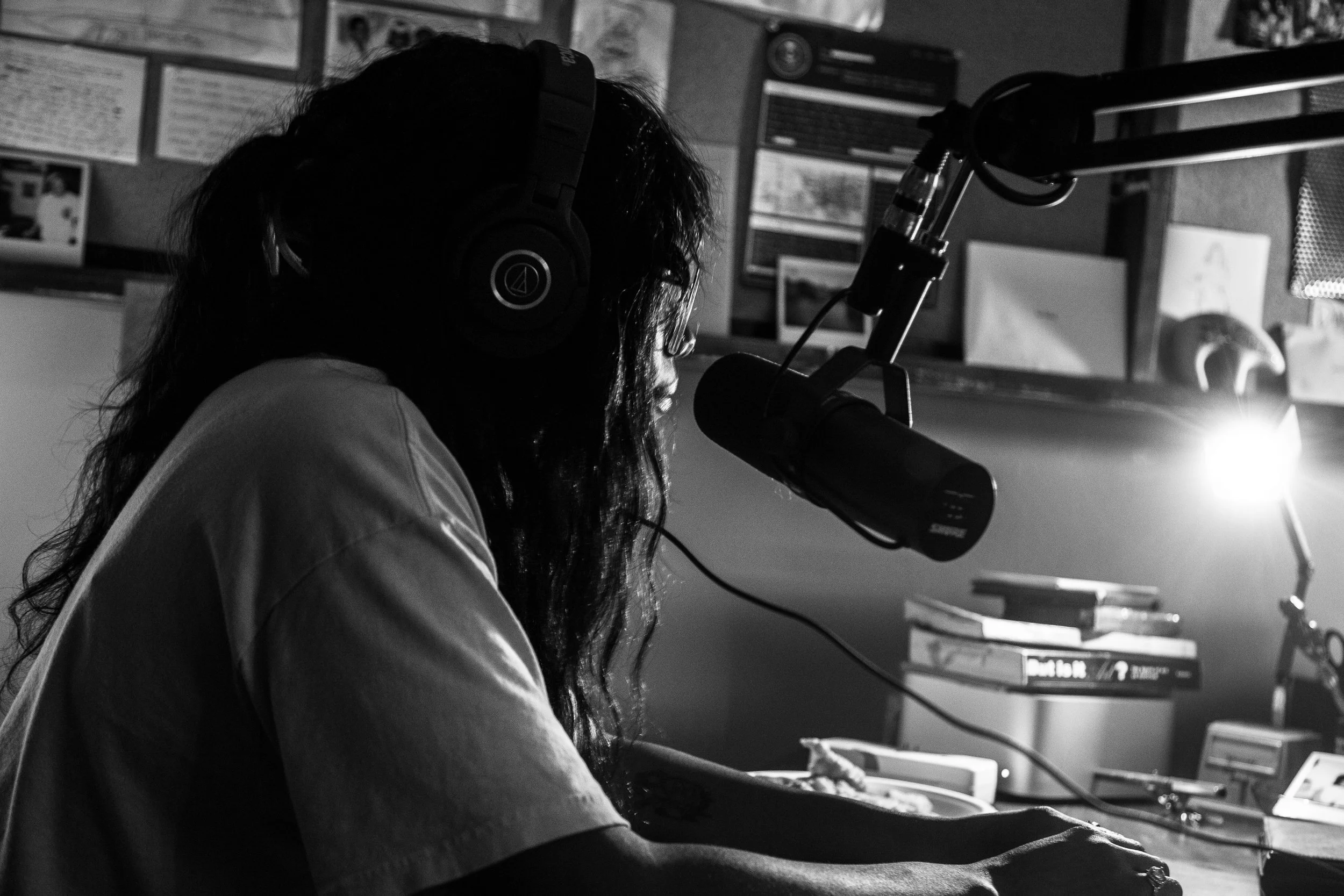
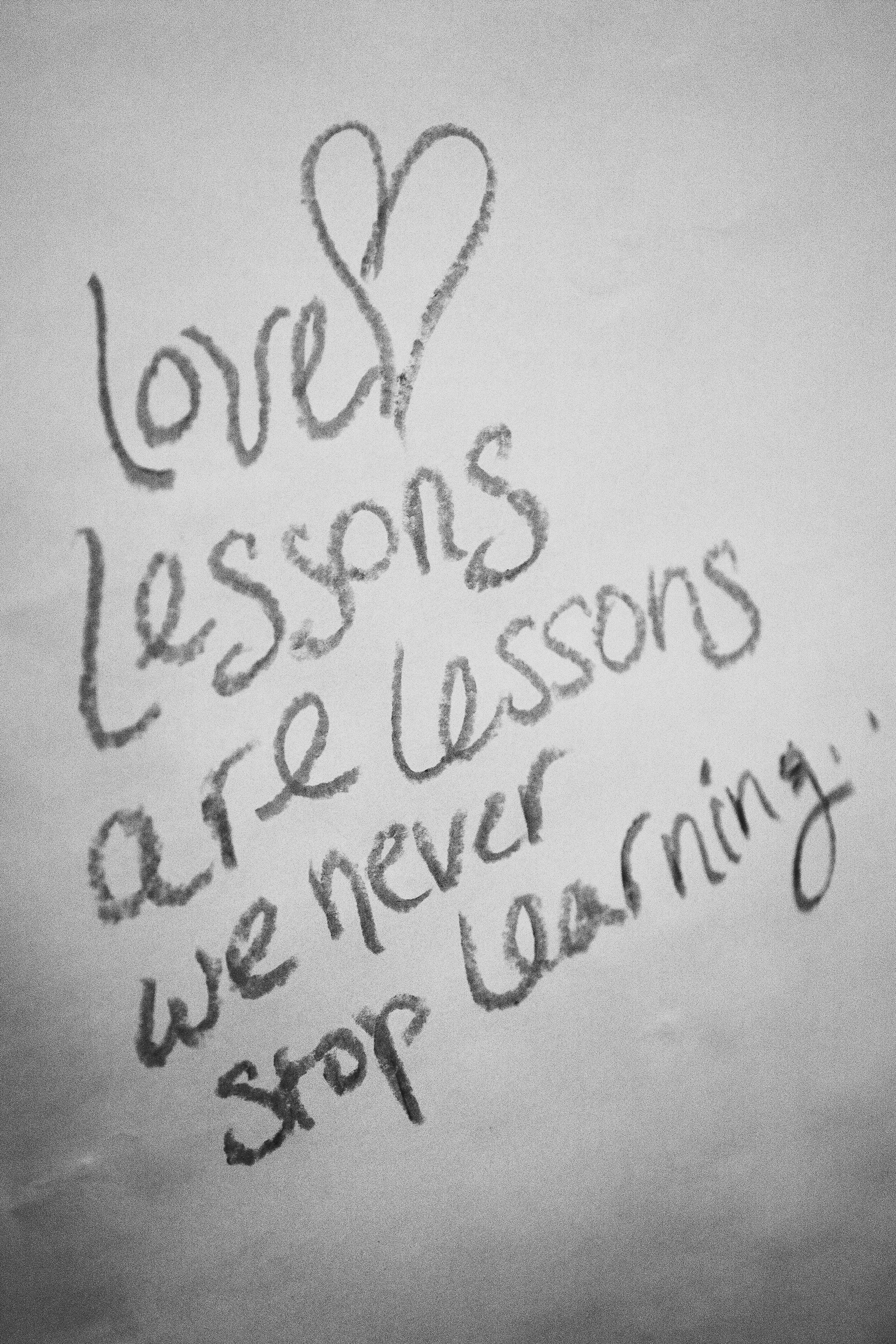
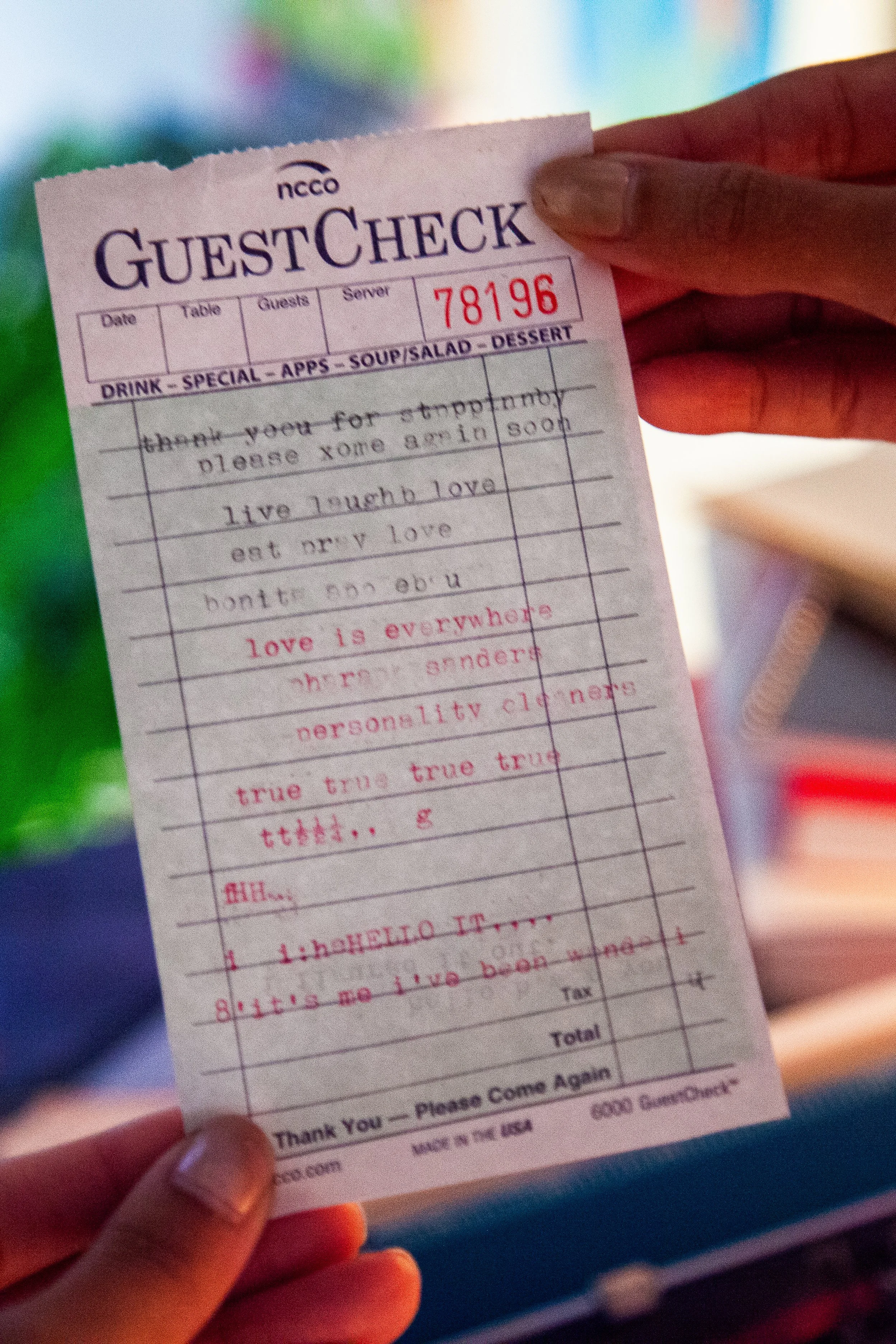
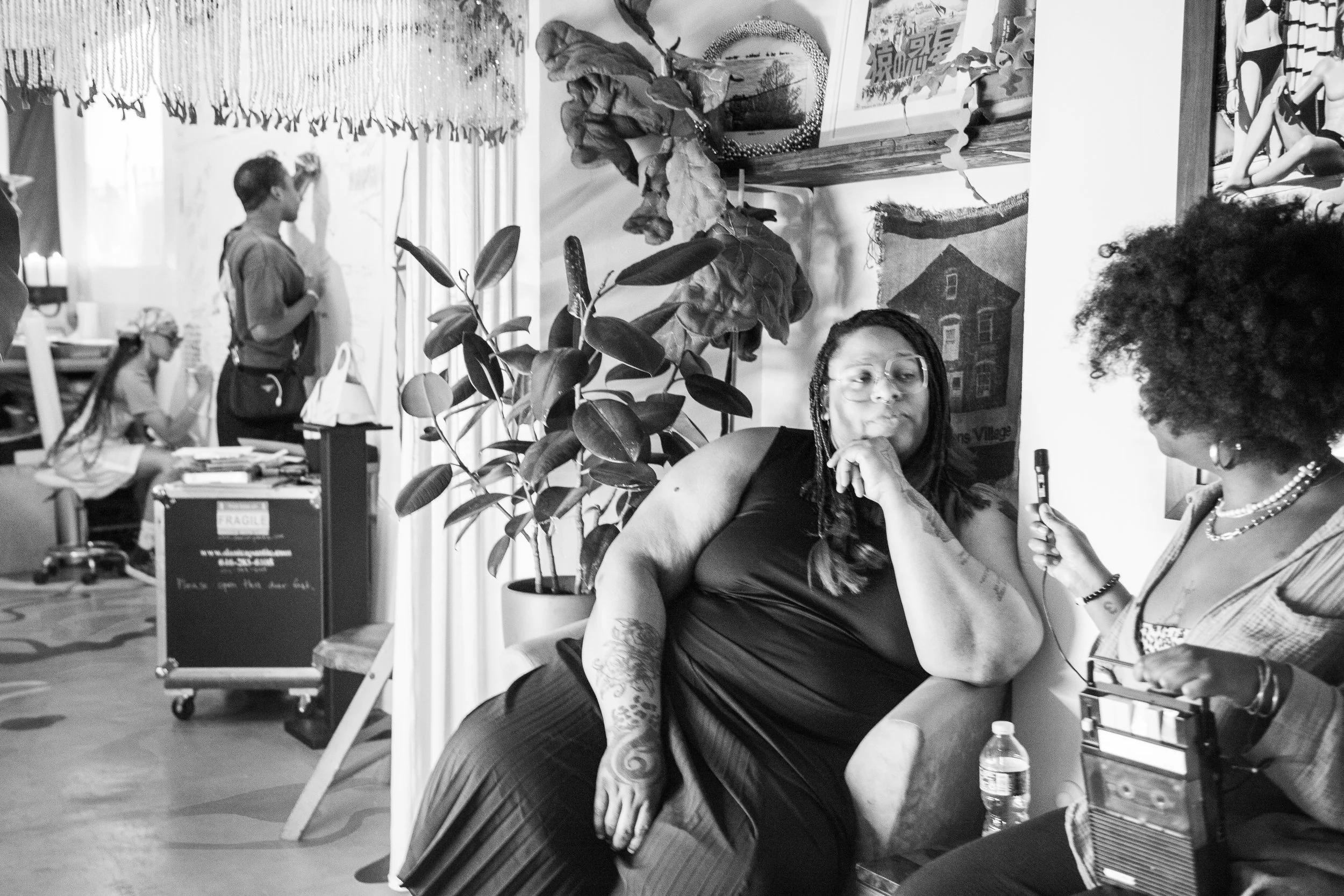
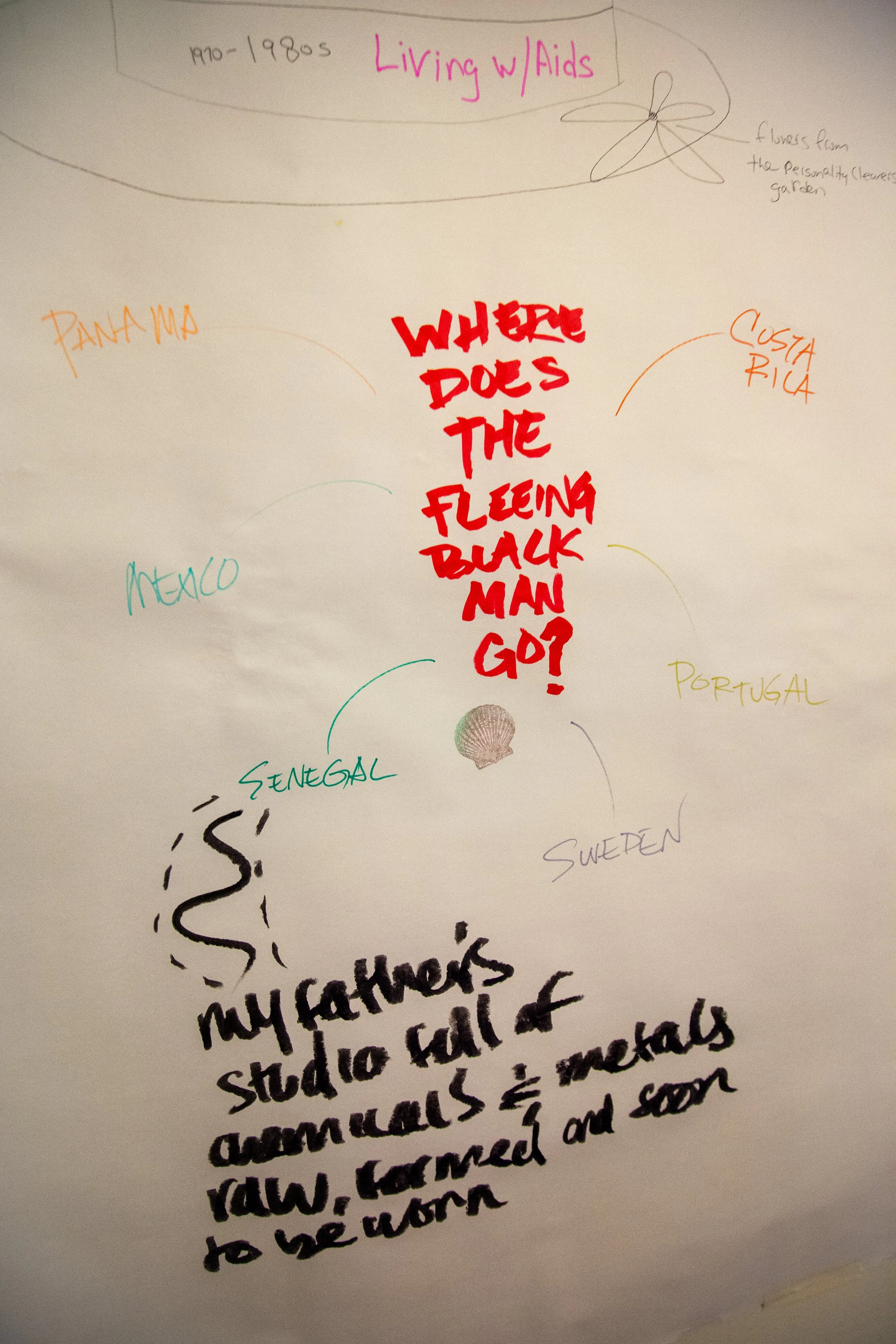
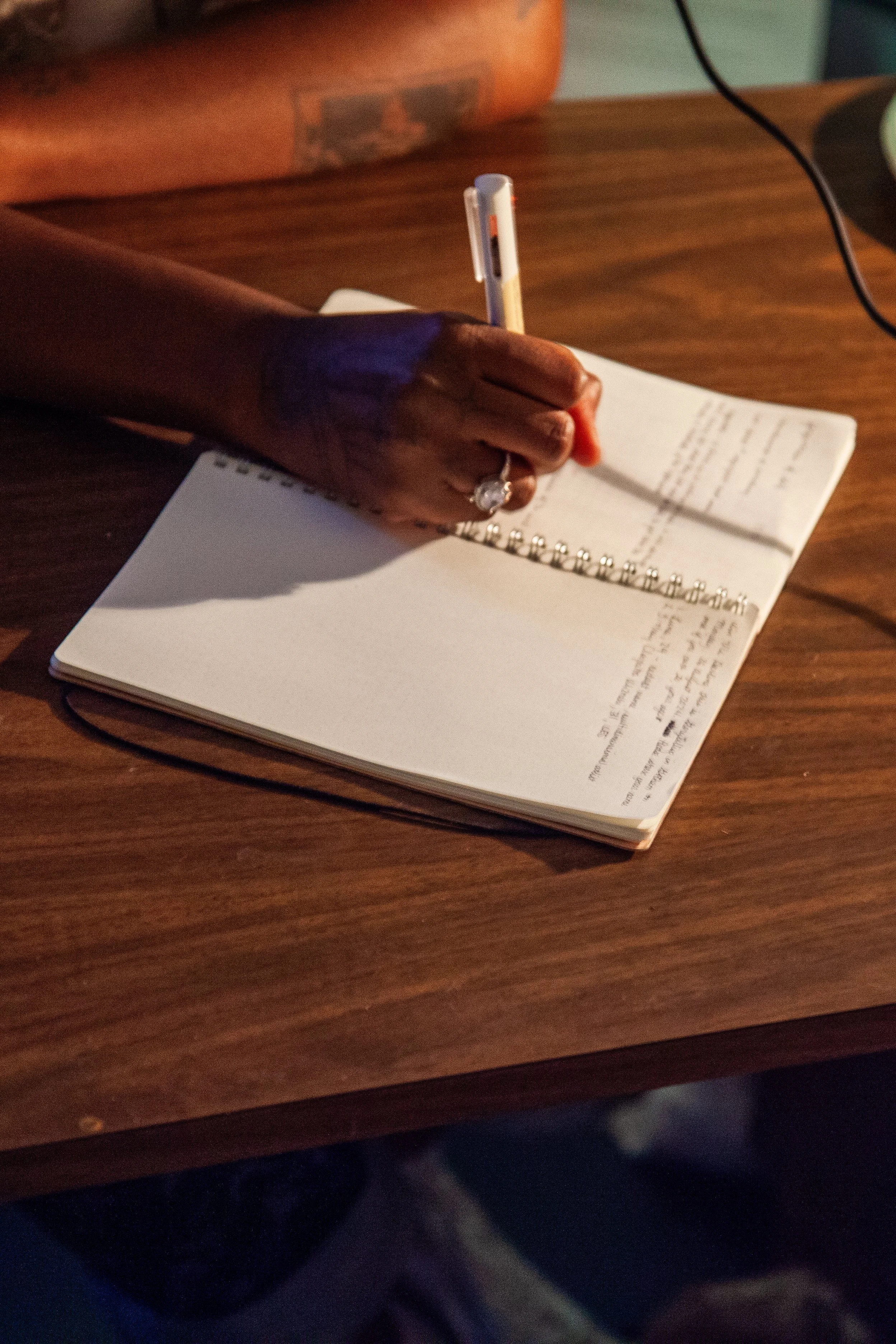
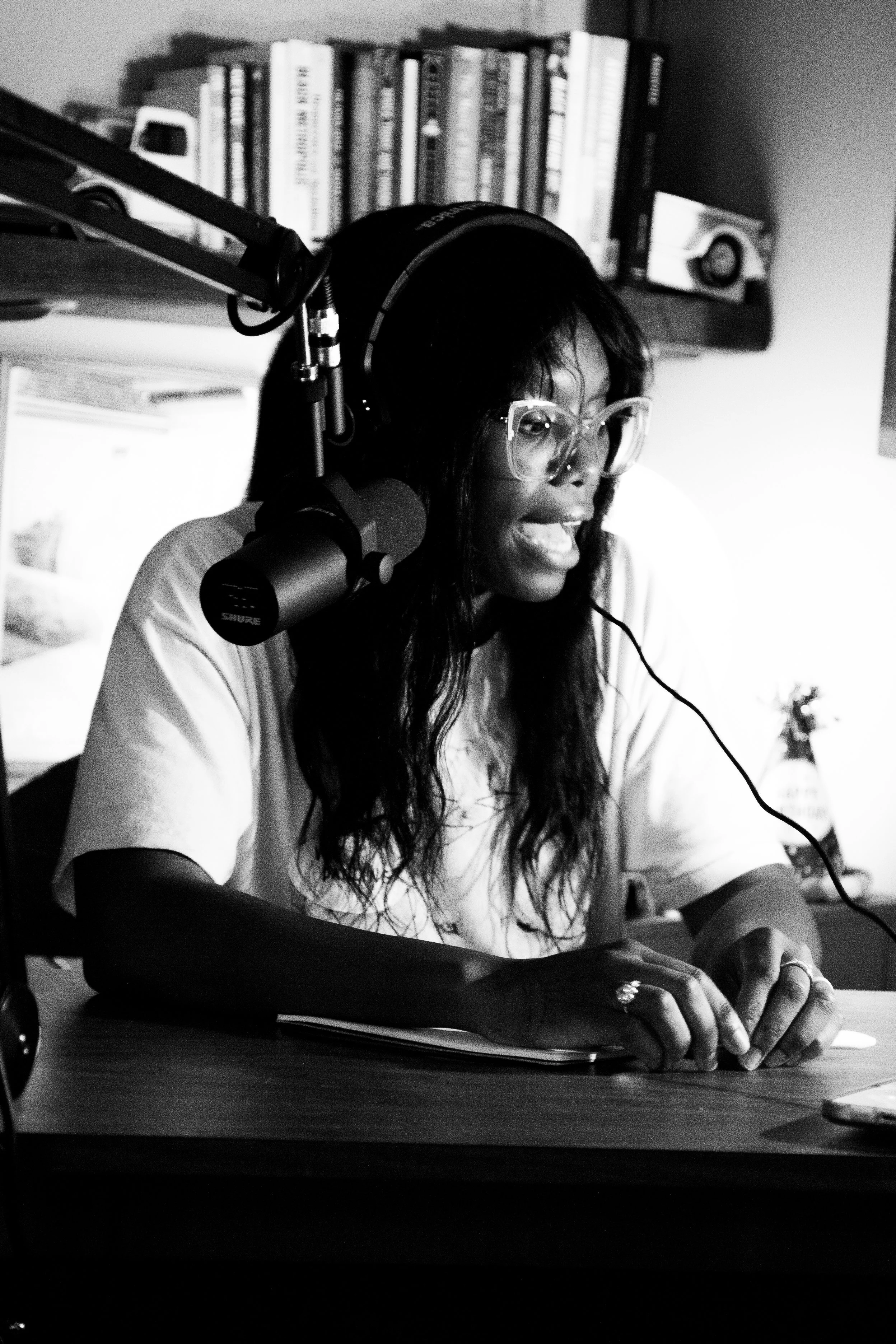
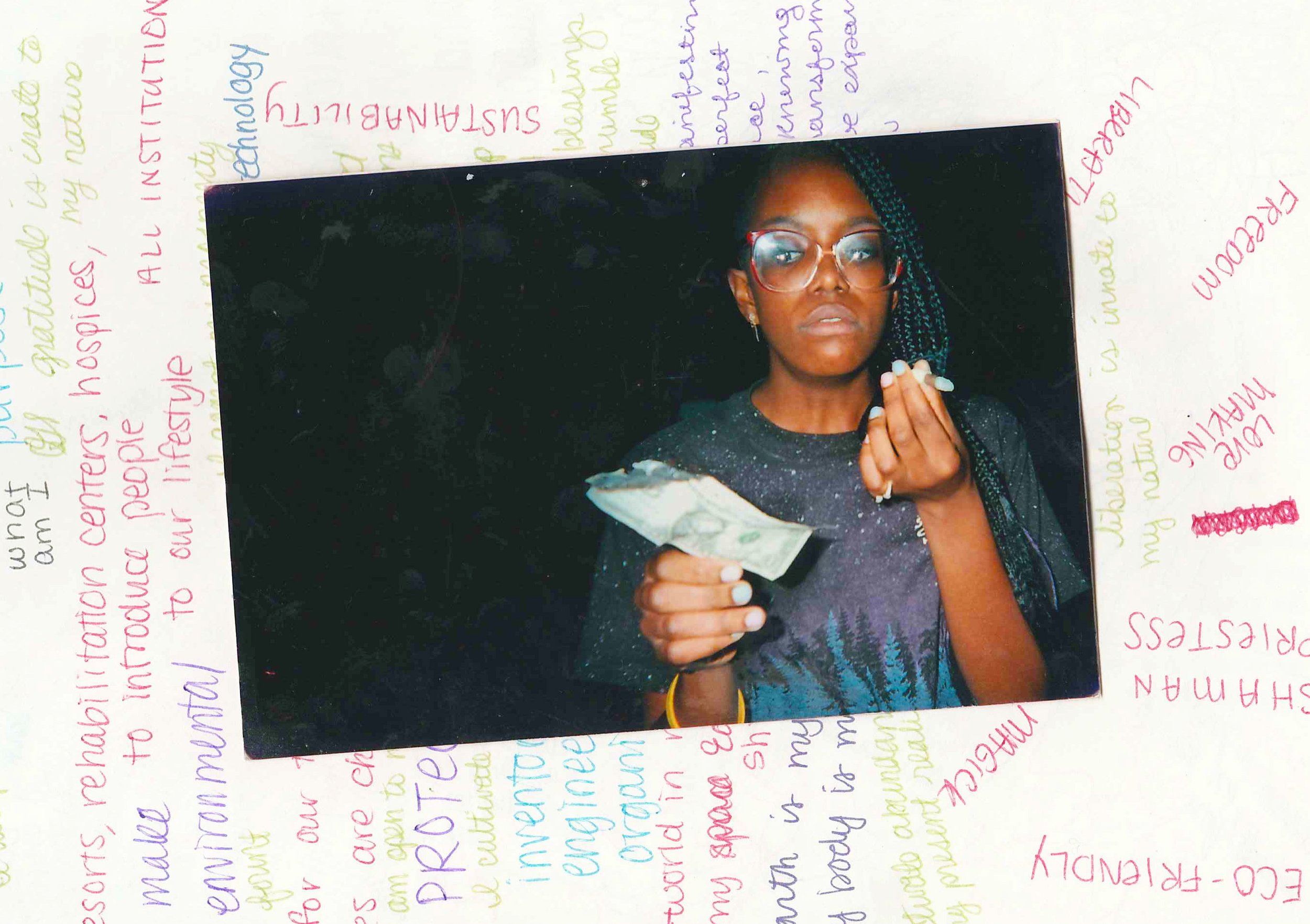
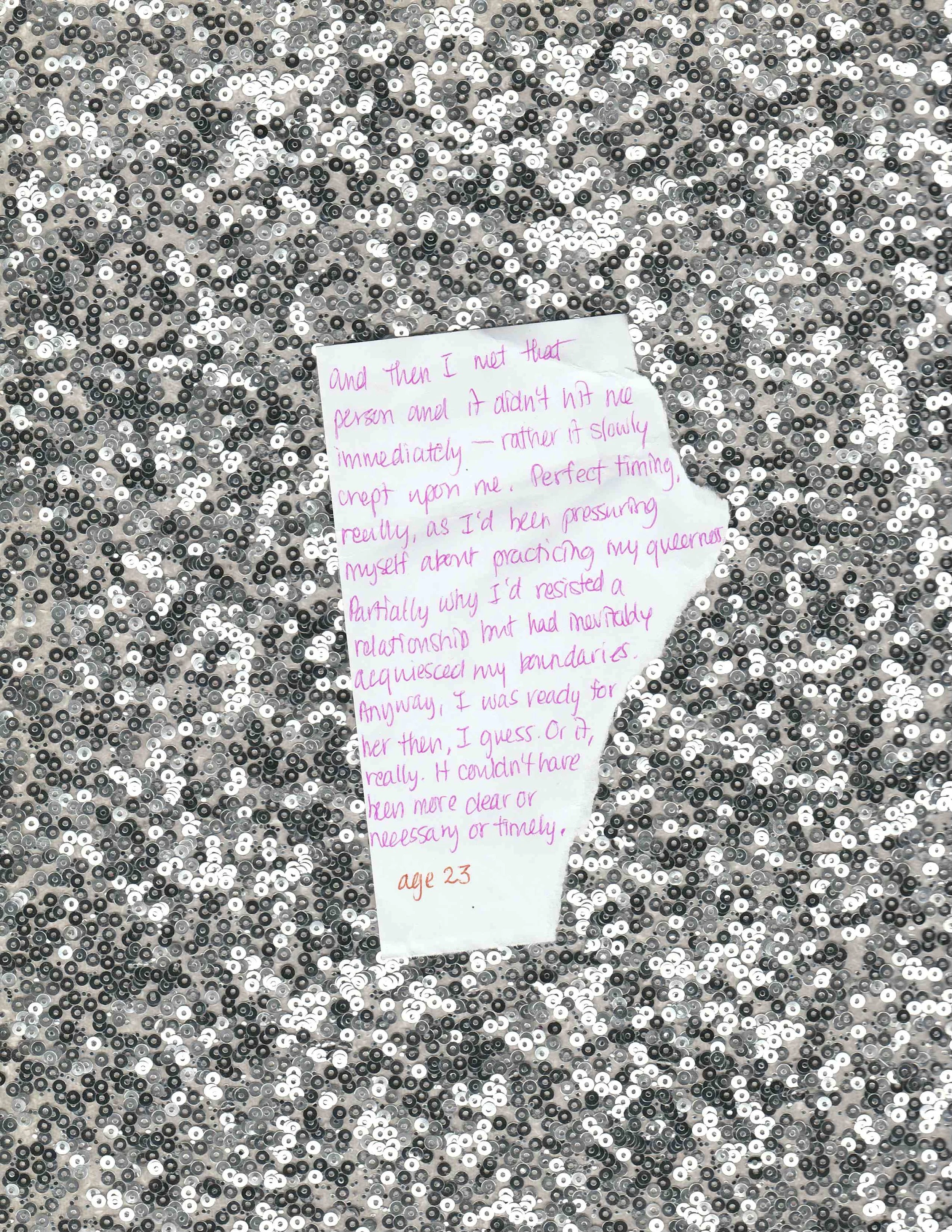
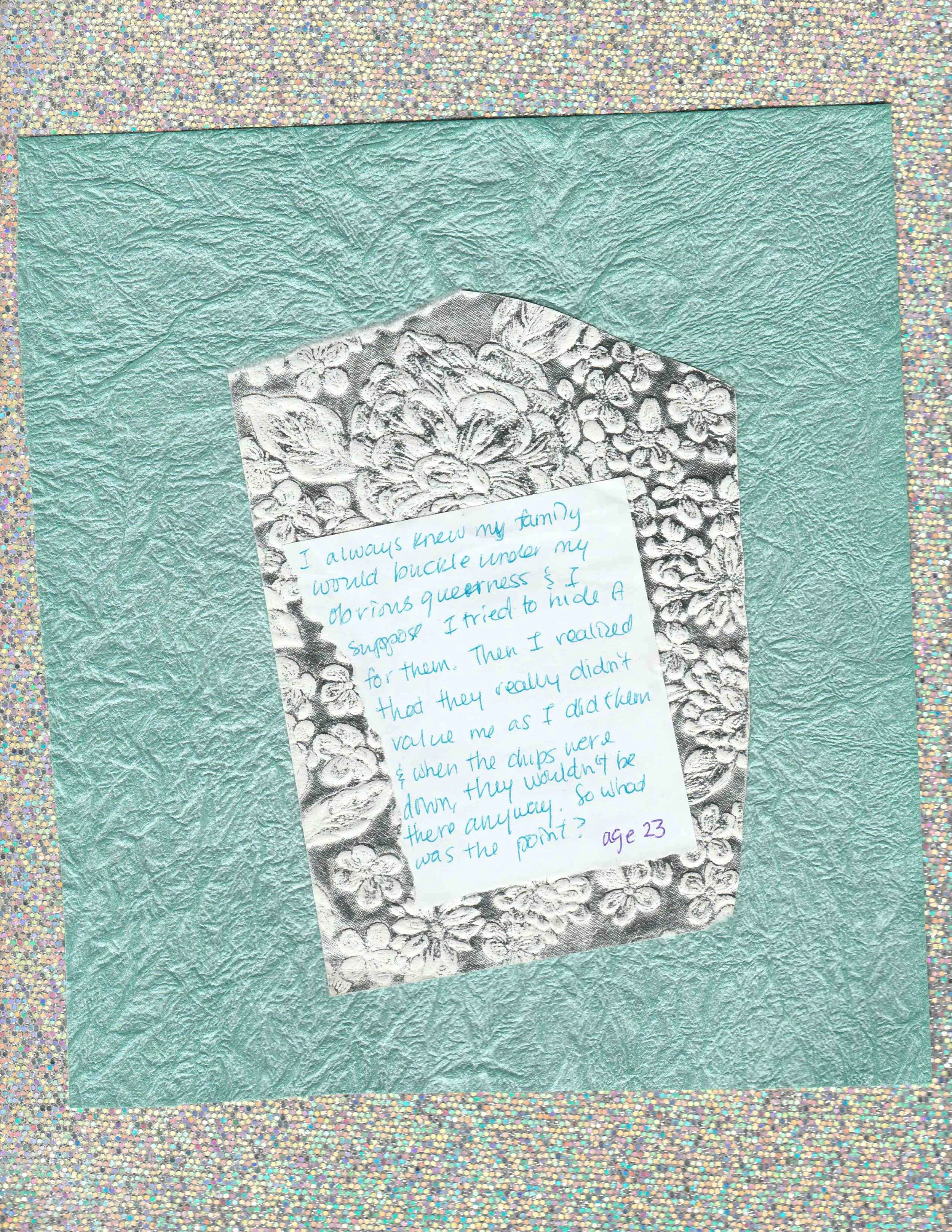
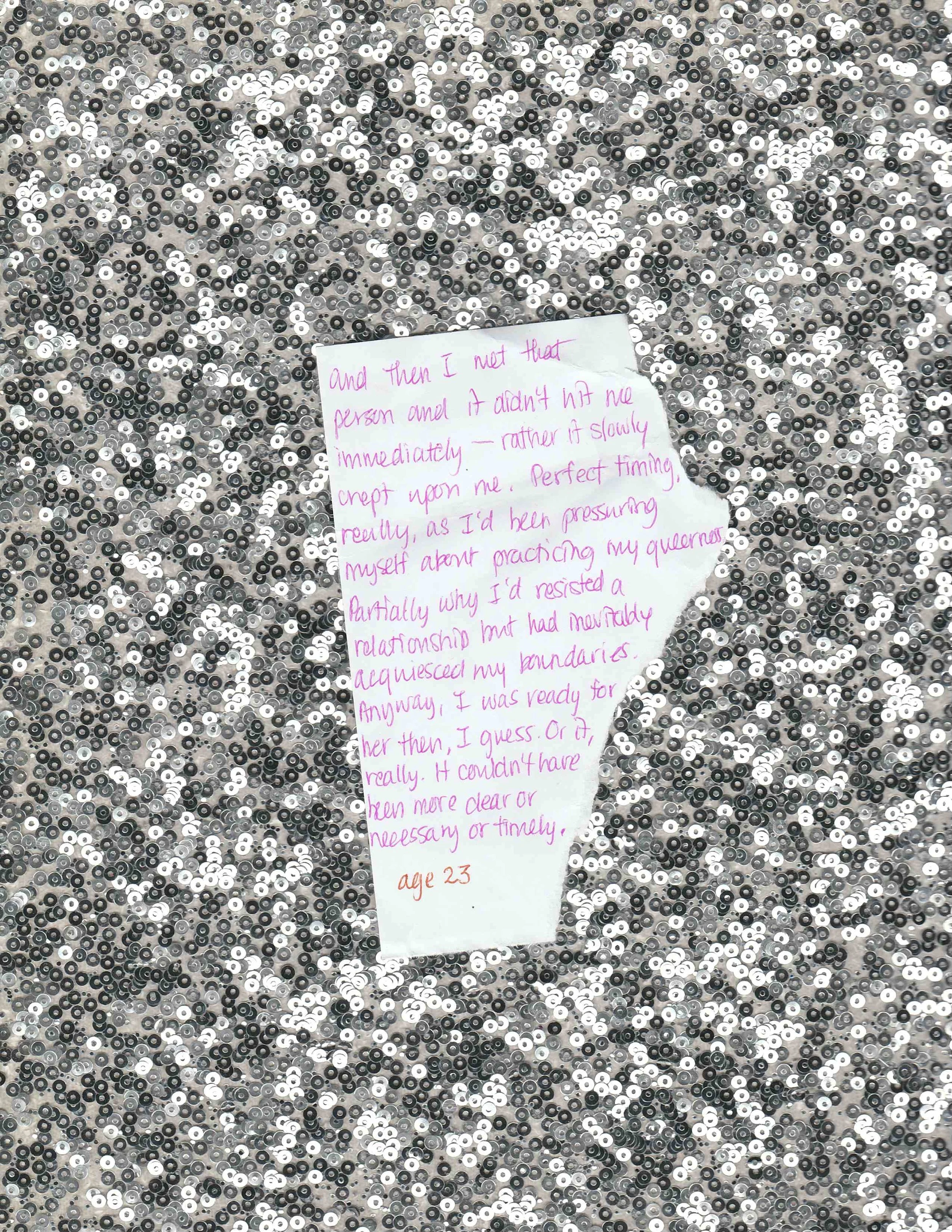
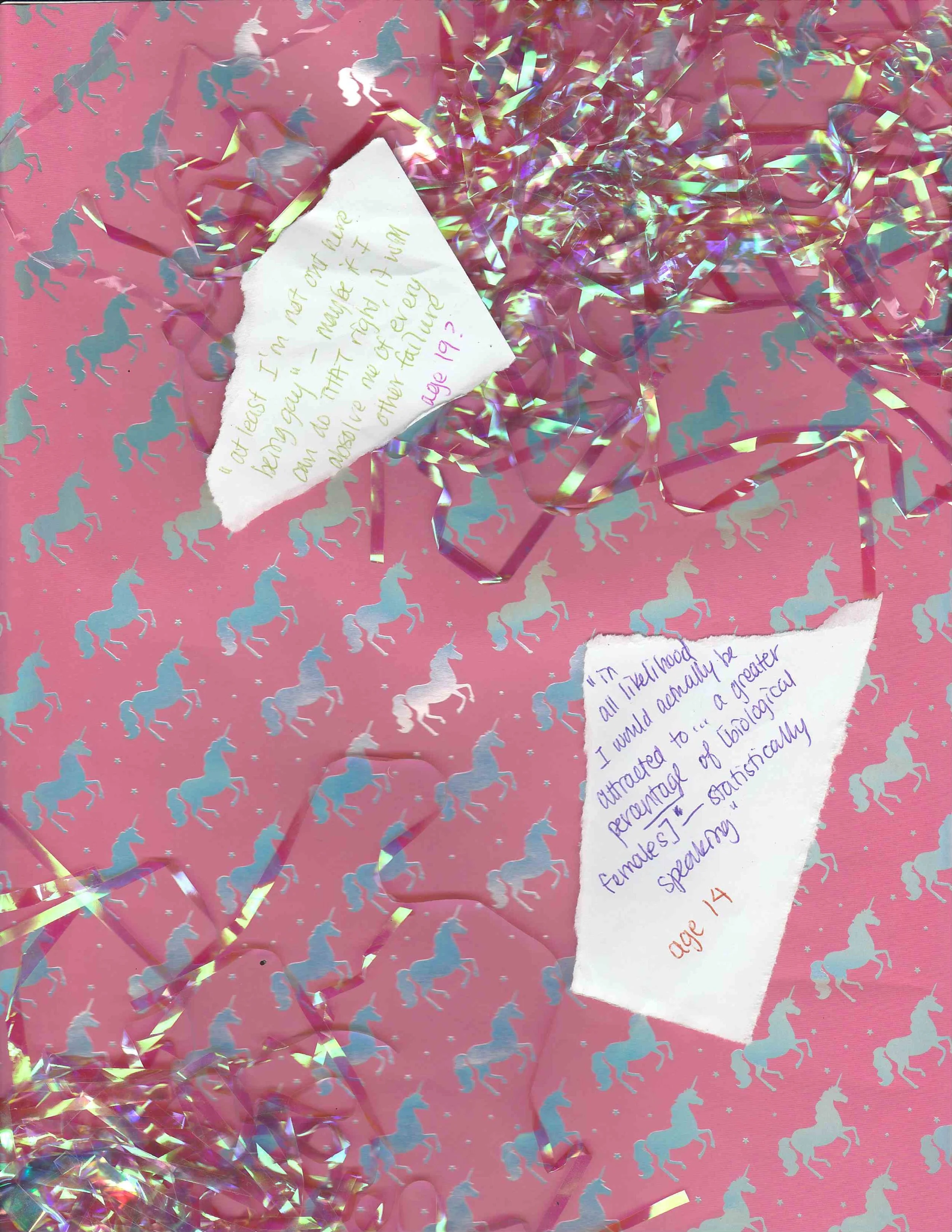
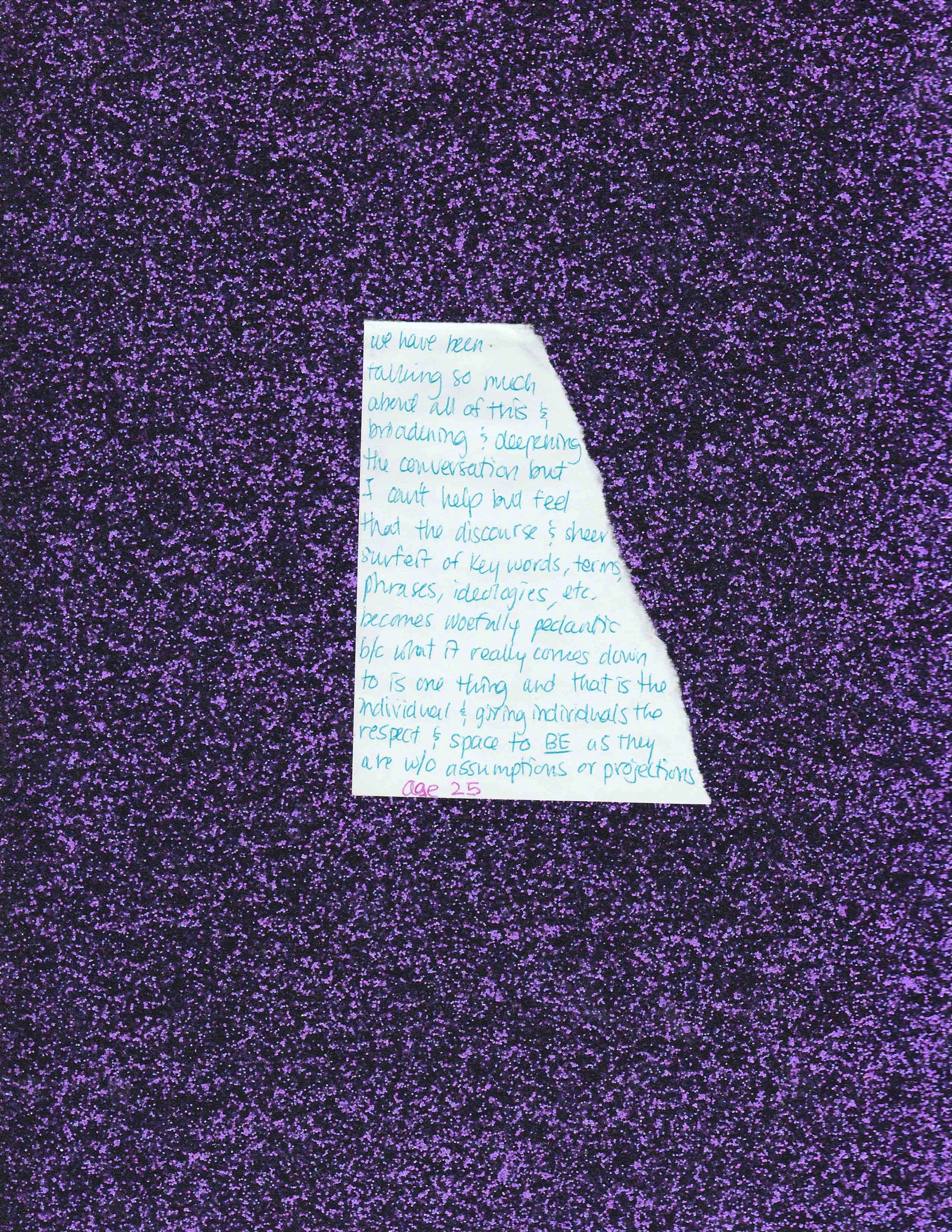
With participants permission, stories shared were added to our archive with the Museum of Modern Art. Each story shared was not extracted, but honored. Our co-created container was neither therapy nor confession—it served as a space of radical co-presence. The somatic elements are subtle but foundational: shared breath, grounding gestures, silence, and a gentle ritual to close each encounter. The logic of this work is slow, bodily, and accumulative. I sat with each person and listen.
Guided by a hauntological framework, I understand these exchanges as reverberations of pasts that are not past—intimate hauntings, inherited truths, and the felt presence of what Euro-colonialism tried to disappear. But here, in this room, we invite it all in. We allow the possibility of freedom—not just politically, but spiritually and sensorially. We confront the deathtrap of neoliberal posturing in exchange for self-possession and actualization.
This is an offering.
An opening.
A record of love in practice.
Gotham A Go-Go Artist Statement:
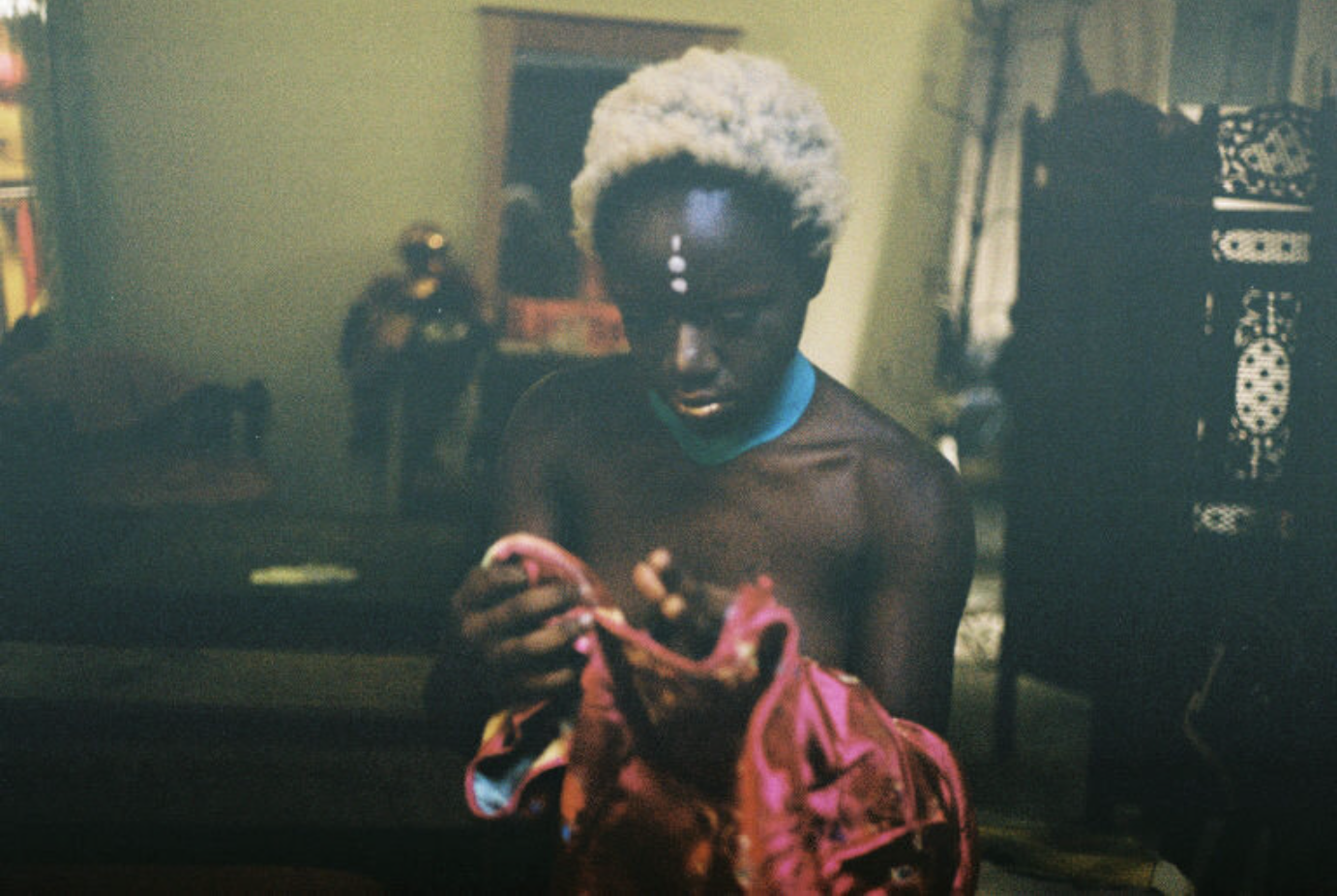
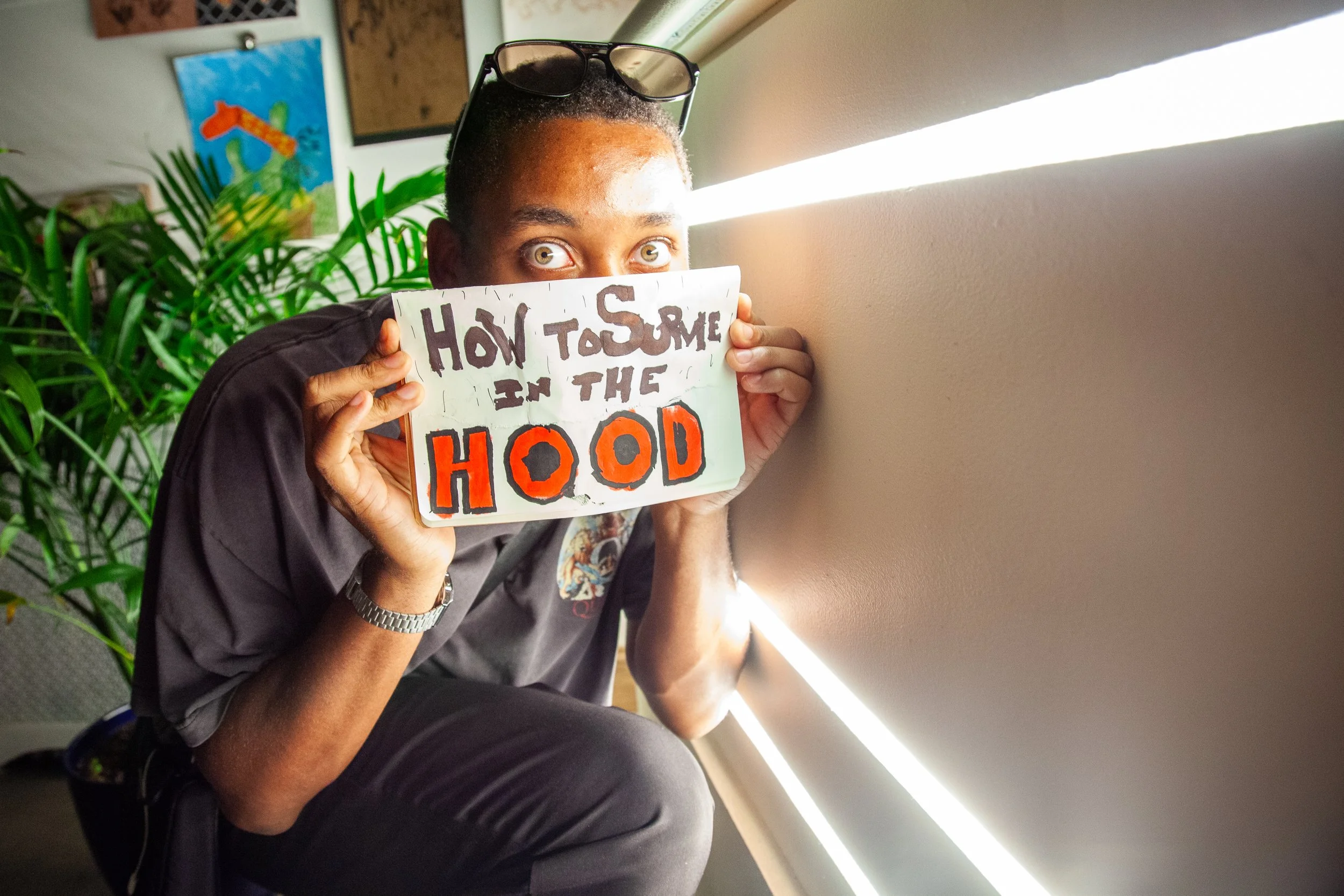
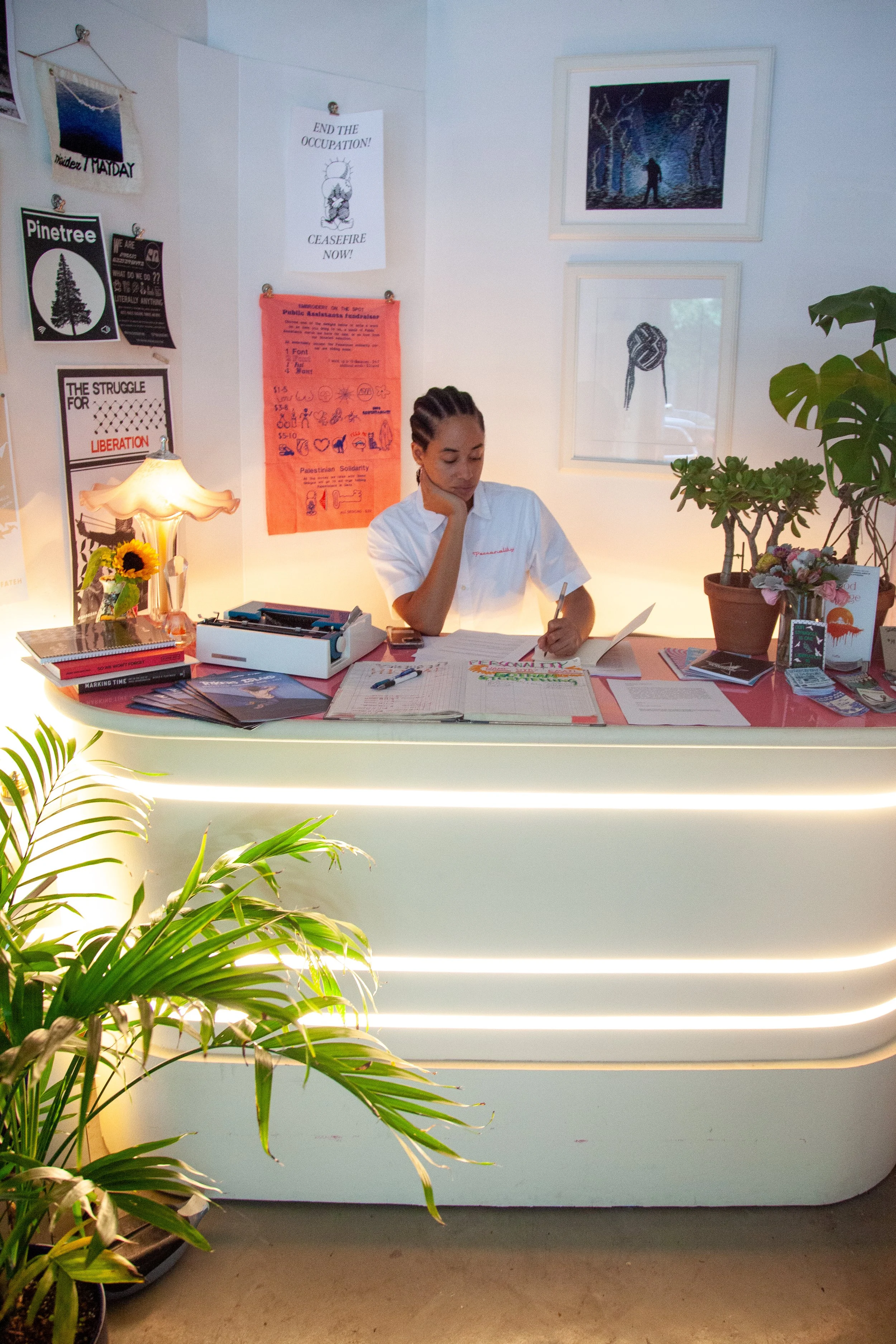
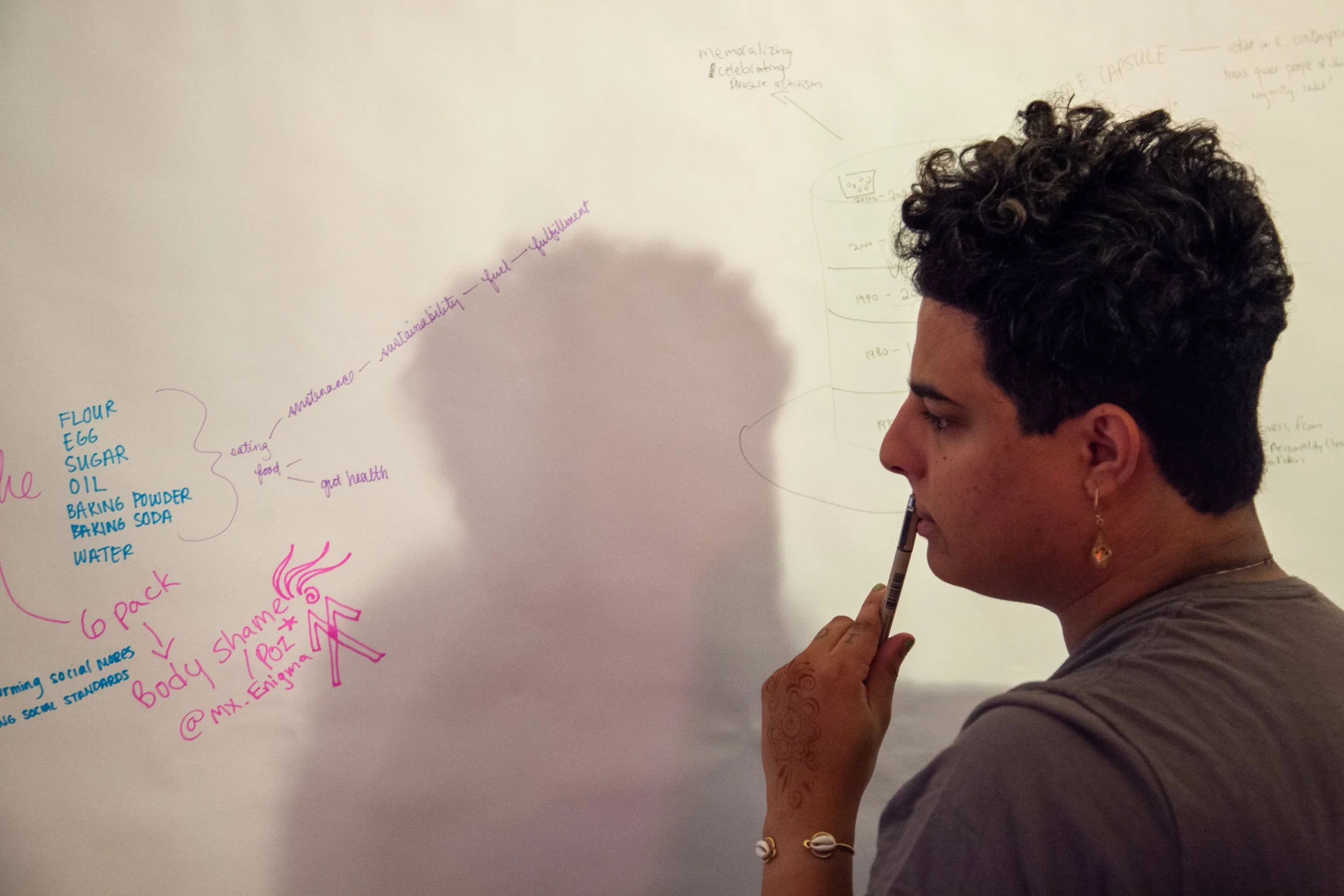
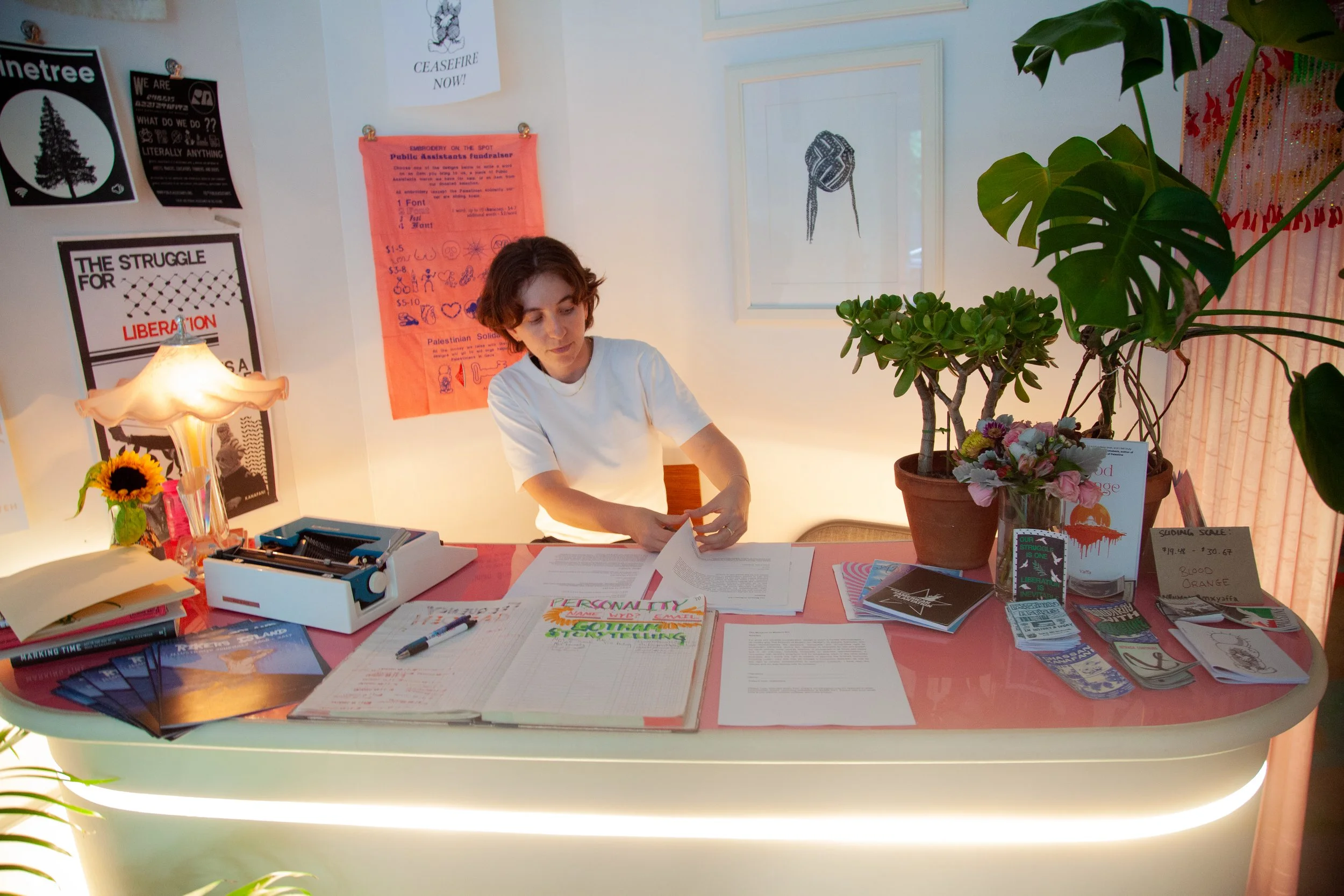
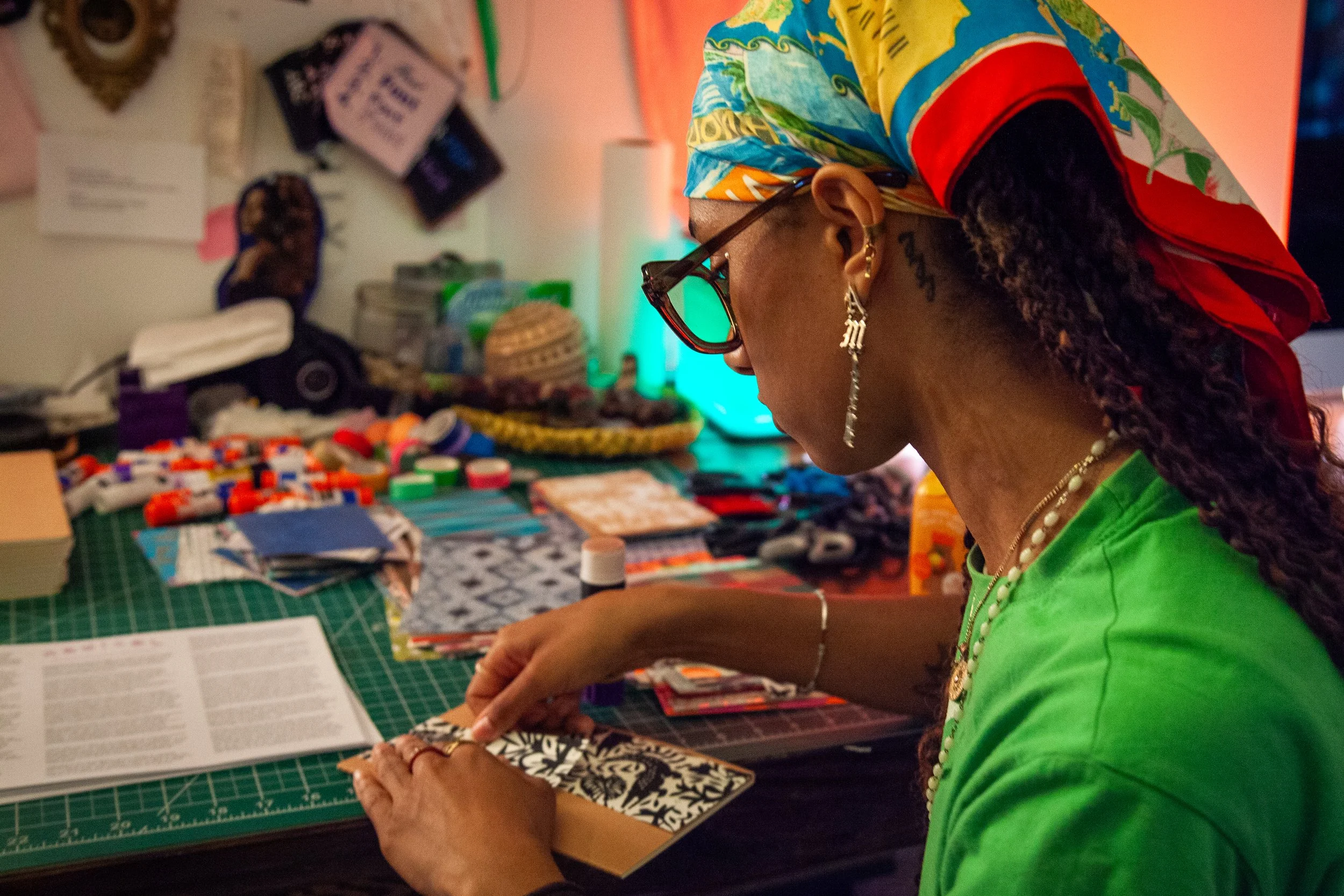
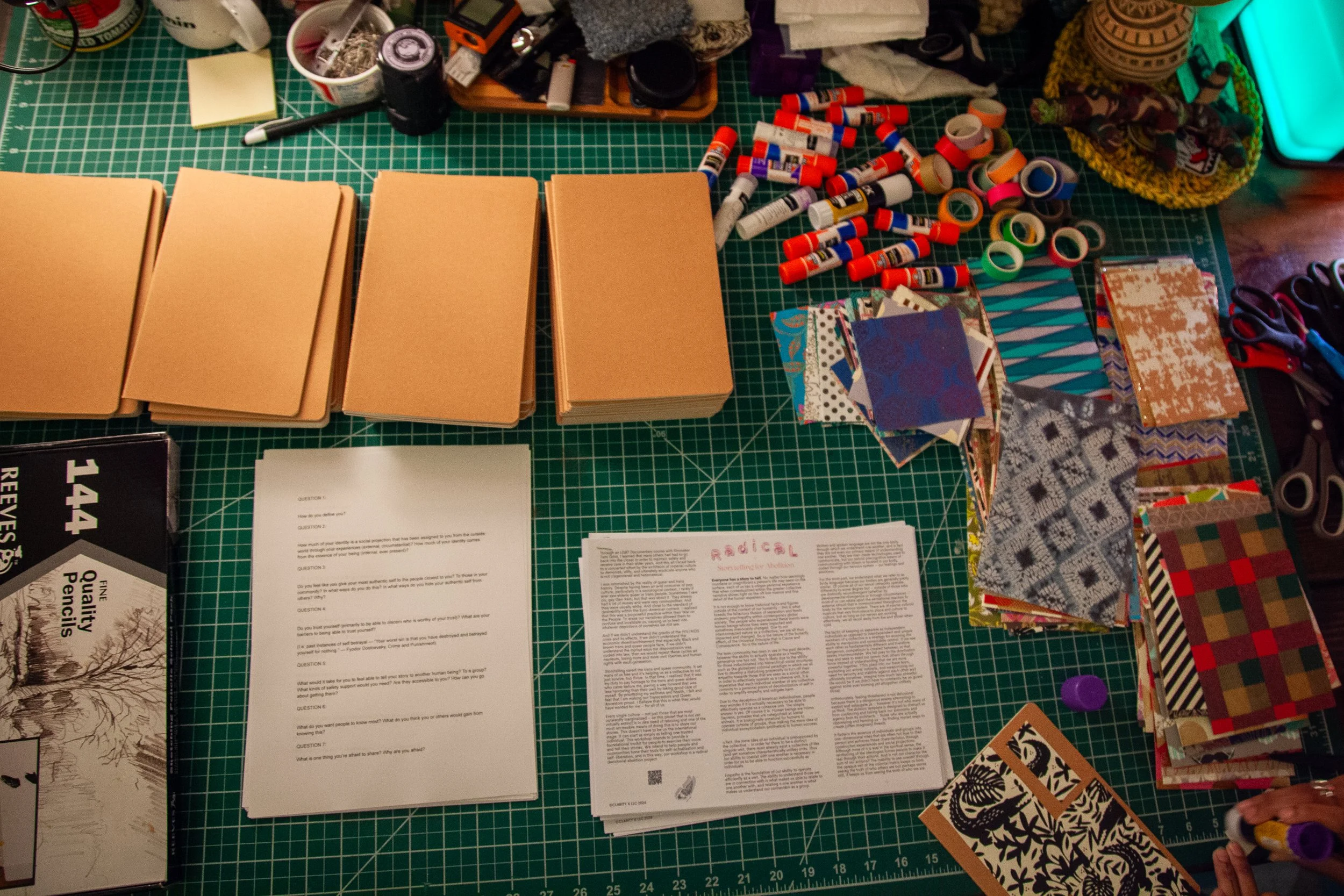
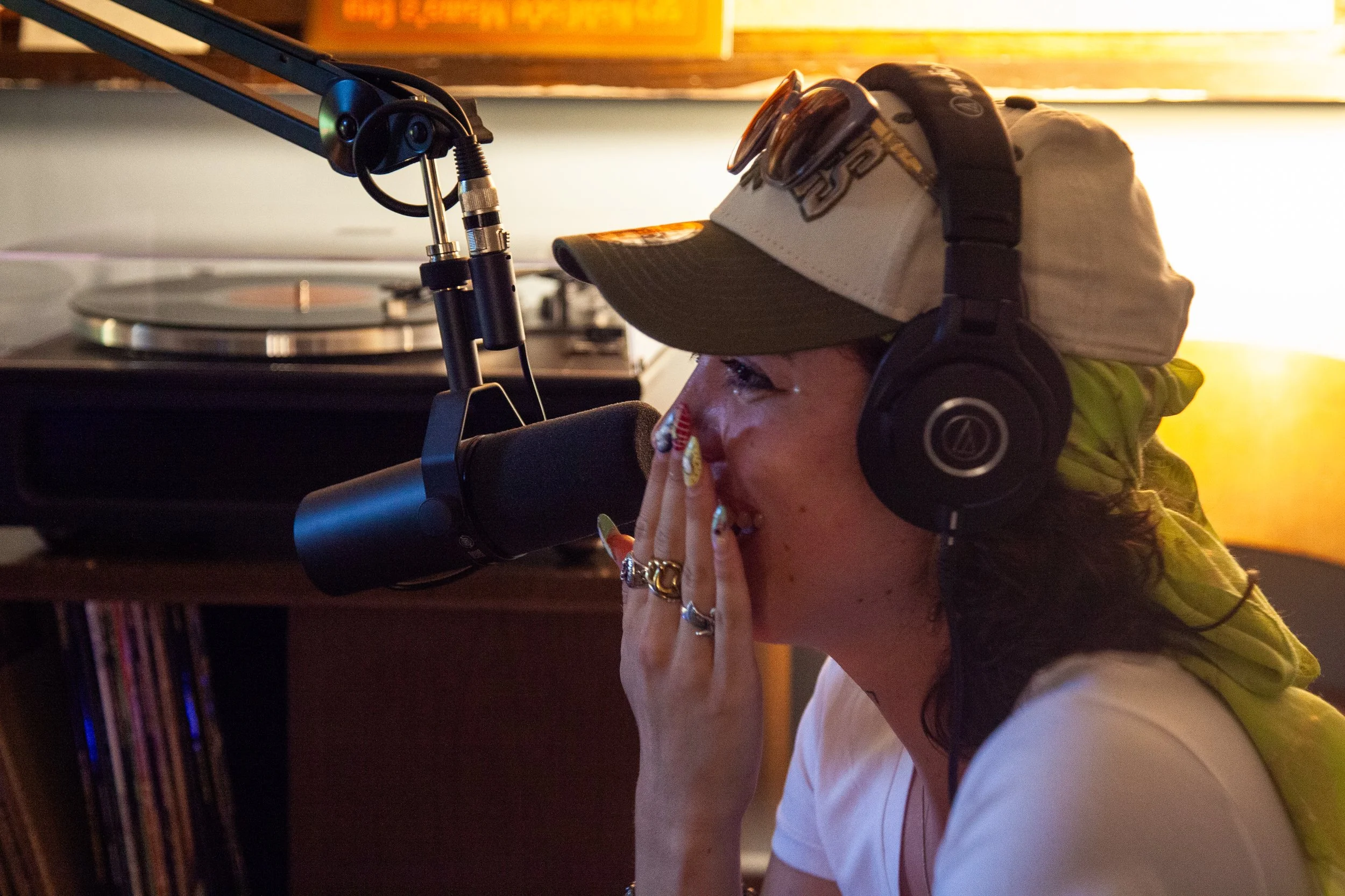
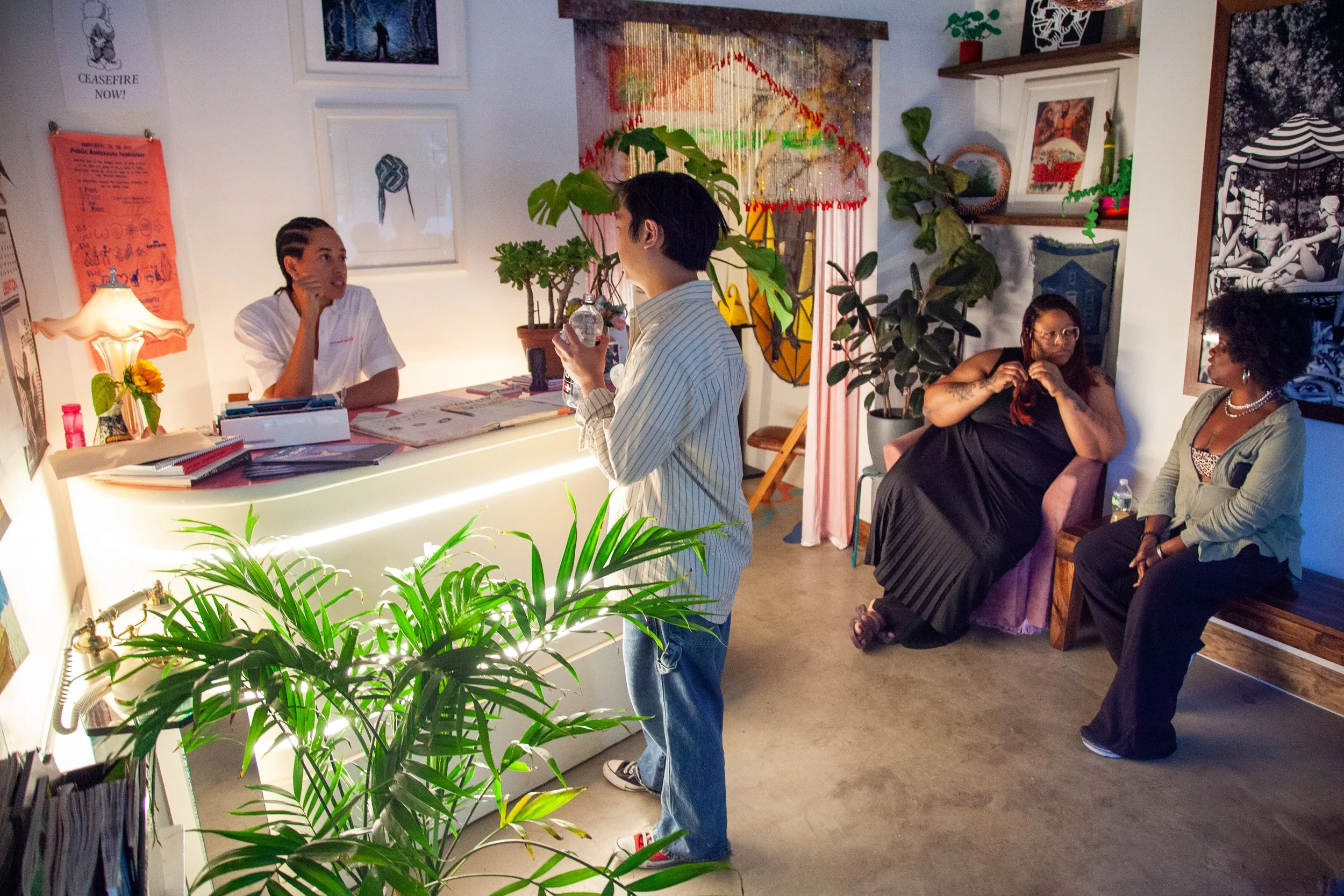
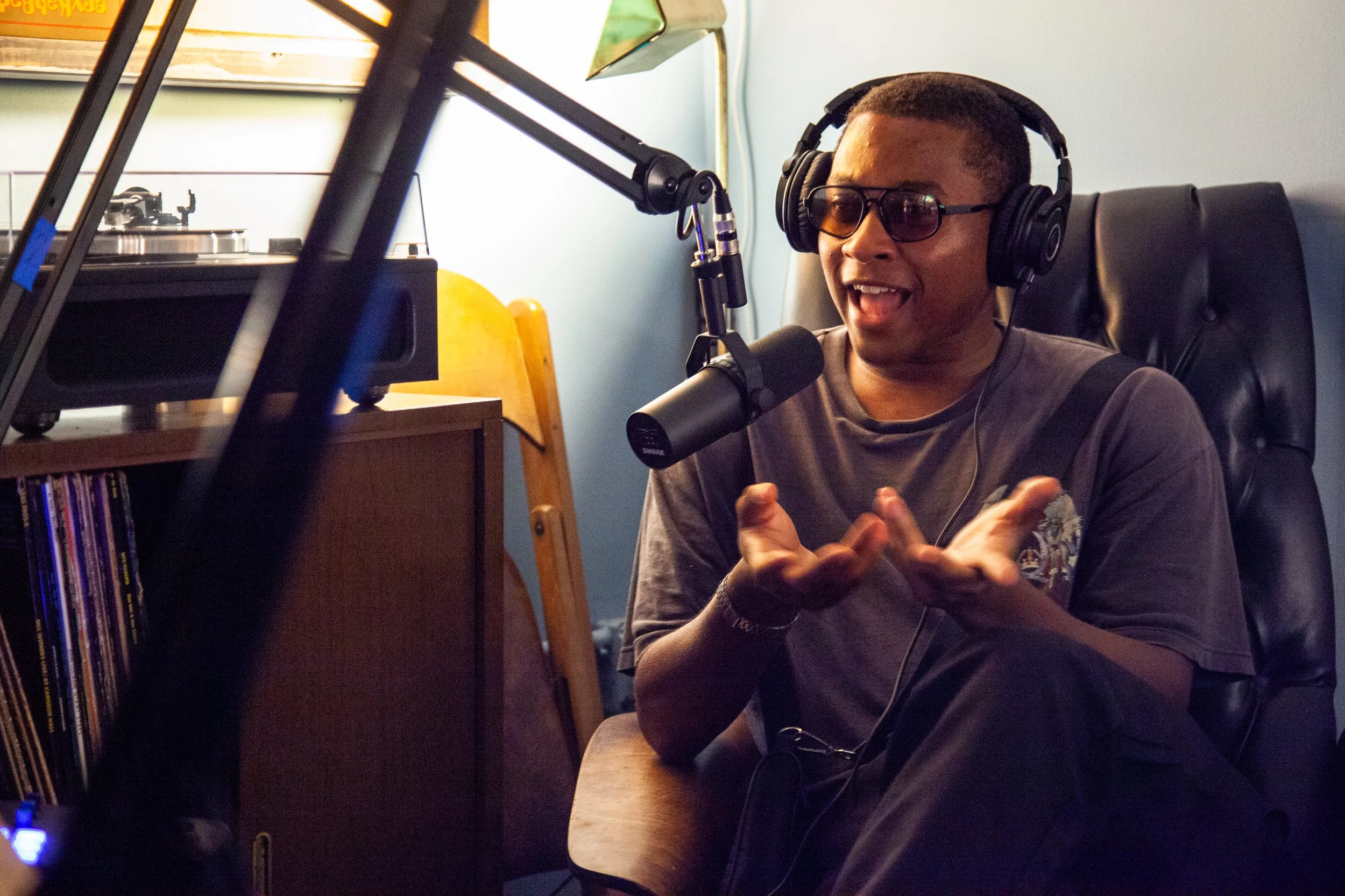
As the inaugural Adobe Creative Resident at The Museum of Modern Art, artist and musician DonChristian Jones presents an installation inspired by their Bed-Stuy studio, home to Public Assistants (PA, est. 2020), a space for queer and trans people of color to skill-share, create, and cultivate joy. At MoMA PS1, Jones has created a clandestine study that imagines a portal into their “double life” over the past fifteen years, teaching and painting during the day while rapping and performing at night. The exhibition incorporates design elements inspired by film noir, Blaxploitation films, the Harlem Renaissance, and contemporary Ballroom culture. Extending the artist’s ongoing practice of world-building, the project includes a performance program celebrating Jones’ community of creative practitioners. Staged as an outpost of PA, The Sumptuous Discovery of Gotham a Go-Go offers a place to meet, perform, and conspire.
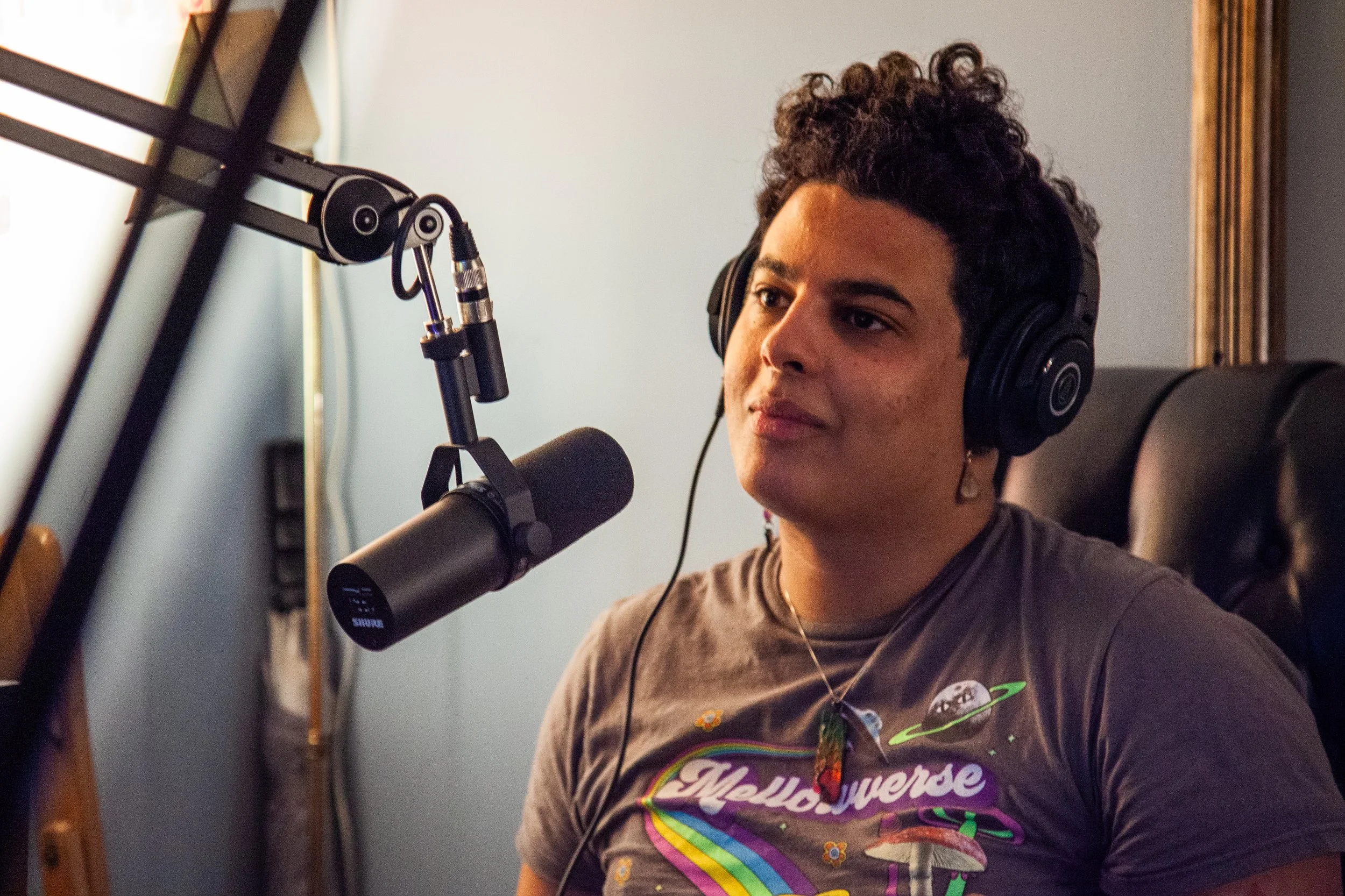
DonChristian Jones (American, b. 1989) is the inaugural Adobe Creative Resident at MoMA. Jones is a New York–based artist, musician, and producer whose diverse artistic practice spans painting, music, film and video, time-based performance, and public murals, while blending genres of painting and performance installation. They have shown work at venues such as The Whitney Museum of American Art, the New Museum, The Brooklyn Museum, and The Shed. In the spring of 2020, Jones founded Public Assistants, a community design studio and mutual-aid hub located in Bedford-Stuyvesant, Brooklyn.
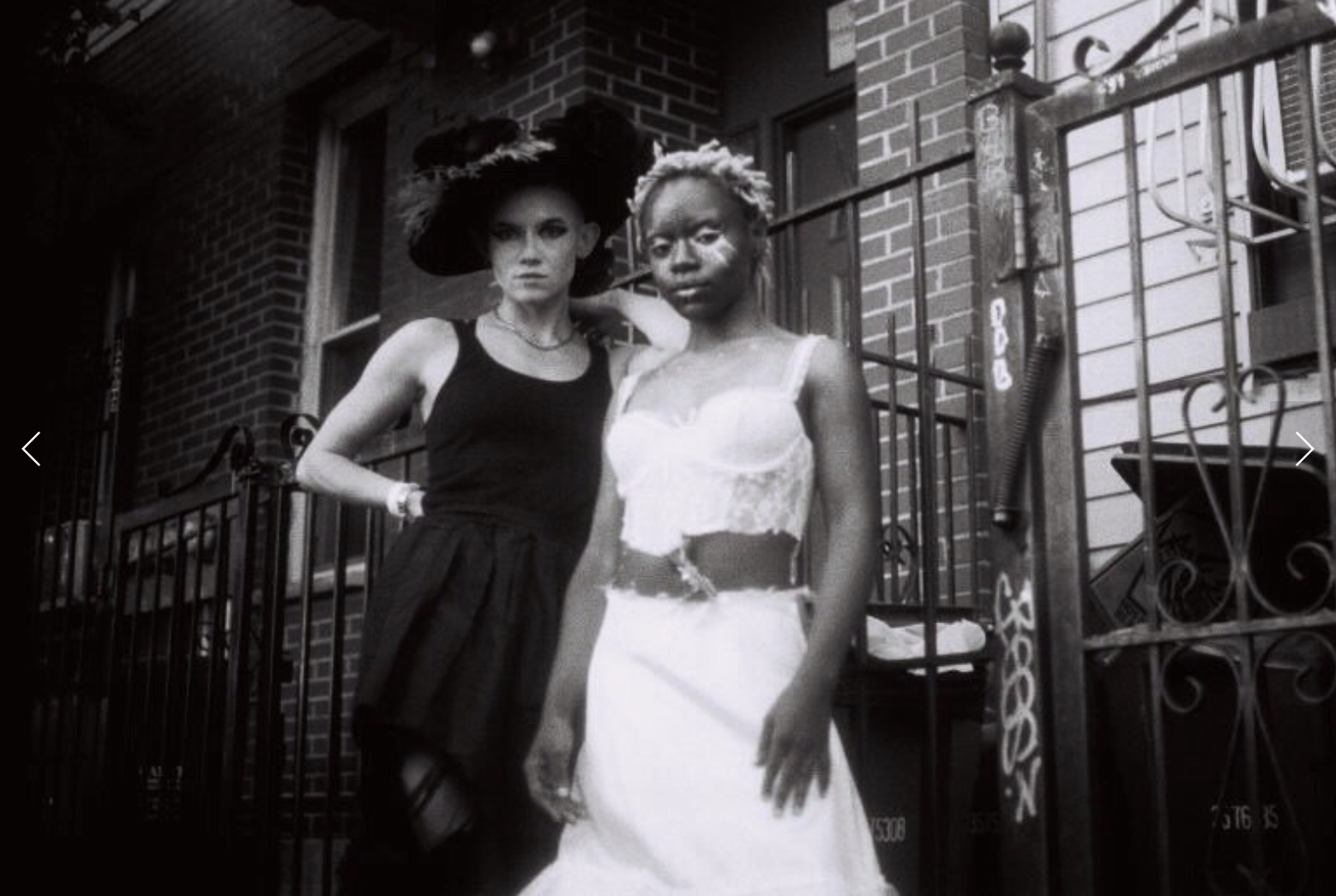
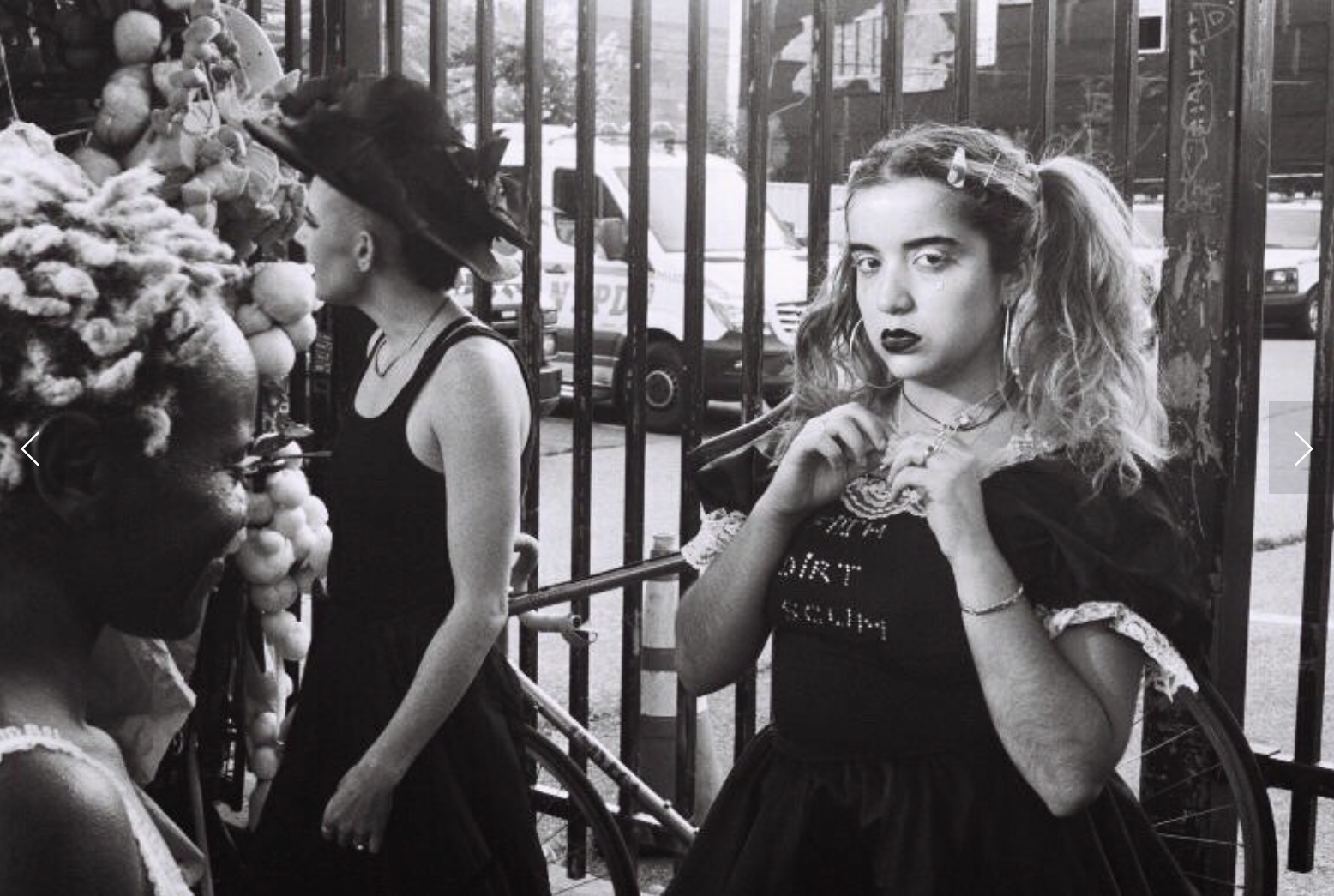
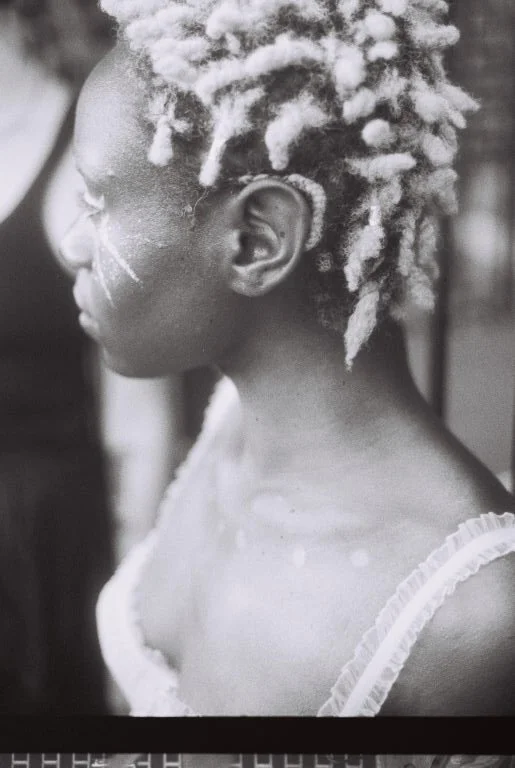
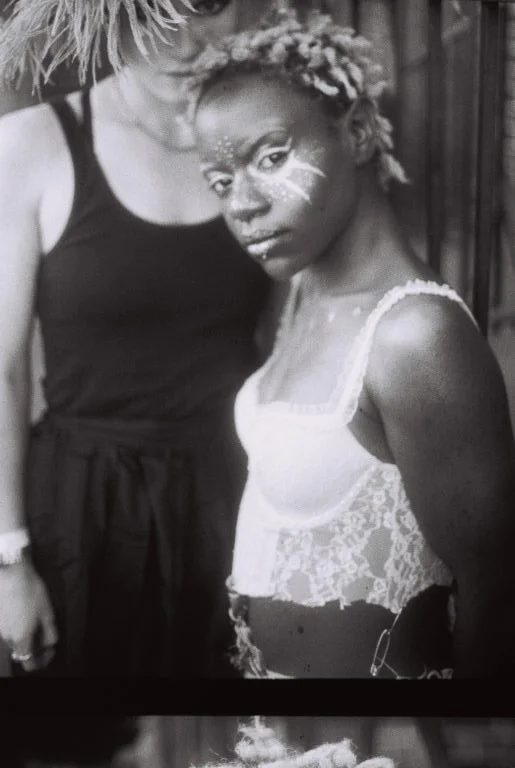
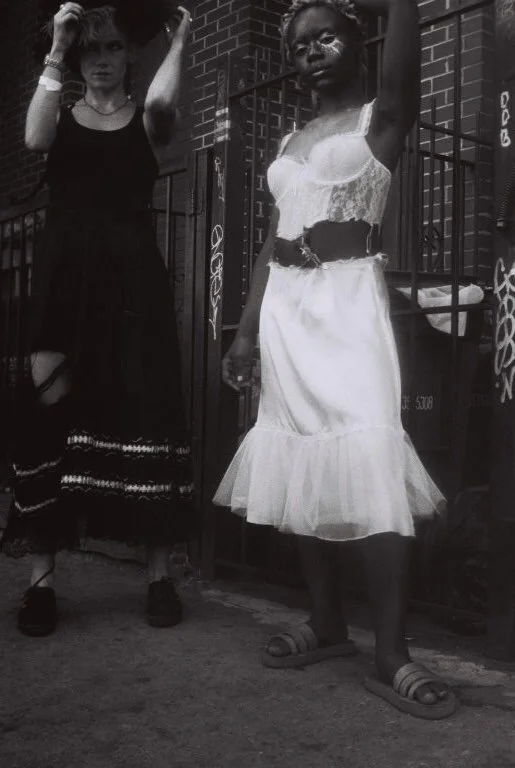
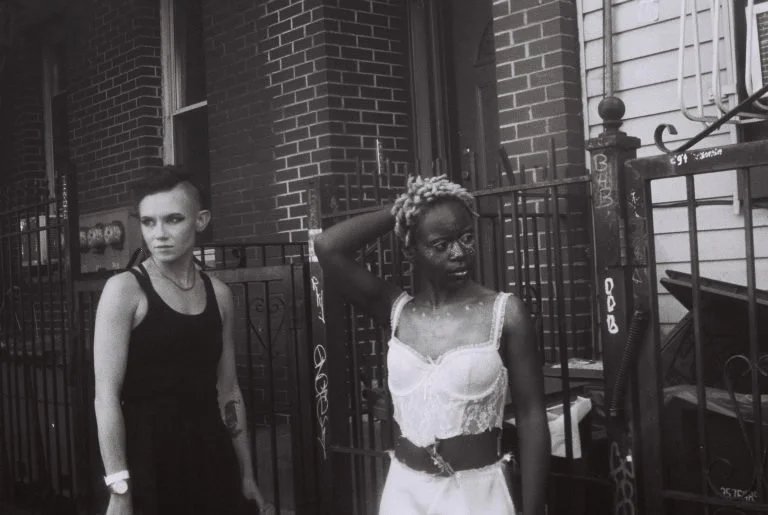
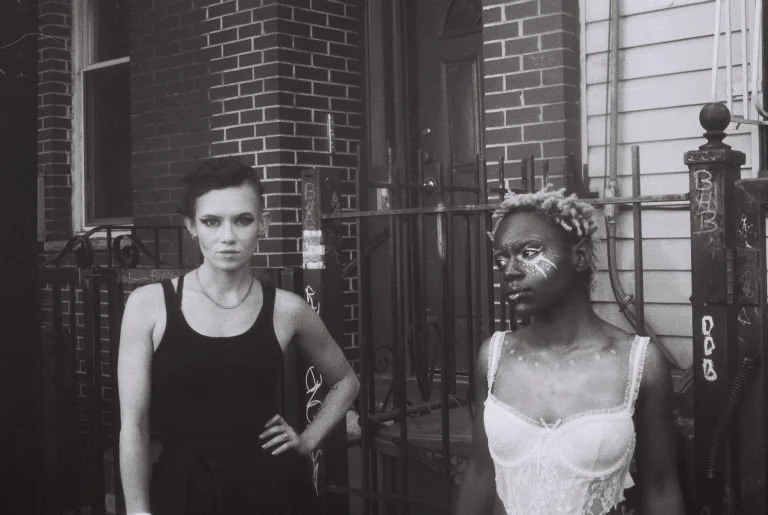
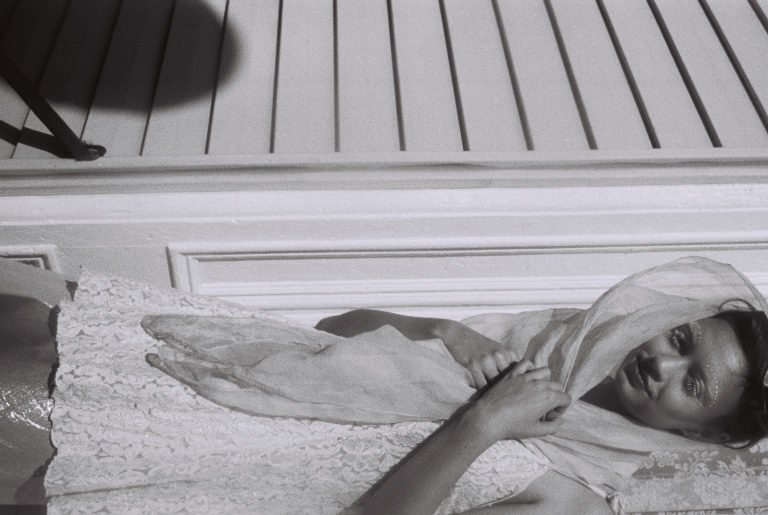
Documentation by: Marisa Alper